Choosing plywood for your home sounds straightforward—until you see options like BWR and BWP on the quotation. Both are designed for water resistance, but they are not meant for exactly the same conditions. And while BWP may offer higher water resistance, choosing it everywhere may not always be the most practical decision.
The better question is: Where will the plywood be used, how much moisture will it face, and what level of protection does that area actually need? Let’s compare BWR vs BWP plywood and see which one makes sense for your kitchen, wardrobes and other interiors.
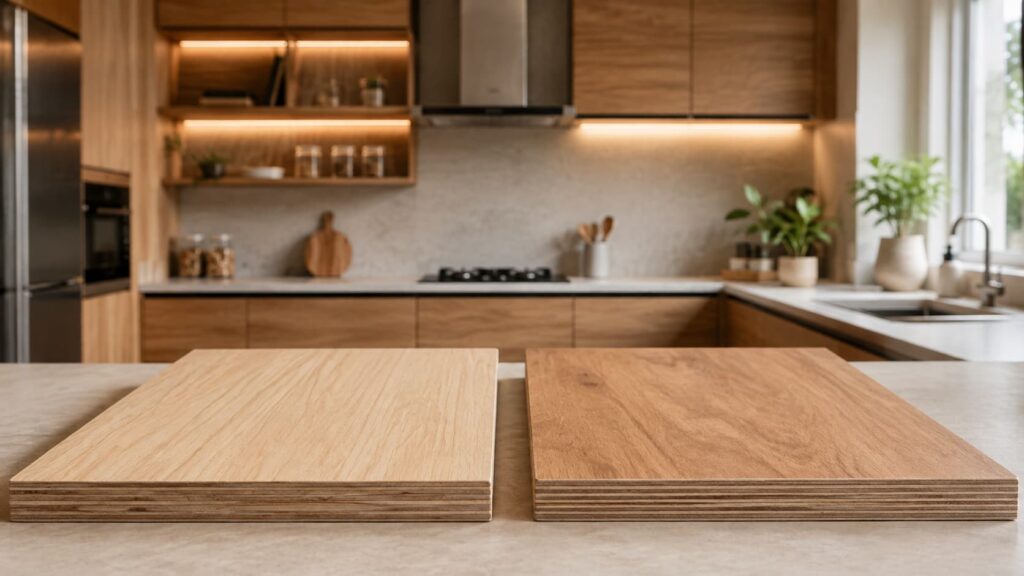
What Is the Difference Between BWR and BWP Plywood?
BWR stands for Boiling Water Resistant, while BWP means Boiling Water Proof. Both are designed to handle moisture, but they are suited to different levels of water exposure.
Under the current BIS framework, IS 303:2024 covers BWR and BWP grades, while IS 710:2024 applies to marine plywood. This distinction is important because BWP should not automatically be considered marine plywood.
When comparing them, check the BIS standard, grade, thickness, water exposure, core construction, manufacturer specifications and certification. The right choice depends on where the plywood will be used. Don’t choose simply because BWP sounds better—choose the grade that matches your home’s actual requirements.
BWR vs BWP Plywood: Quick Comparison
| Feature | BWR Plywood | BWP Plywood |
|---|---|---|
| Full form | Boiling Water Resistant | Boiling Water Proof |
| Typical use | Interiors with occasional moisture | Areas requiring higher water resistance |
| Moisture exposure | Moderate / intermittent | Higher / prolonged exposure |
| Suitable for kitchens | Yes, depending on application | Yes, especially moisture-prone areas |
| Suitable for wardrobes | Often suitable | Can be used, but may be unnecessary |
| Cost | Generally lower than comparable BWP | Generally higher |
| Best choice | When moisture protection is needed without over-specifying | When stronger water resistance justifies the added cost |
Tip: The exact performance, price, and construction can vary by manufacturer and product. Treat this table as a selection guide, not a substitute for checking the actual product specification.
What Is BWR Plywood?
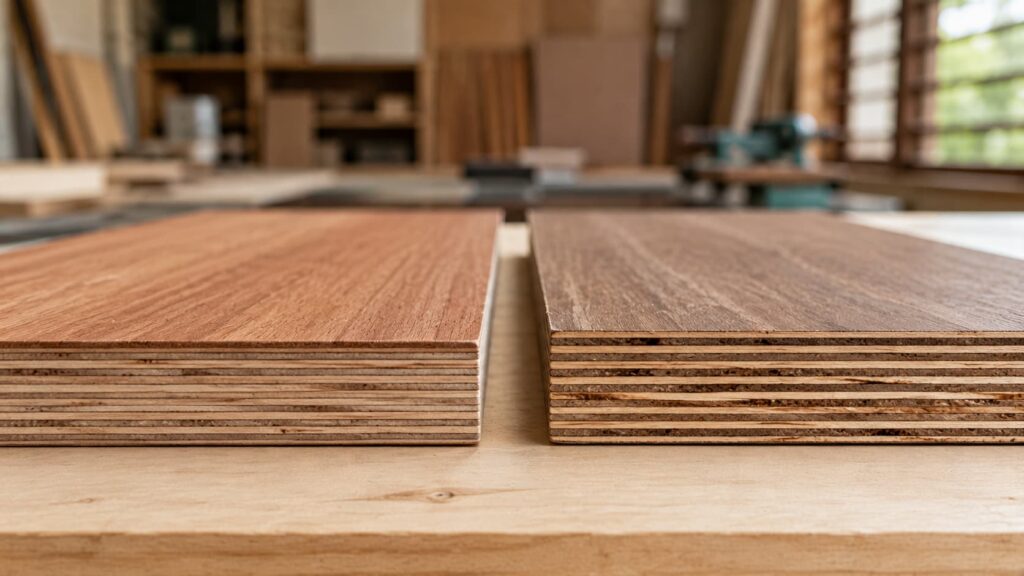
BWR plywood means Boiling Water Resistant plywood.
It is designed for applications where plywood may encounter humidity, moisture, steam or occasional water exposure.
That makes BWR a popular option for many interior applications where some moisture protection is required but the material isn’t expected to remain continuously wet.
For example, depending on the design and moisture exposure, BWR can be considered for:
- Kitchen cabinets
- Utility-area furniture
- Storage units
- Certain wardrobes
- Interior furniture
- Other areas with intermittent moisture
But remember: water-resistant does not mean that the entire finished cabinet is waterproof.
Even good plywood can be affected by prolonged water exposure if edges, joints, cut-outs or other vulnerable areas are poorly protected.
What Is BWP Plywood?
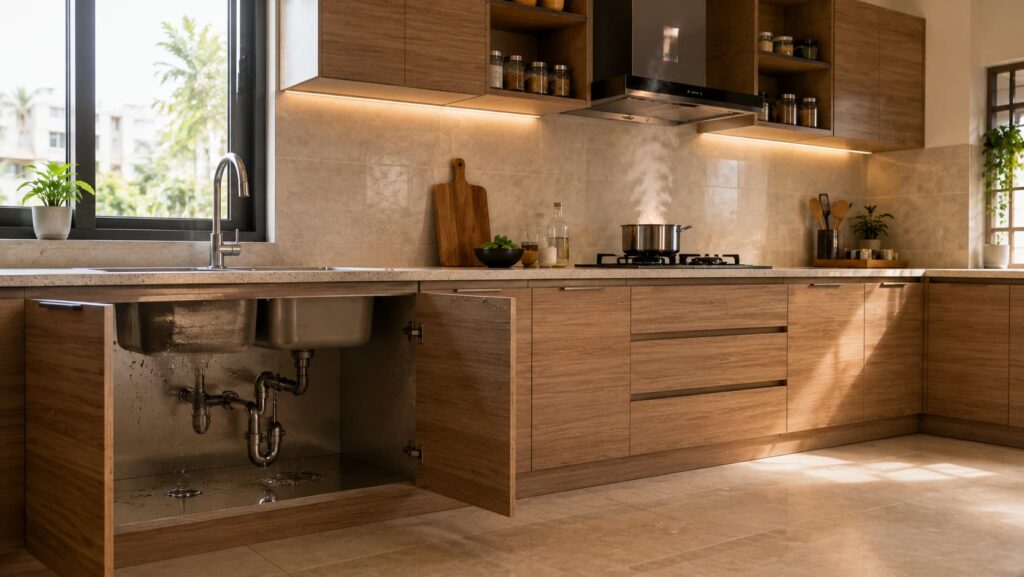
BWP plywood means Boiling Water Proof plywood. It is designed for applications where stronger resistance to water exposure is important, making it a consideration for areas where moisture is a greater concern.
Under the current BIS framework, IS 303:2024 includes BWP as a grade for general-purpose plywood, while IS 710:2024 covers marine plywood for applications involving higher or prolonged moisture exposure.
This distinction is especially useful when deciding whether your project needs marine plywood or whether a suitable BWP grade is enough. Read our guide on Marine Plywood vs Commercial Plywood for a closer comparison. If a salesperson says “BWP means marine plywood,” ask for the applicable IS standard and product specification. For moisture-prone areas, BWP can provide a higher level of water resistance compared with BWR.
BWR vs BWP Plywood: Which Is Better?
There isn’t one universal winner between BWR and BWP plywood. BWP is the stronger choice when an area requires higher water resistance, while BWR can be a practical option where moisture exposure is lower.
Instead of asking only, “Which plywood is better?”, consider where the plywood will actually be used. A kitchen sink cabinet may face very different moisture conditions compared with a bedroom wardrobe or living-room unit.
The better question is:
“Which plywood is appropriate for this particular part of my home?”
Matching the plywood grade to the application can help you get the right balance of durability, moisture resistance and cost without paying for performance you may not need.
BWR vs BWP Plywood for Kitchen: Which Should You Choose?
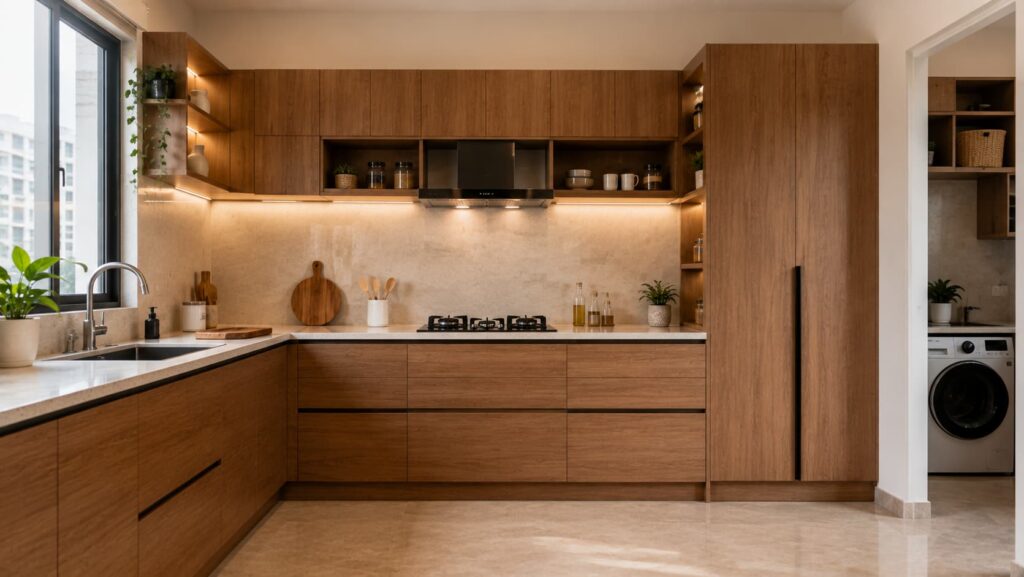
The kitchen is where this decision becomes especially important.
A kitchen can have:
- Steam from cooking
- Water splashes
- Cleaning moisture
- Spills
- Humidity
- Plumbing connections
- Moisture around the sink area
But not every cabinet experiences the same amount of water.
For regular kitchen cabinets
BWR can be a practical choice when the cabinets are not exposed to continuous or heavy water contact.
For moisture-prone areas
BWP may make more sense where the risk of prolonged moisture exposure is higher.
For example, the cabinet around a sink or plumbing connection deserves more attention than a cabinet located far away from the water source.
The important part
Don’t automatically specify BWP for every single kitchen component without considering the application.
A better approach is to identify high-risk moisture zones and select materials accordingly.
This can help you balance durability and budget instead of simply choosing the most expensive option everywhere.
BWR or BWP Plywood for Modular Kitchen?
For a modular kitchen, the choice should be made component by component rather than treating the entire kitchen as one moisture zone.
Consider:
| Kitchen Area | What to Consider |
|---|---|
| Sink cabinet | Higher moisture exposure; stronger water resistance may be worthwhile |
| Lower cabinets | More likely to encounter spills and cleaning moisture |
| Upper cabinets | Usually lower direct water exposure |
| Tall units | Depends on location and plumbing proximity |
| Utility area | Often higher humidity or water exposure |
| Pantry/storage | Usually lower moisture exposure |
The plywood grade is only one part of a durable kitchen. Cabinet construction, finishes and installation also matter. For a broader material guide, see our best wood for modular kitchens guide.
A good plywood grade cannot compensate for poor workmanship.
BWR vs BWP Plywood for Wardrobes
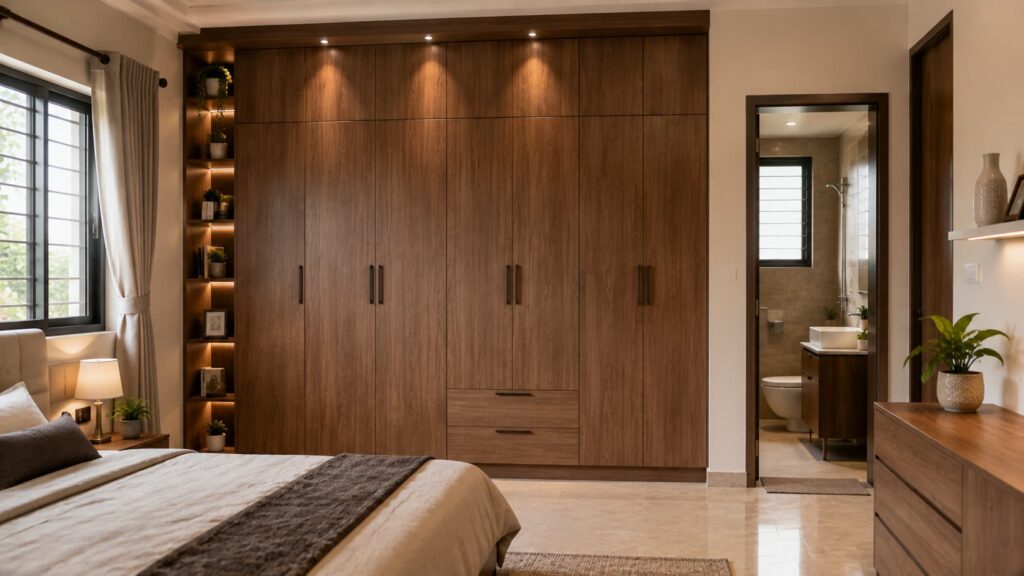
Wardrobes are a different situation.
A bedroom wardrobe generally doesn’t face the same water exposure as a kitchen sink cabinet.
If the wardrobe is located in a relatively dry interior environment, choosing BWP purely because it is a higher water-resistance grade may not always provide enough practical benefit to justify the additional cost.
However, the decision can change if the wardrobe is:
- Near a bathroom
- Against a damp wall
- In an area with recurring moisture problems
- In a location where water leakage is a known concern
This is why application matters more than simply choosing the highest grade. For wardrobes and other furniture, our guide on how to choose the best wood for furniture can help you compare material choices more broadly.
BWR vs BWP Plywood Price: Why Is BWP Usually More Expensive?
BWP plywood generally costs more than BWR when comparing comparable products because higher water-resistance performance and product specifications can increase manufacturing cost.
But there isn’t one reliable BWR-versus-BWP price that applies across Bangalore or India.
Prices can change based on:
- Brand
- Grade
- Thickness
- Sheet size
- Core construction
- Product range
- Certification
- Quantity
- Dealer
- Market conditions
So if someone gives you a quotation such as “BWP costs ₹X more per square foot,” don’t assume that the same difference applies to every brand.
Compare like with like.
Ask for the exact product name, thickness, applicable standard, certification and unit of measurement before comparing quotations.
Is BWP Always Better Than BWR?
When it comes to water resistance, BWP is designed to provide a higher level of protection, but that doesn’t automatically make it the best choice for every part of your home.
For example, spending extra on BWP for a bedroom wardrobe in a dry environment may provide additional water resistance that you rarely need. On the other hand, choosing a lower water-resistance grade for a moisture-prone area just to save money could prove costly later.
A smarter way to choose is:
Application → Moisture Exposure → Required Performance → Appropriate Grade → Budget
Rather than:
Highest Grade → Use It Everywhere
The goal is to choose the right plywood for the right application, not simply the most expensive option.
What Most Homeowners Miss: Plywood Is Only One Part of the Equation
This is where many plywood comparisons stop too early.
People often focus on the plywood sheet but forget what happens after the sheet is cut and assembled.
A kitchen cabinet can have:
- Cut edges
- Screw holes
- Joints
- Sink cut-outs
- Plumbing openings
- Laminate edges
- Hardware connections
These areas can influence how the finished unit handles moisture.
When choosing materials for home interiors, plywood is not the only option worth considering. If you’re comparing different boards, our HDHMR vs MDF vs Plywood guide explains how these materials differ and where they may be suitable.
Also ask:
“How will the finished furniture be protected from moisture?”
That includes proper construction, edge treatment, installation and protection around plumbing and wet zones.
How to Check Whether the Plywood You Are Buying Is Genuine
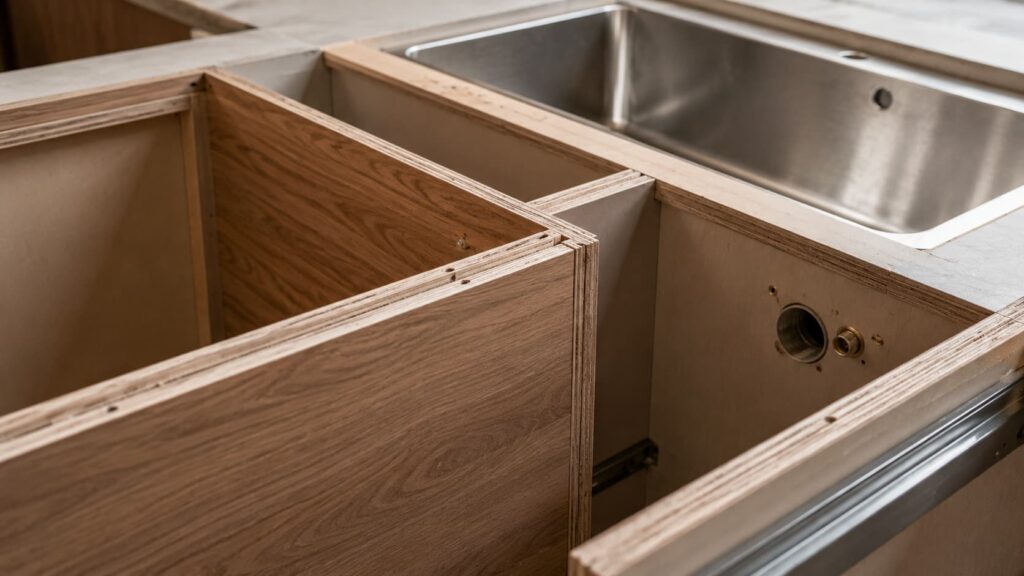
Don’t rely only on a salesperson’s claim. Before buying plywood, check the applicable BIS standard, grade, product markings, manufacturer details and available certification or technical documentation. These details help you verify whether the product matches what you are being offered. If you’re comparing manufacturers as well, our guide to the best plywood brands in India can help you evaluate products beyond price alone.
1. Check the Applicable BIS Standard
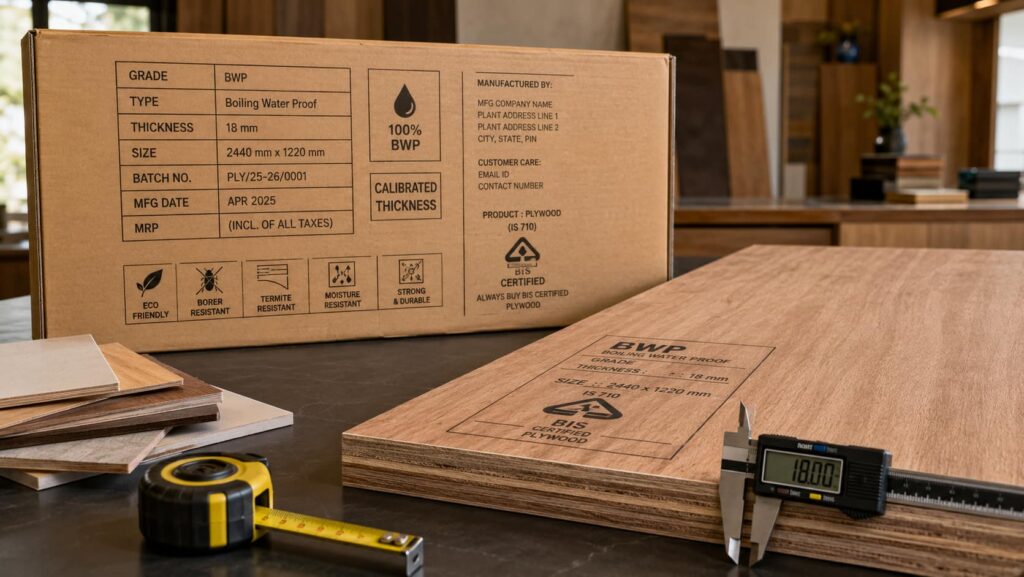
Confirm that the plywood follows the correct BIS standard and grade. IS 303:2024 covers general-purpose plywood, while IS 710:2024 covers marine plywood for specific applications.
2. Check Product Marking
Check the plywood sheet or packaging for the BIS marking, grade and product information. These details help you verify that the product matches the specifications provided by the manufacturer.
3. Verify Manufacturer Details
Look for clear manufacturer information on the plywood or packaging. A traceable manufacturer makes it easier to verify the product, specifications and available certification before purchasing.
4. Check the Exact Thickness
Always confirm the plywood thickness before comparing products or prices. 12 mm and 18 mm plywood are not interchangeable, even when they carry the same grade.
5. Ask for Technical Details
For larger interior projects, ask the supplier or manufacturer for technical specifications and certification details. This gives you clearer information about the product before making an important material decision.
Common Mistakes to Avoid When Choosing Plywood
Choosing Only by Price
A lower quotation may look attractive initially, but the cheapest plywood is not always the most cost-effective choice. Consider quality, application, durability and long-term performance before deciding.
Choosing BWP for Everything
BWP offers higher water resistance, but that doesn’t mean every interior needs it. Choose the appropriate grade based on moisture exposure and the specific application.
Assuming BWR Means Waterproof
BWR provides water resistance, but it should not be treated as unlimited protection against prolonged water exposure. Proper construction and moisture protection still matter.
Ignoring the Standard
Don’t rely only on product names or salesperson claims. Check the applicable BIS standard, grade, product marking and manufacturer specifications before purchasing plywood.
Comparing Products Only by Price Per Square Foot
Price alone can be misleading. Two plywood sheets may differ in grade, thickness, construction and specifications, making a direct price comparison inaccurate.
Forgetting Installation
Even good-quality plywood can perform poorly if cabinet construction, joints, edges or moisture-prone areas are not handled correctly. Material quality and workmanship need to work together.
So, Which One Should You Choose?
Here’s the practical answer:
Choose BWR when:
- Moisture exposure is occasional
- You are working on general interior applications
- The area is not continuously wet
- You want a good balance between moisture resistance and cost
Consider BWP when:
- Moisture exposure is higher
- The application is close to a significant water source
- Long-term water resistance is an important requirement
- The additional material cost is justified by the environment
For a modular kitchen, the best solution may not be to use one grade everywhere. Identify the moisture-prone zones first, then select the plywood specification accordingly.
And if you are comparing quotations, always compare the same grade, thickness, standard and product specification before deciding which one is cheaper.
BWR vs BWP Plywood: Final Verdict
There is no need to turn BWR vs BWP into a simple “good vs better” argument.
BWR is a practical choice for many interior applications with intermittent moisture, while BWP is appropriate when greater water resistance is genuinely needed.
For homeowners designing a modular kitchen or complete home interior, the smartest approach is to match the plywood specification to the actual environment and use of each furniture unit.
If you’re planning a new home interior in Bangalore, material selection is only one part of getting the result right. Cabinet construction, space planning, finishes, hardware and installation all need to work together.
Woodlab Interiors can help homeowners evaluate material choices as part of their overall interior planning.
Planning your home interiors in Bangalore? Talk to Woodlab Interiors about choosing materials that suit your space, usage and budget.
Frequently Asked Questions
Is BWR or BWP plywood better?
BWP offers higher water-resistance performance, but that doesn’t mean it is the right choice for every application. BWR can be sufficient for areas with intermittent moisture, while BWP is more appropriate where higher water resistance is required.
Which plywood is best for a modular kitchen, BWR or BWP?
It depends on the part of the kitchen and its moisture exposure. BWR can work for many kitchen applications, while BWP may be worth considering for areas exposed to greater moisture, such as certain sink or plumbing zones.
Is BWR plywood waterproof?
No. BWR means Boiling Water Resistant, not unlimited waterproofing. It is intended to provide resistance to moisture and water exposure, but prolonged exposure can still cause problems.
Is BWP plywood completely waterproof?
BWP is designed for a higher level of water resistance, but homeowners should not interpret the term as meaning a finished cabinet can be left exposed to water indefinitely. Edges, joints, installation and finishing still matter.
Is BWR plywood good for wardrobes?
BWR can be suitable for wardrobes, particularly where some moisture resistance is desired. In a dry bedroom environment, however, there may not always be a practical reason to select a higher water-resistance grade.
Why is BWP plywood more expensive than BWR?
BWP generally carries a higher price because it is designed to provide stronger water-resistance performance. Actual prices vary by brand, thickness, product specification and market.
What should I check before buying BWR or BWP plywood?
Check the exact grade, applicable BIS standard, product marking, thickness, manufacturer details and technical specifications. For important interior projects, compare equivalent products rather than comparing only the price per square foot.