Choosing the right material for your home furniture can directly impact its durability, appearance, and maintenance needs. When planning wardrobes, modular kitchens, TV units, or custom furniture, homeowners often get confused between HDHMR vs MDF vs Plywood. Each material has different strengths, finishes, moisture resistance, and pricing. This guide explains the difference between MDF and HDHMR, compares MDF plywood options, and helps to choose the right material based on usage, budget, and long-term performance.
What Are HDHMR, MDF, and Plywood?
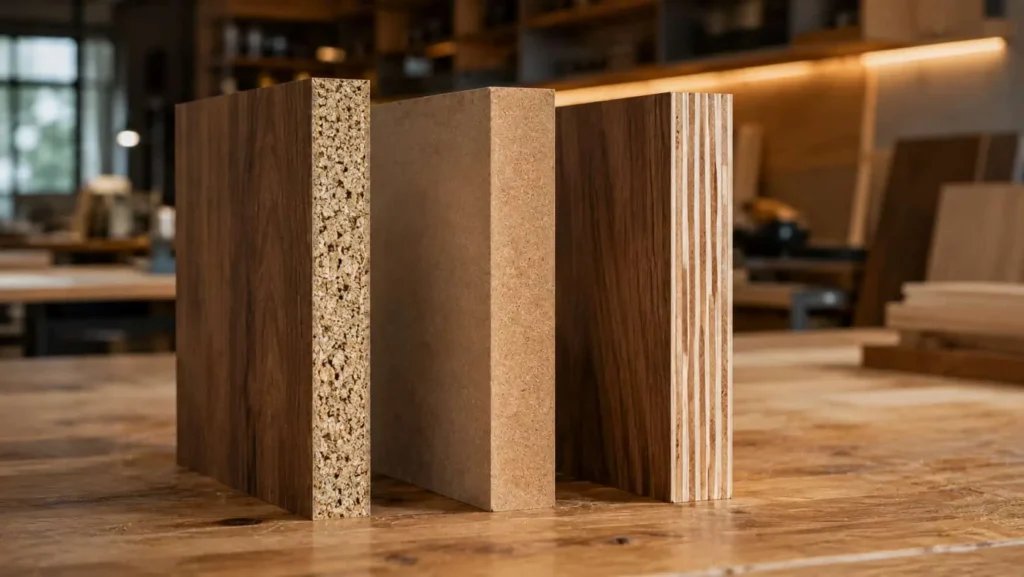
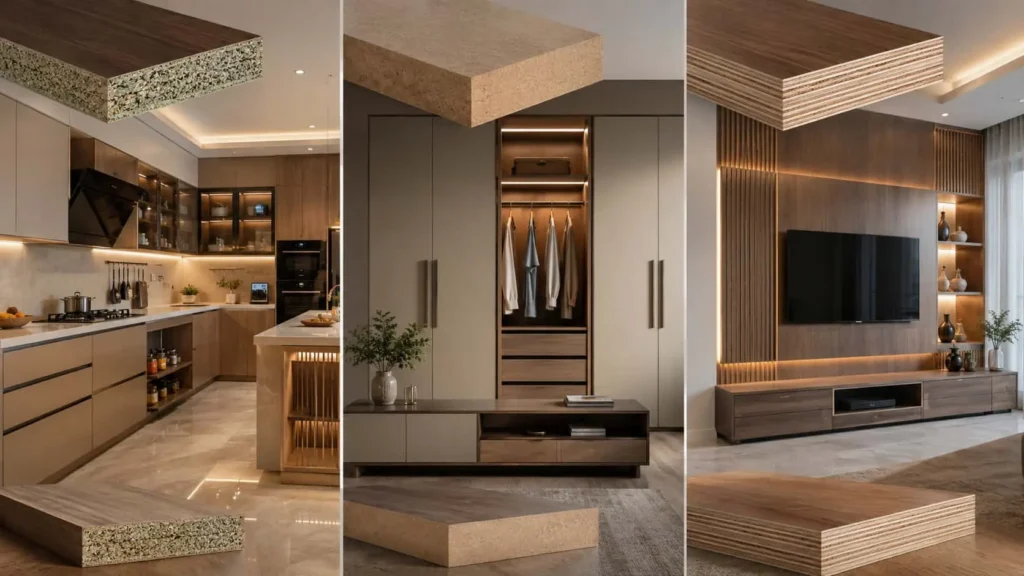
HDHMR, MDF, and plywood are engineered wood products used for making modern furniture. Although they look similar after finishing, their internal structure, strength, moisture resistance, and durability are different. Choosing the correct material helps create stronger and longer-lasting interiors.
Key factors to understand:
- Every board has different strength levels.
- Moisture exposure affects material selection.
- The furniture type decides the right choice.
- Premium interiors often combine multiple materials.
What Is MDF?
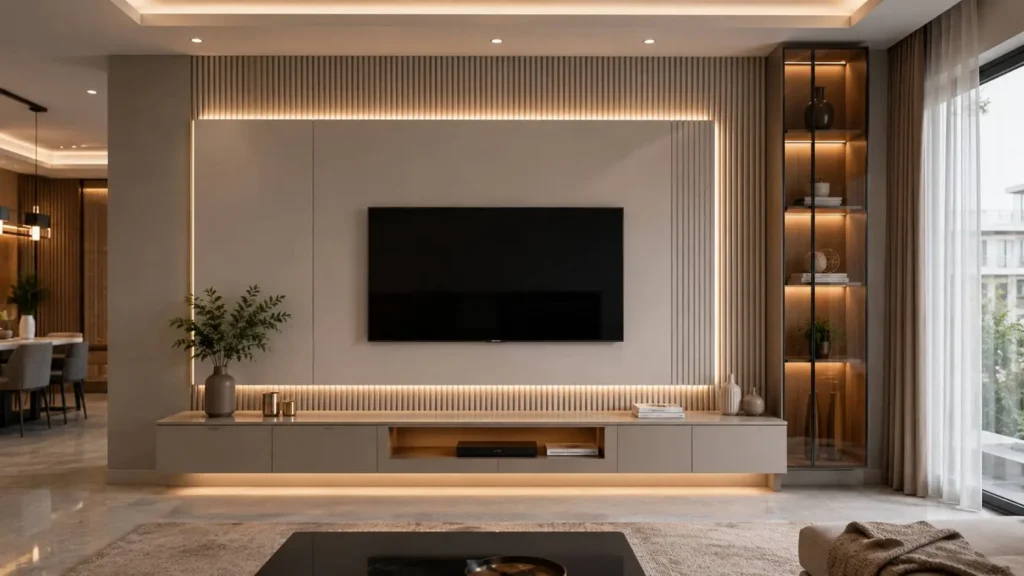
MDF (Medium Density Fibreboard) is made by compressing fine wood fibres with resin under high pressure and temperature. Its smooth surface makes it popular for decorative furniture, painted designs, and modern interior applications where finishing quality is important.
Common uses of MDF include:
- TV units
- Decorative wall panels
- Painted furniture
- Cabinet shutters
- CNC-cut designs
- Fluted panels
The main advantage of MDF material is its smooth texture, which allows easy painting and detailed designs. The MDF sheet price is also generally lower compared to premium plywood options.
However, standard MDF should not be used in areas with frequent water exposure because it can absorb moisture and swell.
What Is HDHMR?
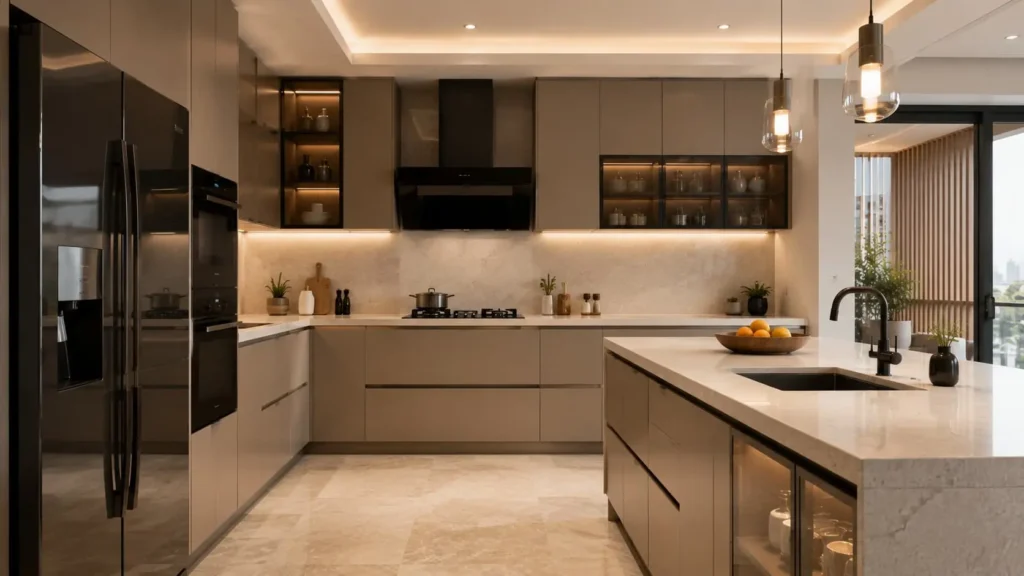
HDHMR stands for High Density High Moisture Resistance board. It is an advanced engineered board designed to offer better strength and moisture resistance compared to standard MDF.
HDHMR boards are manufactured using refined wood fibres compressed at higher density, resulting in better durability and screw-holding capacity.
Benefits of HDHMR include:
- Better moisture resistance than MDF
- Higher density
- Stronger structure
- Smooth finishing surface
HDHMR board is commonly used for:
- Modular kitchen shutters
- Wardrobes
- Storage units
- Premium furniture
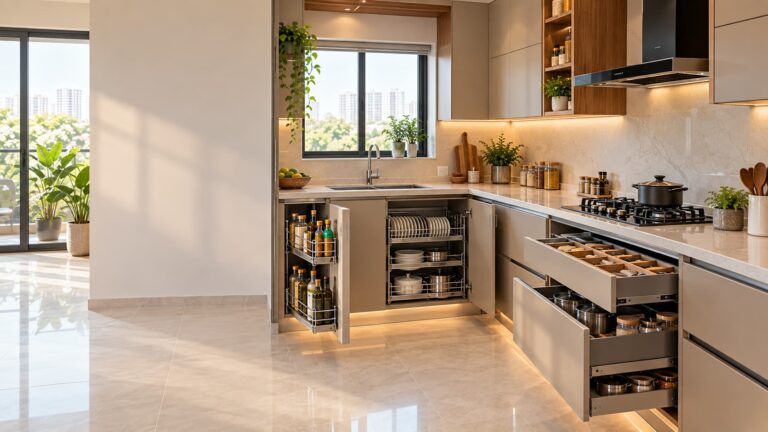
For homeowners planning a modern home, HDHMR is a preferred material for wardrobes and modular kitchens because it offers an excellent balance of durability, moisture resistance, and finish. Learn more about our Modular Kitchen Interior Design solutions for customised kitchen cabinets.
What Is Plywood?
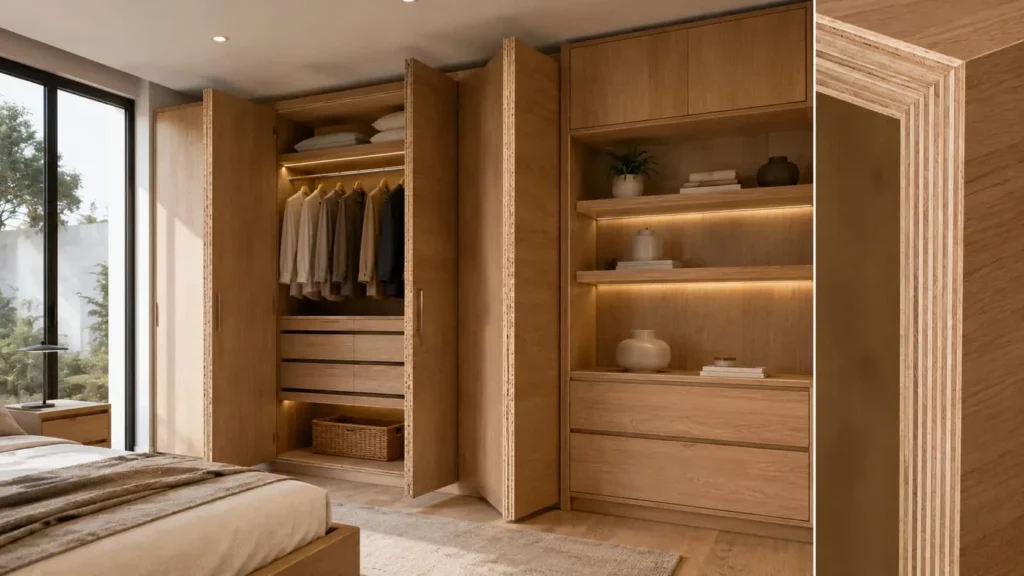
Plywood is made by bonding multiple layers of wood veneer together with adhesives. The layers are arranged in different directions, creating a strong and stable panel suitable for heavy furniture applications.
Common plywood uses include:
- Modular kitchens
- Beds
- Wardrobes
- Storage cabinets
- Office furniture
When selecting the best plywood, homeowners should check:
- Grade quality
- Thickness
- Water resistance
- Brand reliability
Waterproof plywood is preferred for kitchens and areas exposed to humidity.
Types of Boards Used in Home Interiors
Interior designers use different boards depending on furniture requirements, design preferences, and budget. There is no single material suitable for every part of a home.
Common options include:
- MDF board
- HDHMR board
- Commercial plywood
- Waterproof plywood
- HDF board
Types of MDF Board
MDF is available in different variants depending on moisture resistance and application. Choosing the right MDF type helps improve furniture performance and prevents damage in unsuitable areas.
Standard MDF Board
Standard MDF works best for dry areas where appearance is the main priority.
Suitable for:
- Decorative furniture
- Wall panels
- Interior designs
Moisture-Resistant MDF
Moisture-resistant MDF offers better protection than standard MDF but should not be treated as completely waterproof.
Suitable for:
- Bedroom furniture
- Dry storage units
Avoid using MDF near:
- Kitchen sinks
- Bathrooms
- Outdoor areas
Types of HDHMR Board
HDHMR boards are available in different thicknesses based on furniture requirements. The thickness selected affects stability, strength, and finishing quality.
Common options include:
- 16mm HDHMR
- 18mm HDHMR board
The 18mm HDHMR board is commonly used for shutters, cabinets, and premium furniture because it provides better support.
Types of Plywood
Plywood quality depends on the manufacturing process and grade. Different plywood categories are designed for different levels of strength and moisture resistance.
Common types include:
| Type | Best Use |
|---|---|
| Commercial Plywood | General furniture |
| BWP Plywood | Kitchens and moisture-prone areas |
| Marine Plywood | High-moisture applications |
| Fire-Retardant Plywood | Safety-focused projects |
Why Choosing the Right Interior Material Matters
The material inside your furniture plays a major role in its durability and performance. Experienced Home Interior Designers in Bangalore carefully select different materials for each room based on functionality, moisture exposure, and budget. A premium exterior finish cannot improve poor-quality internal boards. Choosing correctly helps avoid frequent repairs and replacement costs.
The right material provides:
- Longer furniture lifespan
- Better moisture protection
- Improved finishing quality
- Better value for money
For Bangalore homes, moisture resistance becomes especially important because kitchens and storage areas may experience humidity changes.
Material Selection Affects Furniture Performance
Different furniture pieces require different strength levels. A decorative wall panel and a kitchen cabinet may look similar but experience completely different pressure and usage.
Consider these requirements:
- Kitchens need moisture resistance.
- Wardrobes need screw-holding strength.
- Beds need structural stability.
- Decorative panels need smooth finishes.
Material Selection Affects Budget
The cheapest board is not always the most economical choice. A low-cost material may require replacement earlier, increasing the overall expense over time.
A practical budget should consider:
- Initial material cost
- Expected lifespan
- Maintenance needs
- Repair expenses
How Are MDF, HDHMR, and Plywood Made?
The manufacturing process determines how strong and durable each material becomes. MDF, HDHMR, and plywood use different production methods, which directly affect their performance in furniture applications.
The basic process includes:
- Raw material preparation
- Fibre or veneer processing
- Adhesive bonding
- High-pressure compression
- Quality testing
MDF Manufacturing Process
MDF is produced by converting wood into fine fibres, mixing them with resin, and compressing them into dense boards. This process creates a smooth and uniform surface.
Advantages of this process:
- Smooth finish
- Easy cutting
- Uniform thickness
However, MDF has lower structural strength compared to plywood.
HDHMR Manufacturing Process
HDHMR follows a fibre-based manufacturing process but uses higher-density compression technology. This improves strength, durability, and moisture resistance.
The process provides:
- Higher density
- Better screw holding
- Improved furniture performance
Plywood Manufacturing Process
Plywood is made by stacking veneer layers in opposite directions and bonding them under pressure. This layered structure creates excellent strength and stability.
Benefits include:
- High load capacity
- Better durability
- Long lifespan
HDHMR vs MDF vs Plywood Comparison
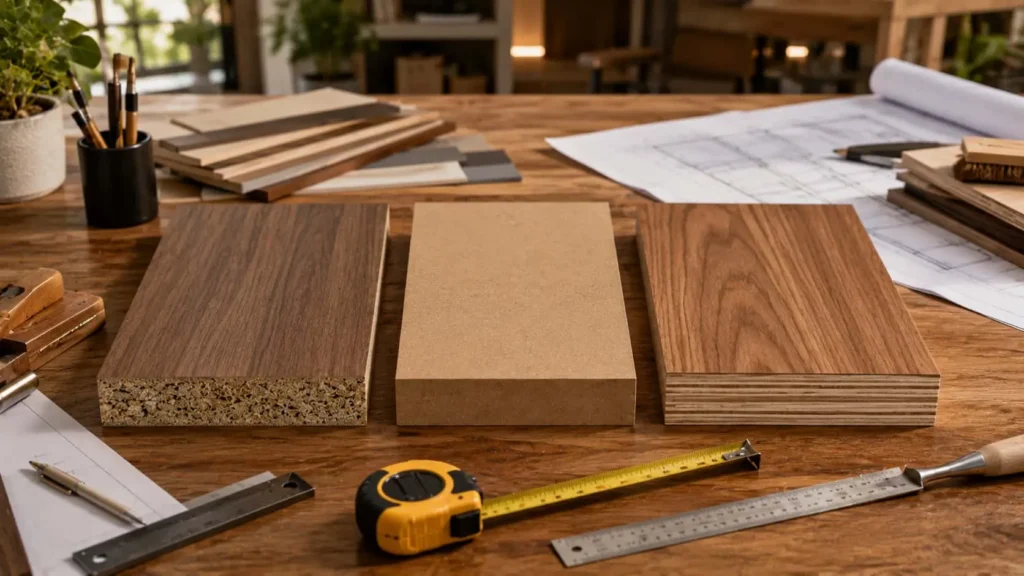
Understanding the differences between these materials helps homeowners choose the right board based on furniture type, budget, and durability expectations.
Feature | HDHMR | MDF | Plywood |
Material Type | High-density fibre board | Fibre board | Layered veneer board |
Strength | High | Medium | Very High |
Moisture Resistance | High | Low-Medium | Good-Excellent |
Finish Quality | Excellent | Excellent | Good |
Screw Holding | Good | Average | Excellent |
Cost | Medium-High | Budget-Friendly | Medium-High |
Best Use | Premium furniture | Decorative designs | Heavy furniture |
Lifespan | Long | Moderate | Very Long |
Benefits of HDHMR, MDF, and Plywood
Each material has unique advantages. Instead of selecting one board for the entire home, designers usually combine materials according to furniture requirements.
A practical approach:
- Use plywood for strength.
- Use HDHMR for balanced performance.
- Use MDF for decorative designs.
Benefits of HDHMR Board
HDHMR is one of the most popular materials for Wardrobe Interior Design because it provides strong screw-holding capacity, a premium finish, and better moisture resistance than standard MDF. It is becoming popular among homeowners who want modern furniture with better durability.
Key benefits:
- Better moisture resistance than MDF
- Smooth premium finish
- Good screw holding
- Stronger structure
Best applications:
- Kitchen shutters
- Wardrobes
- Storage units
Benefits of MDF Board
MDF is widely used in TV Unit Interior Design because its smooth surface makes it ideal for painted finishes, decorative wall panels, and customised entertainment units. Its smooth surface makes it ideal for painted finishes and detailed patterns.
Advantages include:
- Affordable MDF price
- Easy CNC cutting
- Excellent paint finish
- Design flexibility
Best applications:
- TV units
- Wall panels
- Decorative furniture
Benefits of Plywood
Plywood remains one of the most trusted materials because of its strength and ability to handle heavy loads.
Main benefits:
- Excellent durability
- Strong screw holding
- Better stability
- Long lifespan
Best applications:
- Kitchens
- Beds
- Wardrobes
- Heavy storage
Difference Between MDF and HDHMR
The main difference between MDF and HDHMR is density, strength, and moisture resistance. HDHMR is an improved engineered board designed for applications where regular MDF may not provide enough durability.
Feature | MDF | HDHMR |
Density | Medium | Higher |
Strength | Moderate | Higher |
Moisture Resistance | Lower | Excellent |
Finish | Excellent | Excellent |
Cost | Lower | Higher |
Best Material for Different Furniture Applications
Different furniture requires different materials. Choosing the correct board improves durability and reduces future maintenance problems.
Consider:
- Water exposure
- Weight requirements
- Usage frequency
- Expected lifespan
Best Material for Modular Kitchen
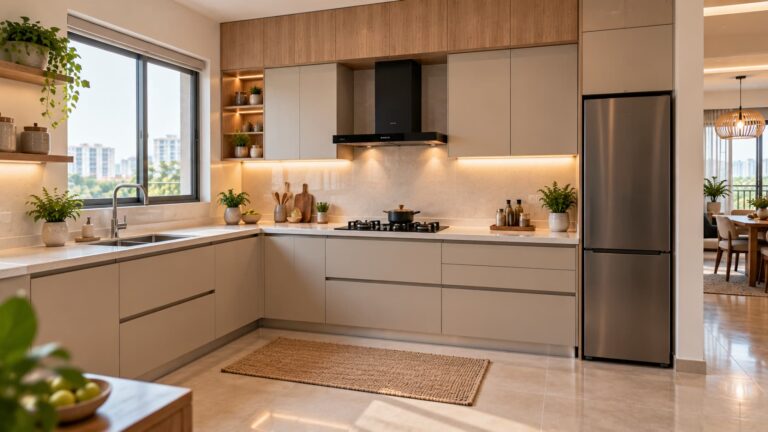
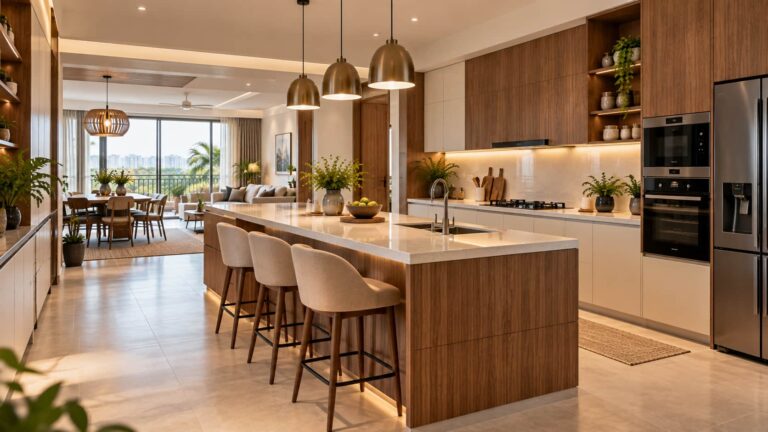
Modular kitchens face moisture, heat, and daily usage. Therefore, stronger and moisture-resistant boards are preferred for long-lasting performance.
Recommended options:
- Waterproof plywood
- HDHMR board
Benefits:
- Better moisture resistance
- Strong storage support
- Long durability
Before selecting materials, read our guide on How to Choose the Perfect Modular Kitchen Design to understand the best layouts, storage options, and material combinations for your home.
Best Material for Wardrobes
Wardrobes require strong shelves and durable shutters because they handle regular opening, closing, and storage weight.
Recommended materials:
- HDHMR
- Plywood
Benefits:
- Better screw holding
- Strong shelves
- Longer lifespan
You can also explore 15 space-saving wardrobe design ideas for small bedrooms.
Best Material for TV Units
TV units focus more on design and finishing rather than heavy load-bearing capacity.
Recommended materials:
- MDF board
- HDHMR board
MDF works well because it provides:
- Smooth finish
- Easy customization
- Affordable designs
Cost Comparison: MDF Price, Plywood Price & HDHMR Board Price
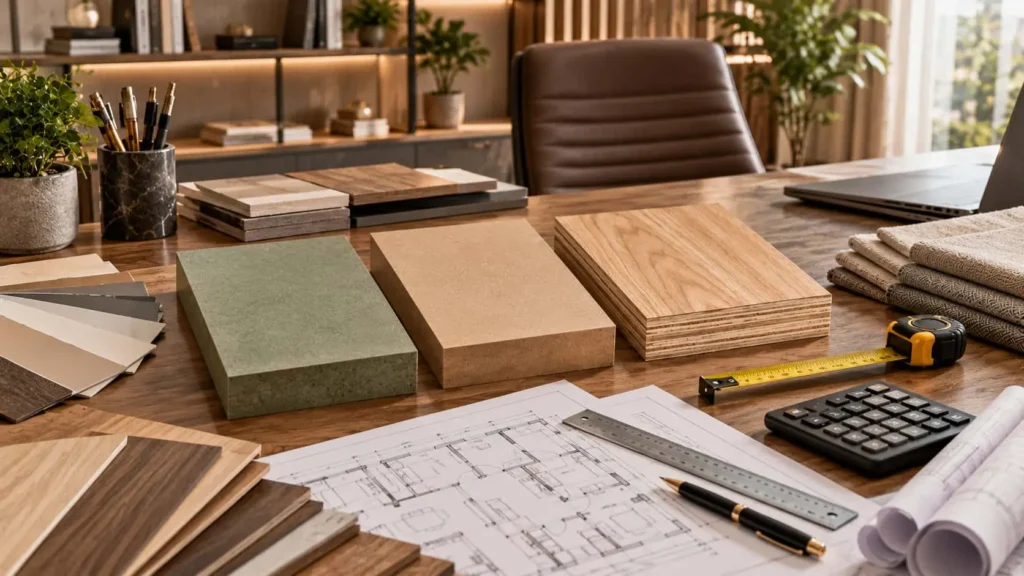
Material prices vary depending on thickness, brand, quality, and moisture resistance. Homeowners should compare long-term value instead of choosing only the lowest price.
Material | Approximate Price |
MDF Sheet | ₹50–₹150/sq.ft |
HDHMR Board | ₹80–₹200/sq.ft |
Plywood | ₹100–₹250+/sq.ft |
The MDF sheet price, plywood price, and HDHMR board price depend on:
- Thickness
- Brand
- Quality
- Finish
Common Mistakes to Avoid
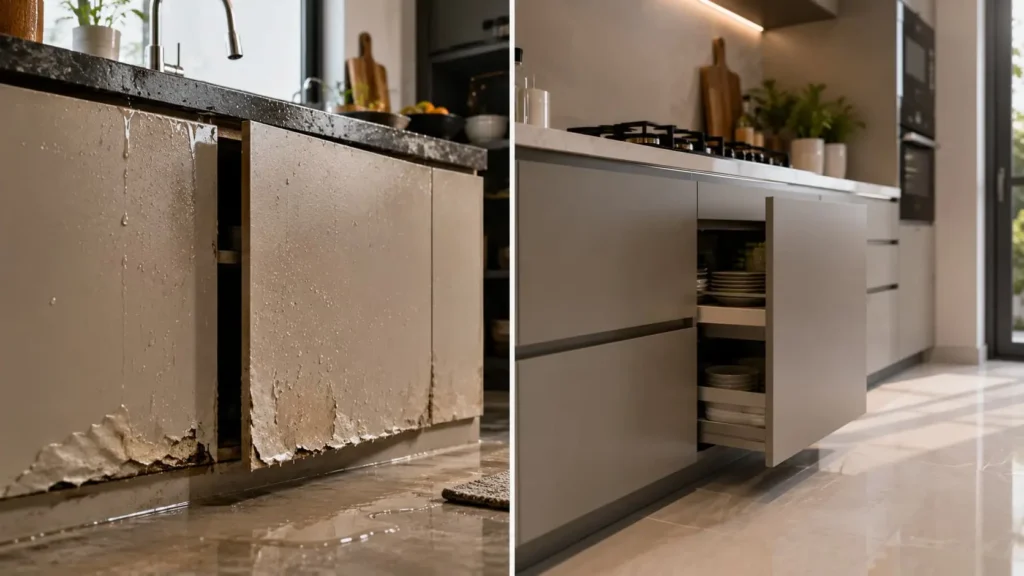
Many homeowners focus only on exterior design and ignore the internal material. Choosing the wrong board can reduce furniture life.
Avoid these mistakes:
- Selecting only based on price
- Using MDF in wet areas
- Ignoring thickness
- Choosing poor hardware
Expert Tips for Selecting Interior Materials
Professional designers often combine materials instead of using one board everywhere. This approach balances durability, appearance, and budget.
Recommended combination:
Area | Material |
Kitchen carcass | Waterproof plywood |
Kitchen shutters | HDHMR |
Decorative panels | MDF |
For Bangalore homes:
- Choose moisture-resistant boards.
- Seal edges properly.
- Use quality hardware.
Latest Interior Material Trends in 2026
Modern homeowners are focusing on durability, customised furniture, and smart space utilisation. Engineered boards continue to grow because they offer design flexibility and better performance.
Current trends include:
- Premium HDHMR furniture
- Custom furniture solutions
- Space-saving designs
- Sustainable materials
HDHMR vs MDF vs Plywood: Final Verdict
The best material depends on where it is used. MDF works well for decorative designs, HDHMR provides balanced durability and finish, while plywood remains the strongest option for heavy furniture.
Requirement | Best Choice |
Heavy furniture | Plywood |
Moisture areas | HDHMR / Waterproof plywood |
Premium furniture | HDHMR |
Decorative designs | MDF |
For most Bangalore homes, combining HDHMR, MDF, and plywood provides the best balance of performance, appearance, and cost.
Conclusion
Choosing between HDHMR vs MDF vs Plywood depends on understanding your furniture needs. MDF is ideal for decorative applications, HDHMR offers better durability with premium finishing, and plywood remaians the preferred choice for heavy-duty furniture.
Choosing the right materials is the foundation of a long-lasting home. If you’re planning a new home or renovation, explore our Interior Design Services to create customized interiors that combine quality materials, smart space planning, and expert craftsmanship.
FAQs
1. Which is better: HDHMR or plywood?
Plywood is stronger for heavy furniture, while HDHMR offers better finishing and moisture resistance compared to MDF.
2. What is the difference between MDF and HDHMR?
HDHMR has higher density, better strength, and improved moisture resistance compared to MDF.
3. Is HDHMR waterproof?
HDHMR is moisture-resistant but not completely waterproof.
4. Is MDF good for furniture?
MDF is suitable for decorative furniture, TV units, and painted designs.
5. Which plywood is best for modular kitchens?
BWP waterproof plywood is commonly preferred for kitchens.
6. Is HDHMR more expensive than MDF?
Yes, HDHMR generally costs more because of better durability.
7. Which is better for wardrobes: MDF or plywood?
HDHMR and plywood usually perform better because of stronger support.
8. What MDF thickness is best for furniture?
18mm MDF sheets are commonly used for furniture applications.