You paint a wall thinking it’ll look perfect, but once it dries, something feels slightly off. Too dull, too bright, or just not what you imagined. That moment is more common than people admit when choosing a wall colour combination for their homes.
Most Indian homeowners deal with the same confusion—lighting changes everything, furniture suddenly feels out of place, and Pinterest ideas don’t quite translate into real apartments. Especially in cities like Bangalore, where flats often have mixed lighting and compact rooms, these mistakes feel even more visible.
Below, you’ll find practical home colour combinations, room-wise ideas, and real-world guidance to help you pick colours that actually work in everyday Indian homes, not just design catalogues.
Why Choosing the Right Wall Colour Combination Matters in Indian Homes
The right wall paint colour combination can completely change how a room feels. In Indian homes, where room sizes vary and lighting isn’t always consistent, colours don’t behave the way they do in showroom images.
A small mismatch can make a room feel tighter, dull, or overly loud. On the other hand, a well-planned combination improves brightness, balance, and even how expensive your interiors feel.
Many homeowners in home interiors in Bangalore end up repainting within a year simply because the first choice didn’t suit their lighting or furniture.
How Indian Lighting Changes Colour Appearance
Indian homes rarely have uniform lighting. Morning sunlight feels soft and warm, but evening light—especially with yellow LED bulbs—completely shifts how interior wall colours appear.
A soft grey might look elegant in daylight but slightly bluish at night. Similarly, beige tones can turn warmer than expected under artificial lighting.
In many apartment interiors, especially in Bangalore, side-facing flats get uneven light. That’s why testing paint samples on multiple walls is always better than trusting a colour chart.
Why Furniture Colours Matter More Than Paint Trends
Walls don’t exist alone—they sit right next to your furniture. And in Indian homes, teak, walnut, and cane furniture are extremely common.
A trendy colour might look great online, but if it clashes with your wooden sofa or wardrobe, the whole room feels off.
Instead of chasing trends, it’s better to build a home colour combination that balances:
- wood tones
- floor colour
- natural light
- wall shade
That’s what actually makes a room feel complete.
Top 10 Wall Colour Combination Ideas for 2026 Homes
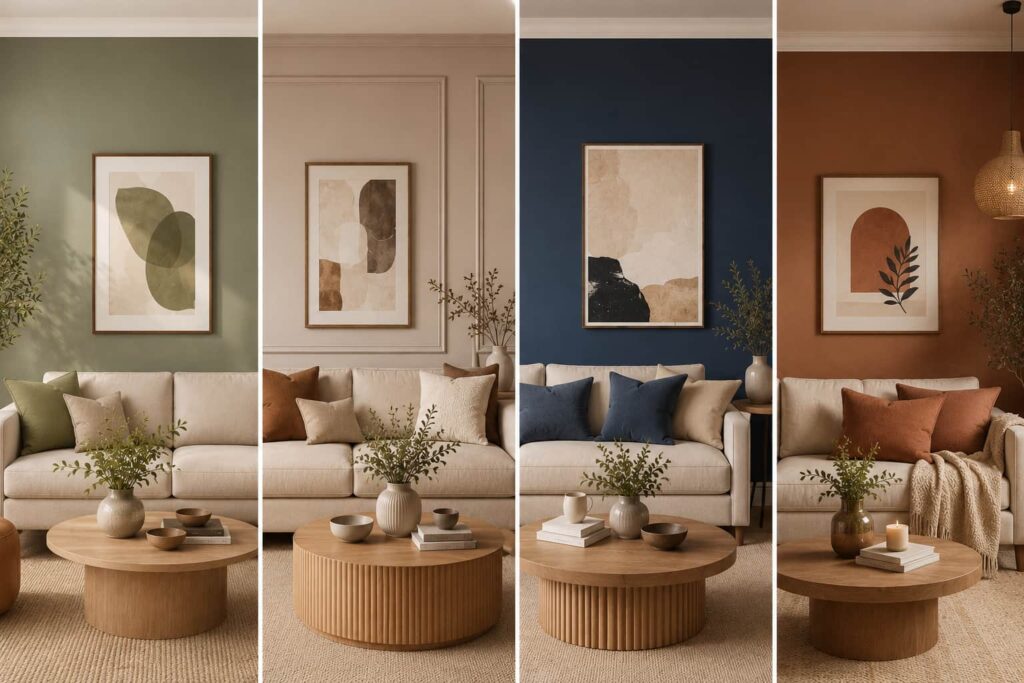
1. Warm White + Olive Green
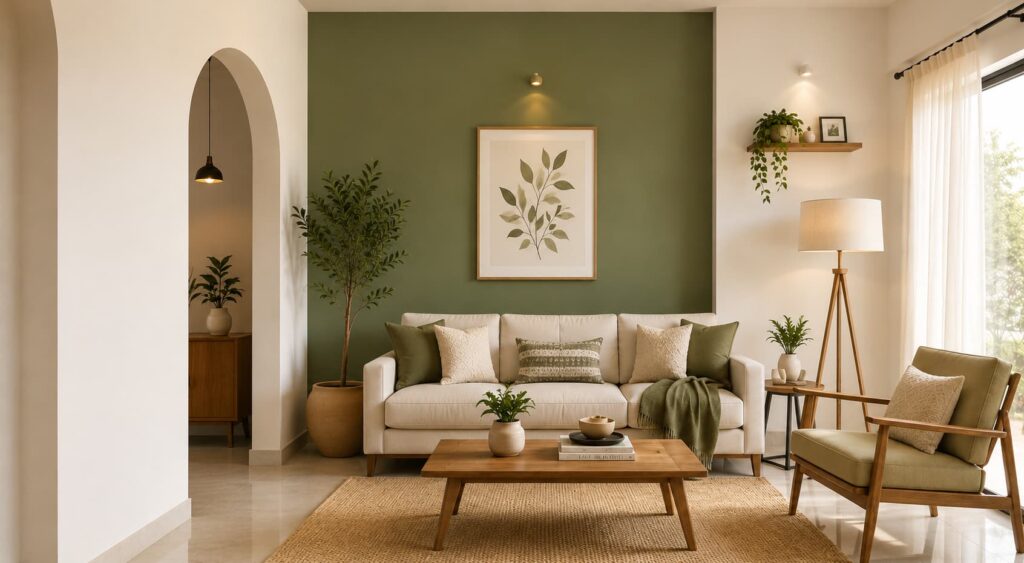
This combination feels calm without being boring. Warm white keeps the room open, while olive green adds depth without overpowering the space. It works especially well in living rooms with natural light and simple wooden furniture.
For modern Indian homes, this is one of the most reliable wall colour combination for living room ideas because it stays fresh for years without feeling outdated.
2. Beige + Terracotta
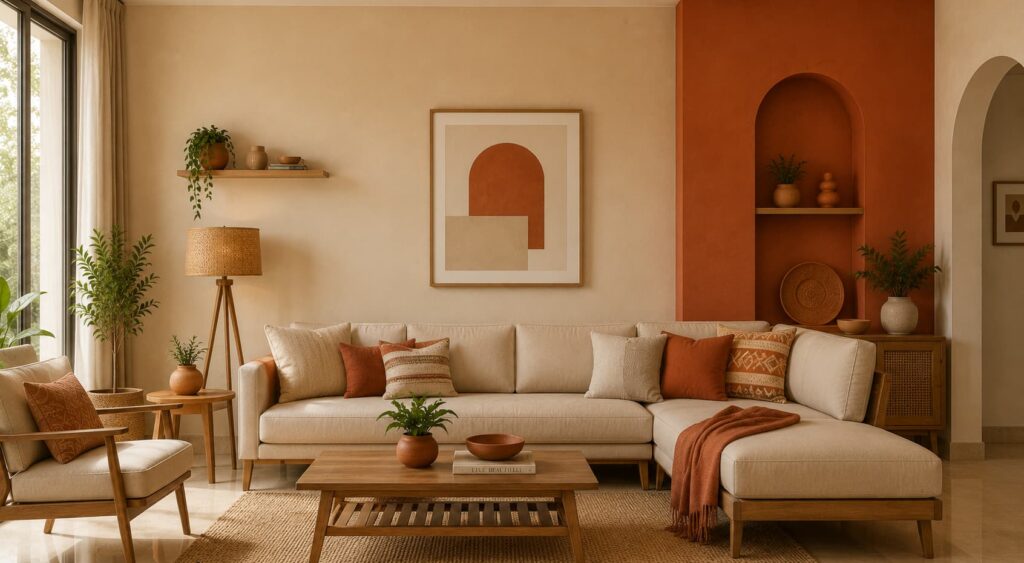
Beige and terracotta together bring a grounded, earthy feel. It’s slightly traditional but still modern enough for 2026 interiors.
This pairing works beautifully with teak wood furniture and is often seen in Indian homes where warmth is preferred over sharp contrast. It’s one of those house painting colour combinations that feels instantly welcoming.
3. Grey + Mustard Yellow
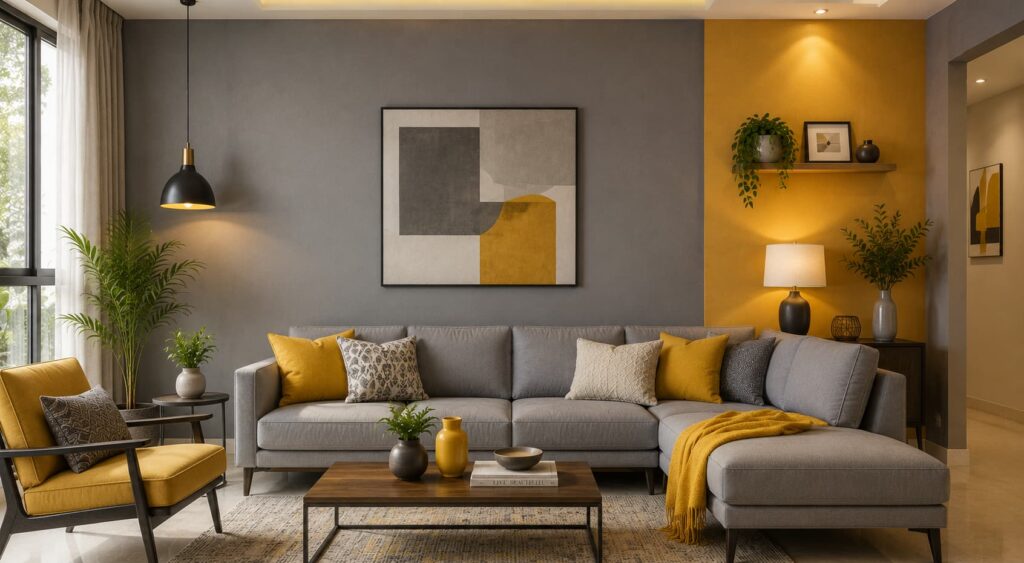
Grey gives structure, while mustard yellow brings personality. This combination works well as an accent wall setup in urban apartments.
It’s a strong example of a two colour combination for walls that balances neutral and bold tones without feeling chaotic.
4. Sky Blue + White
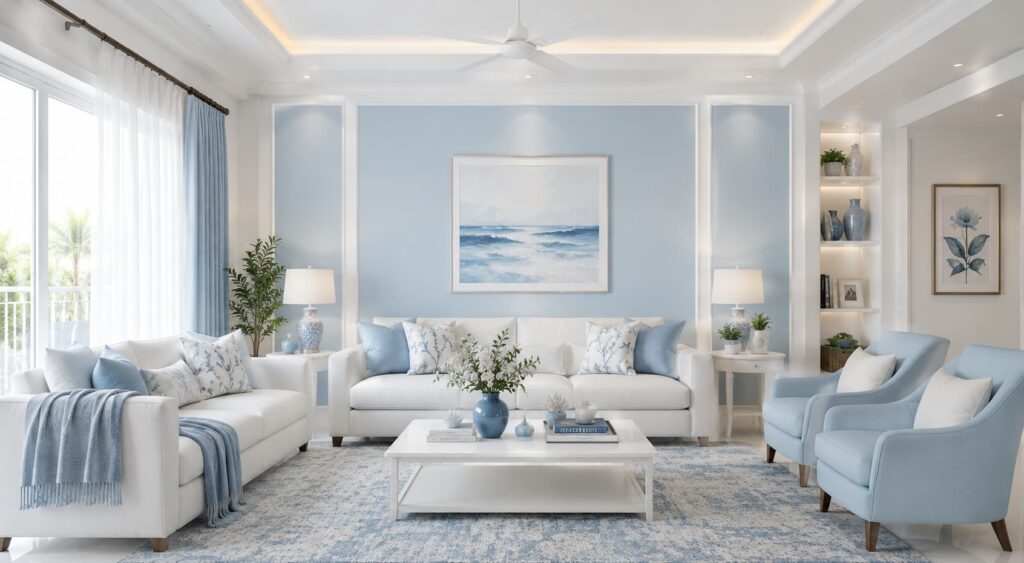
Simple, clean, and visually expanding. This combination is especially good for compact bedrooms where space feels limited.
It enhances brightness and gives a soft, airy feel, making it a strong choice for wall colour combination for bedroom ideas in small flats.
5. Peach + Soft Brown
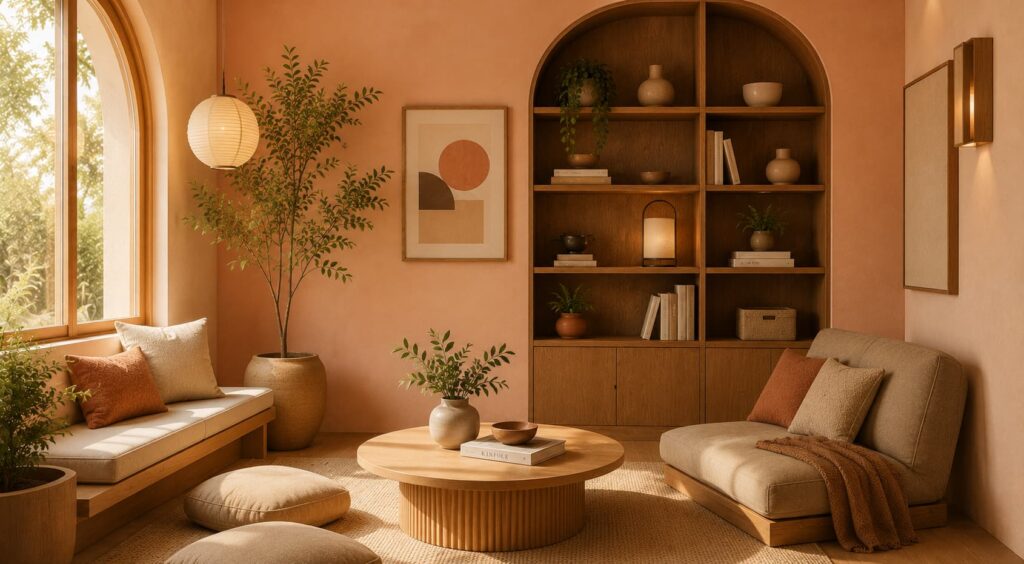
This combination creates a warm and friendly atmosphere, perfect for living rooms or informal seating areas.
It doesn’t shout for attention but still adds personality, especially in homes where neutral tones dominate.
6. Navy Blue + Light Grey
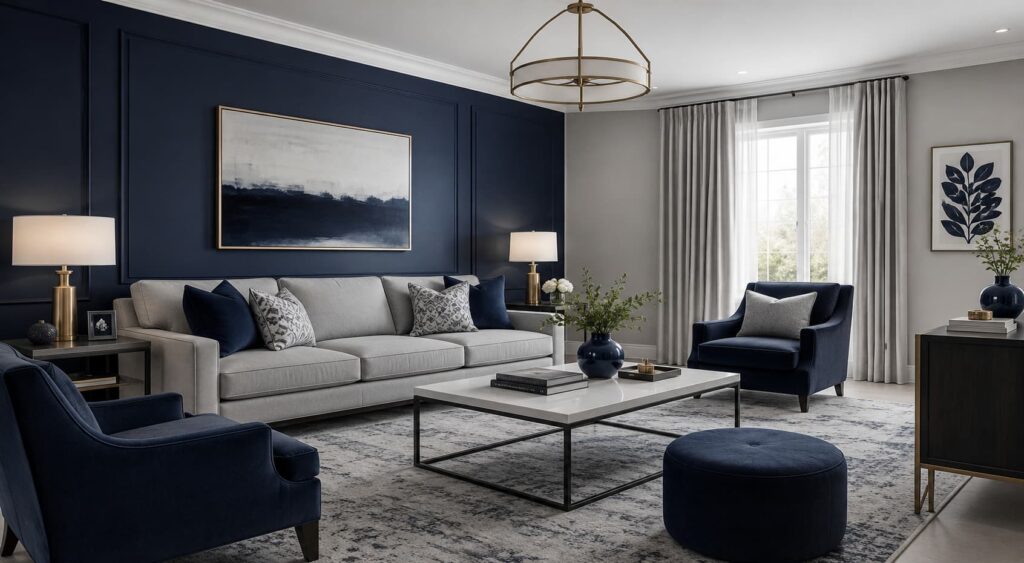
A slightly premium combination that works well in modern apartments. Navy adds depth, while light grey keeps things balanced.
Use it carefully in rooms with good lighting to avoid making the space feel too heavy.
7. Sage Green + Cream
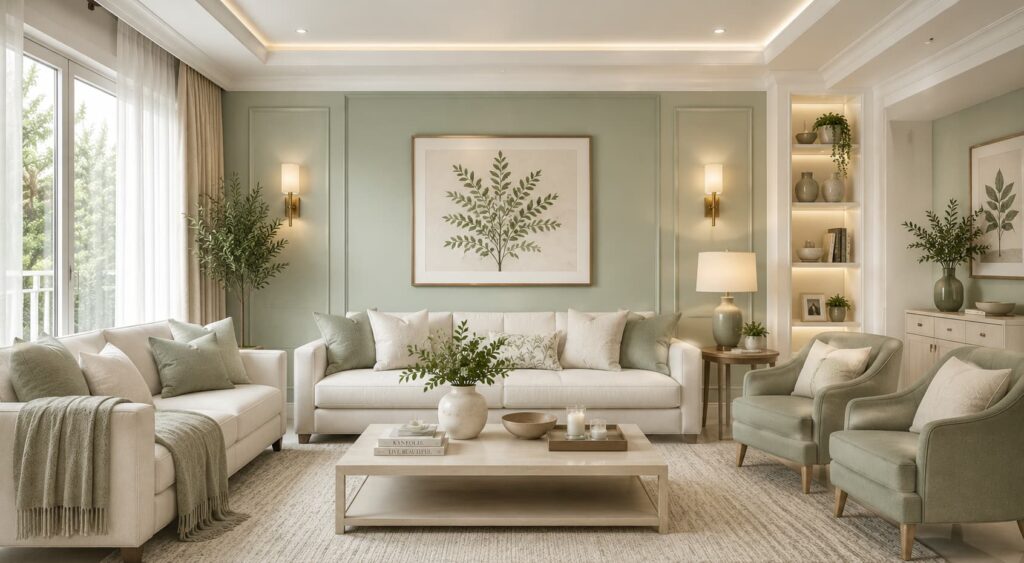
One of the most trending latest wall colour combination choices for 2026. It feels fresh, calming, and very natural.
This combination is widely used in modern Indian apartments because it works well with both wooden and white furniture.
8. Lavender + Off White
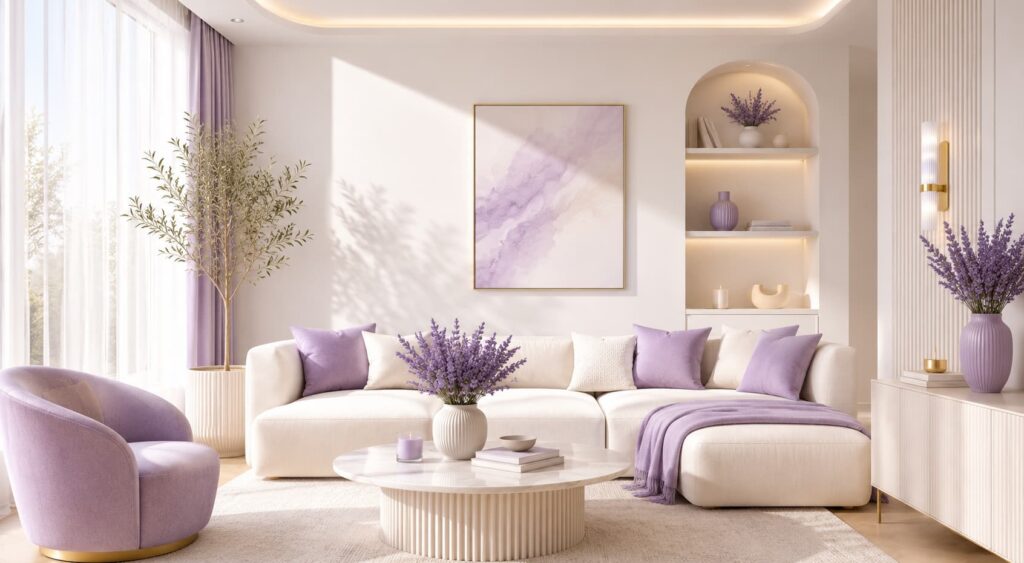
Soft and calming, especially for bedrooms. Lavender adds a subtle personality without overwhelming the space.
It works best in rooms where relaxation is the priority.
9. Charcoal + Wood Brown
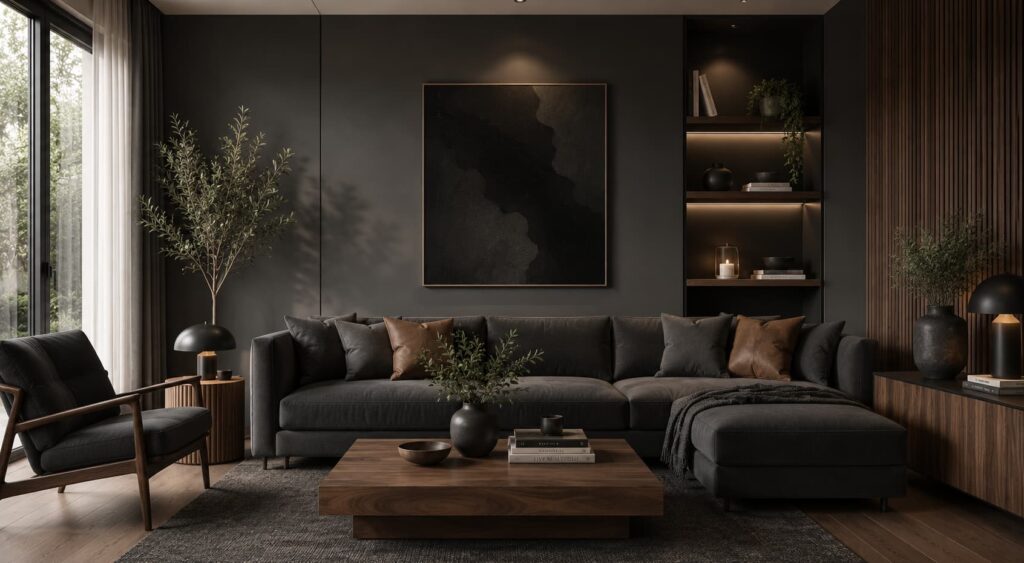
A bold accent wall idea. Charcoal brings drama, while wood brown keeps it grounded.
This is not for full-room use but works great for feature walls in living rooms or study areas.
10. Pastel Pink + Beige
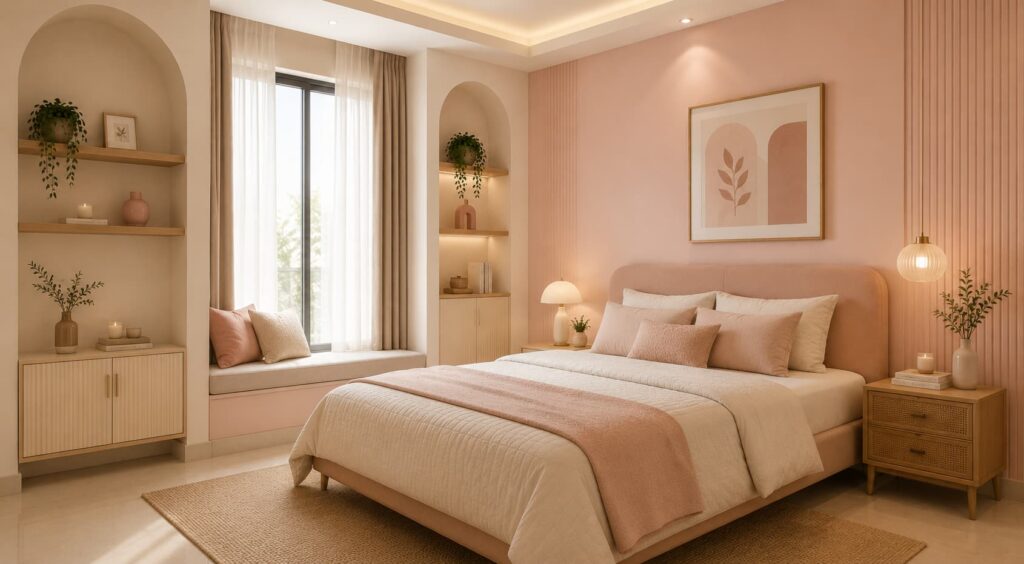
A soft modern aesthetic that feels light and balanced. It works surprisingly well in compact urban homes where you want subtle warmth without going too bright.
Wall Colour Combination for Living Room
Living rooms carry the most visual weight in a home. The ideal wall colour combination for living room should balance warmth and openness.
Avoid making all walls dark. Instead, choose a neutral base like beige or warm white and add one accent wall if needed. This keeps the room inviting without making it feel smaller.
In Indian apartments, especially in Bangalore, natural light varies a lot, so flexible tones work better than fixed bold choices.
Wall Colour Combination for Bedroom
Bedrooms need calmness more than style pressure. Soft tones like sky blue, lavender, or muted greens help reduce visual noise.
A good wall colour combination for bedroom should avoid strong contrasts that can feel stimulating at night. Light colours also help reflect limited indoor lighting, making the room feel more spacious.
Wall Colour Combination for Hall in Apartments
Halls in Indian apartments are usually compact and multi-functional. The safest approach is light tones like warm white or cream paired with a subtle accent.
A balanced wall colour combination for hall helps create openness while still giving character to the space. Overusing dark shades here can make the entrance feel cramped.
Common Mistakes People Make While Choosing Wall Colours
Most repaint regrets come from simple mistakes:
- Choosing colours from screens without testing on walls
- Ignoring how natural and artificial lighting changes shades
- Copying Pinterest designs without checking room size
- Overusing dark colours in small apartments
- Not considering furniture colour harmony
A wall paint colour combination should always be tested physically before final commitment, especially in Indian lighting conditions, because many people only realise the real impact much later when they start living with the colour every day.
Why most people regret their wall colour choice after 6 months
Most people don’t notice it at first, but wall colours feel different once you start living with them. What looks fresh on day one slowly becomes normal, and small issues begin to show.
Lighting plays a big role—morning sunlight, evening light, and yellow LEDs can completely change how a shade looks. A colour that felt perfect in the shop may feel slightly off at home.
Furniture also affects the final look. Once sofas, curtains, and wardrobes come in, the walls may not blend as expected, making the room feel a bit unbalanced.
And often, trendy colours lose their charm over time, making people wish they had tested the shade longer before finalising.
Expert Recommendations for Indian Homes
Interior designers often suggest keeping things simple: fewer colours, better balance.
For Indian homes:
- Stick to 2–3 colour tones per space
- Always test paint under both daylight and night lighting
- Use accent walls instead of full bold rooms
- Prioritise natural lighting over trend-based shades
In cities like Bangalore, where interior wall colours behave differently due to apartment layouts, this approach prevents costly repainting mistakes.
Visual Guide to Choosing Wall Colour Combinations
Before finalising colours, visualising them helps a lot. Useful methods include:
- Before-after room comparisons
- Lighting change mockups (day vs night)
- Colour mood boards using furniture samples
- Accent wall placement sketches
These help you understand how your chosen combination will behave in real spaces, not just on paper.
How Interior Designers in Bangalore Approach Wall Colour Selection
Interior designers in Bangalore don’t pick colours based on trends alone. They study:
- room orientation
- sunlight exposure
- apartment layout
- furniture finish
This ensures the home interiors in Bangalore feel balanced even in compact spaces. The goal is not just beauty, but long-term comfort and practicality.
Comparison Tables
Light vs Dark Wall Colours
Facto | Light Colours | Dark Colours |
Space feel | Expands room | Makes room compact |
Mood | Calm & airy | Bold & dramatic |
Best use | Small rooms | Accent walls |
Living Room vs Bedroom Colours
Room | Ideal Tone | Avoid |
Living Room | Warm neutrals | Fully dark shades |
Bedroom | Soft cool tones | High contrast combos |
Summary Table
Room | Best Colour Combination | Effect |
Living Room | Beige + Terracotta | Warm & welcoming |
Bedroom | Sky Blue + White | Calm & restful |
Hall | Warm White + Olive | Spacious feel |
Conclusion
A good wall colour combination isn’t about trends—it’s about how your home actually feels when you live in it every day. Lighting, furniture, and room size all play a bigger role than most people expect.
Instead of rushing into bold choices, test colours in real conditions and keep combinations simple. In most Indian homes, especially apartments, balanced tones always age better than flashy ones.
If you choose thoughtfully, your walls won’t just look good—they’ll quietly improve how your entire home feels.
FAQs
What is the best wall colour combination for small rooms?
Light shades like white, cream, or soft blue work best because they reflect light and make rooms feel larger.
Which wall colours make a room look bigger?
Soft neutrals and pastel tones create an open, airy effect by improving light reflection.
What is the latest wall colour trend in 2026?
Earthy tones like sage green, terracotta, and warm beige are trending for modern Indian homes.
How do I choose two colour combination for walls?
Pick one neutral base and one accent shade that complements furniture and lighting.
Which colour is best for bedroom walls?
Soft colours like lavender, sky blue, and muted green help create a calming environment.
Can dark colours work in Indian apartments?
Yes, but only as accent walls. Full dark rooms can feel smaller in low-light apartments.