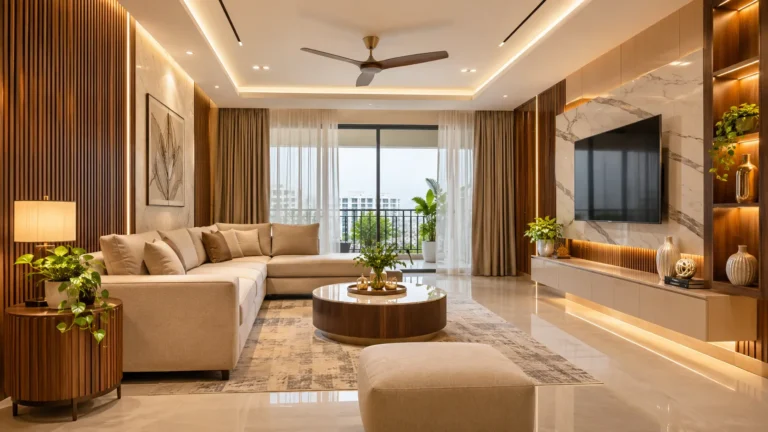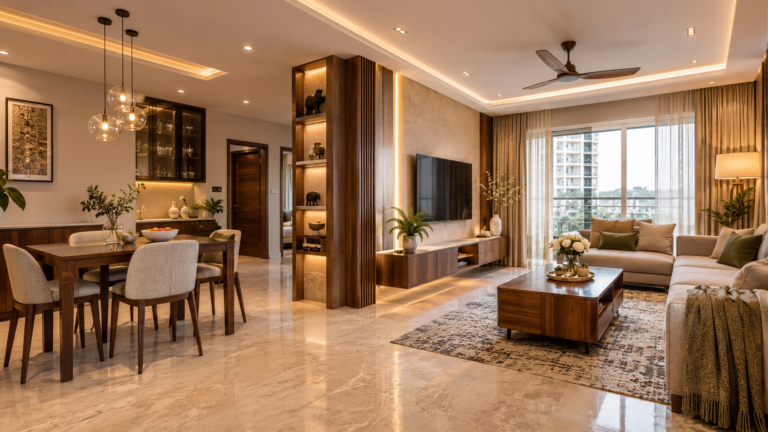
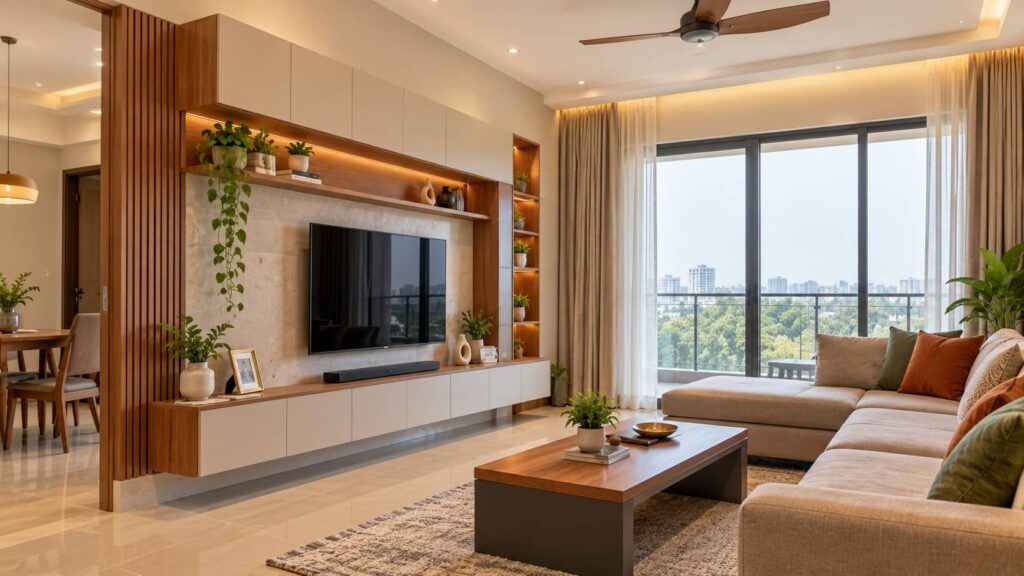
Planning your home interiors involves more than choosing colours, finishes, and furniture designs. The way your furniture is manufactured can also affect its appearance, installation time, maintenance, and long-term value. Factory-manufactured interiors offer machine-cut precision, consistent finishes, and a more organised installation process, making them a practical choice for many modern homes. Traditional carpentry, however, still has advantages when a space requires unusual dimensions or detailed custom work. Understanding the difference between these approaches helps homeowners in Bengaluru make informed decisions, compare quotations fairly, and choose furniture that suits their space, budget, and everyday needs.
What Are Factory-Manufactured Interiors?
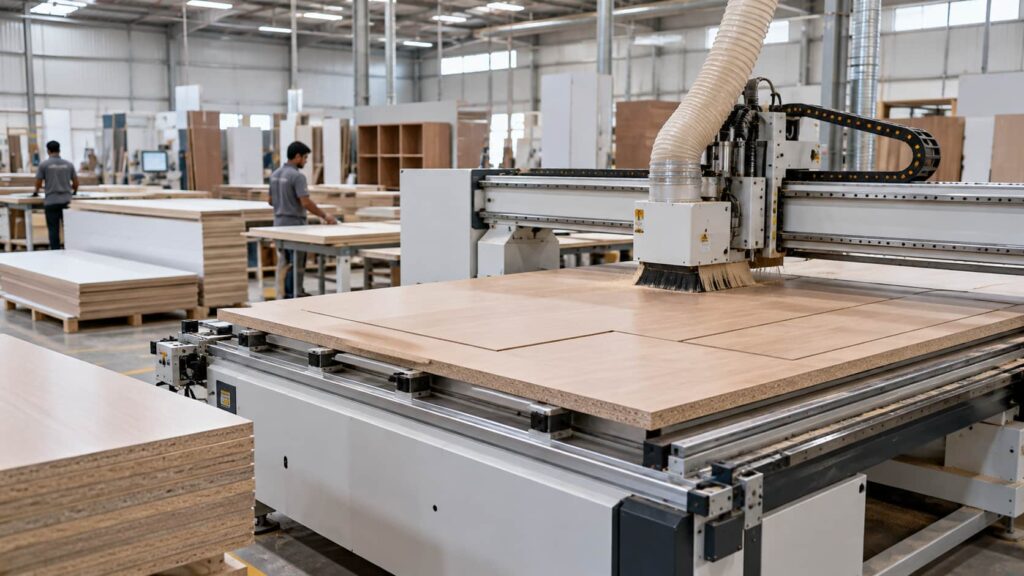
Factory-manufactured interiors are furniture and interior components produced in a factory using measured designs, specialised machinery, and defined manufacturing processes. Components such as kitchen cabinets, wardrobes, storage units, and TV units are prepared before being transported to the home for installation.
Unlike furniture built entirely at the site, factory-made units can undergo cutting, drilling, edge banding, and finishing in a controlled environment. This helps maintain consistency across multiple units, particularly when several rooms need similar finishes and fittings.
For homeowners, the main advantage is predictability. Measurements, materials, hardware, and finishes can be finalized before production begins. The final result still depends on the manufacturer’s workmanship, material selection, installation quality, and the accuracy of the approved design.
Why Is Factory-Made Furniture a Practical Choice for Modern Homes?
Modern homes often need furniture that makes efficient use of available space without creating unnecessary disruption during installation. Factory-made furniture addresses these needs through planned production and coordinated fitting.
Consistent Finishing and Better Precision
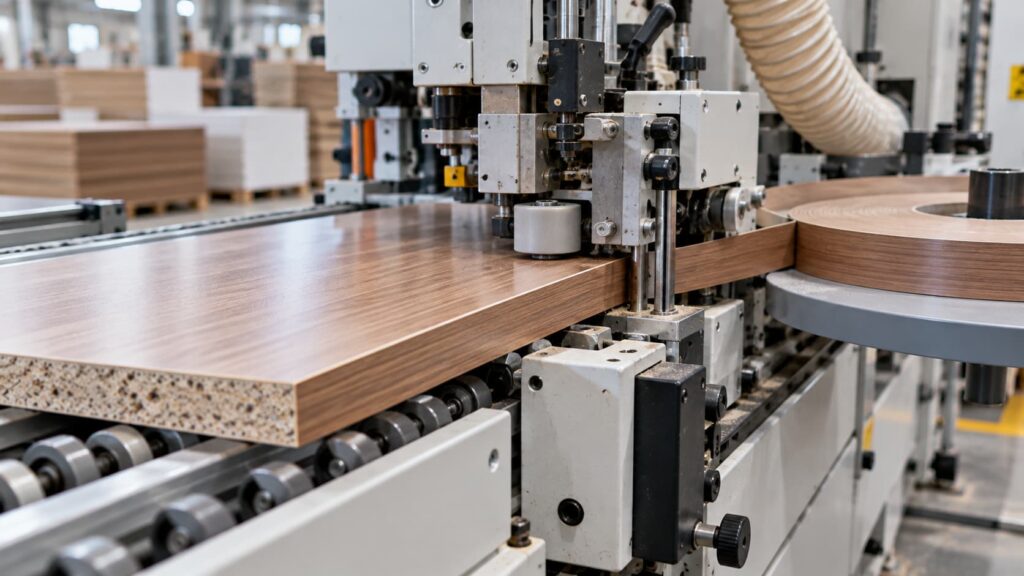
One of the main benefits of factory-made interiors is the consistency of the finished components. Machine cutting helps produce uniform dimensions, while professional edge banding creates cleaner edges and helps protect exposed board surfaces when applied correctly.
These details matter in modular kitchens, wardrobes, and storage cabinets, where doors, drawers, and adjoining panels need to align properly. Factory production can also help maintain a consistent colour and finish across different furniture units. Before choosing a surface material, compare laminate vs veneer vs acrylic finishes to understand how the options differ in appearance, maintenance and cost.
However, factory production does not automatically guarantee superior quality. Poor materials, incorrect measurements, unsuitable adhesives, or improper installation can still cause problems. Good manufacturing standards and careful quality checks are essential.
Faster and More Organised Installation
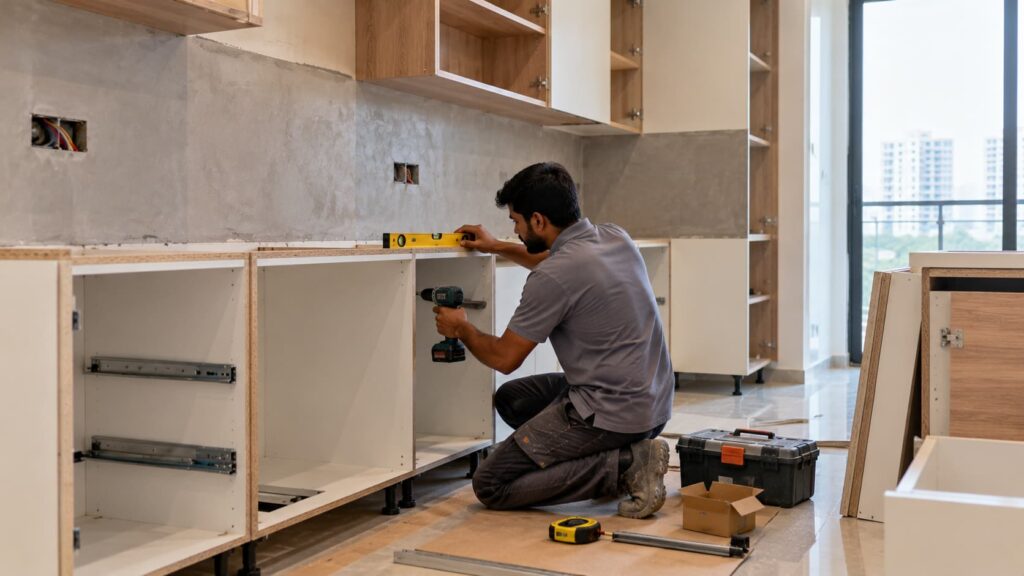
Traditional carpentry involves several activities at the property, including cutting, assembly, fitting, and finishing. Factory-made components allow much of this work to be completed before the furniture reaches the home.
Once the site is ready and the measurements are confirmed, installation can often be completed with less cutting and finishing work inside the property. This can be particularly helpful for apartment owners who want to reduce dust, noise, and disruption to other household activities.
The overall project timeline still depends on design approvals, material availability, manufacturing schedules, transportation, and site readiness. Factory production makes installation more organised, but it cannot eliminate every possible delay.
Factory-Made Furniture vs Traditional Carpentry: Key Differences
| Comparison Factor | Factory-Made Furniture | Traditional Carpentry |
|---|---|---|
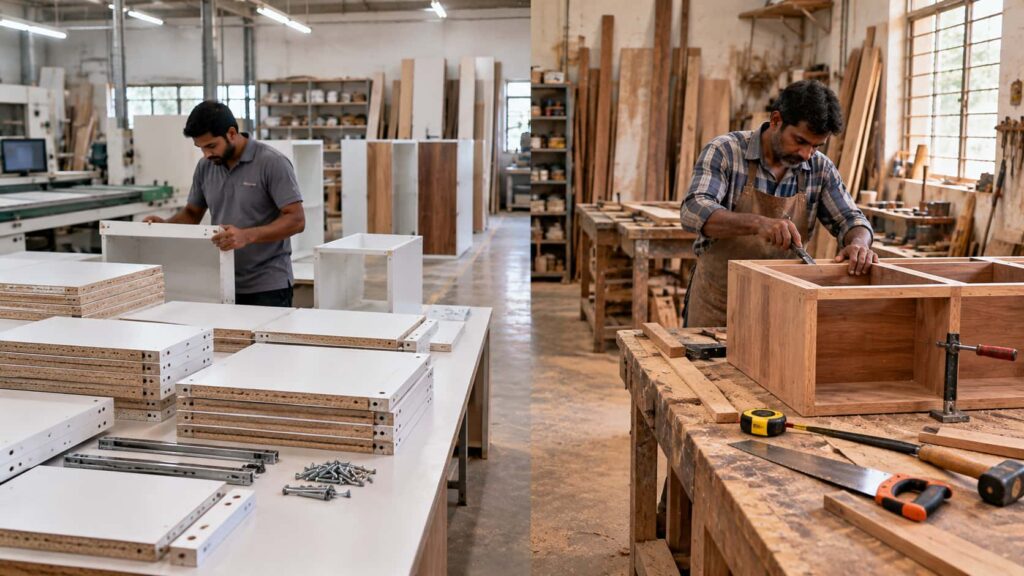
| Manufacturing | Components are prepared in a factory | Furniture is built at the site or in a local workshop |
| Finishing | Machine-assisted, consistent finishing is possible | Quality depends on materials, tools, and workmanship |
| Installation | Usually involves fitting prepared components | May involve cutting, assembly, and finishing at home |
| Customisation | Flexible within the manufacturer’s system | Often easier to modify during construction |
| Site Disruption | Generally less cutting and dust at home | More noise, dust, and activity may occur |
| Cost | Depends on materials, hardware, design, and service | Depends on materials, labour, complexity, and workmanship |
| Repairs | Replacement parts may be available through the manufacturer | Local alterations may be easier to arrange |
| Quality Control | Can follow documented production checks | Depends on the carpenter’s process and supervision |
This comparison highlights typical differences, not guaranteed outcomes. Skilled carpenters can deliver excellent finishes, and poorly manufactured modular furniture can disappoint. The specifications and quality of execution matter as much as the production method.
Factory-made interiors vs carpentry: Which offers better value?
When comparing Factory-made interiors vs carpentry, avoid choosing solely on the initial quotation. A lower price may exclude premium hardware, internal accessories, finishing work, or installation. Similarly, a factory-made package may include features that your home does not actually need.
Request quotations that specify the board material and thickness, surface finish, hardware brand, accessories, installation charges, warranty terms, and any additional work. For a broader budget comparison, review this guide to interior design cost in Bangalore in 2026 before finalising your project. Comparing these details gives you a clearer picture of what you are paying for.
For a complete home interior, factory manufacturing can make it easier to coordinate wardrobes, kitchen cabinets, and storage units. Traditional carpentry may offer better value for a simple, one-off piece or a design that requires extensive adjustments on site.
Understanding the Modular Furniture Manufacturing Process
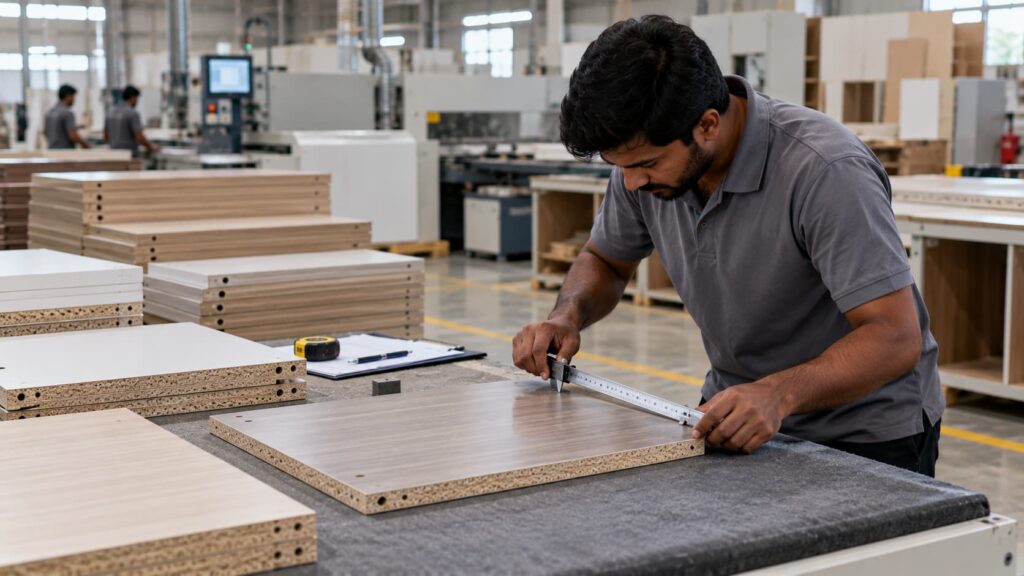
The Modular furniture manufacturing process starts with planning and ends with installation. Each stage influences the fit, appearance, and usability of the finished furniture.
Design, Measurements, and Material Selection
The process begins with measuring the available space and preparing a layout. The design must account for wall dimensions, electrical points, plumbing, appliance sizes, door movement, and everyday storage requirements.
Once the design is approved, the manufacturer selects suitable boards, finishes, and hardware. This stage is important because material choices affect strength, moisture resistance, maintenance, and cost. Changes after production starts can also be more complicated than changes made during the design stage.
Machine Cutting, Edge Banding, and Quality Checks
The approved design is translated into component measurements. Factory machinery cuts the boards, drills the required holes, and prepares the pieces for assembly. Edge banding covers exposed edges and, when properly applied, helps protect them from moisture and everyday wear. Learning about the types of edge banding for furniture interiors can help homeowners understand the finishing options available for cabinet panels and furniture components.
Components can then be checked for dimensions, finish defects, and compatibility with the specified fittings. Depending on the manufacturer, furniture may be assembled partly in the factory or delivered as individual components for site assembly.
Transportation and Installation
The finished components are transported to the property and installed according to the approved layout. Installers level the units, align doors and drawers, secure cabinets where required, and check that fittings operate correctly.
A final inspection should cover panel alignment, edge finishing, drawer movement, door clearances, and any visible damage from transportation or installation. Homeowners should also receive the relevant warranty and maintenance information.
What Are the Benefits of Modular Furniture?
The benefits of modular furniture extend beyond appearance. A well-planned modular system can make everyday storage more practical while keeping the overall design consistent.
Better Space Planning and Storage
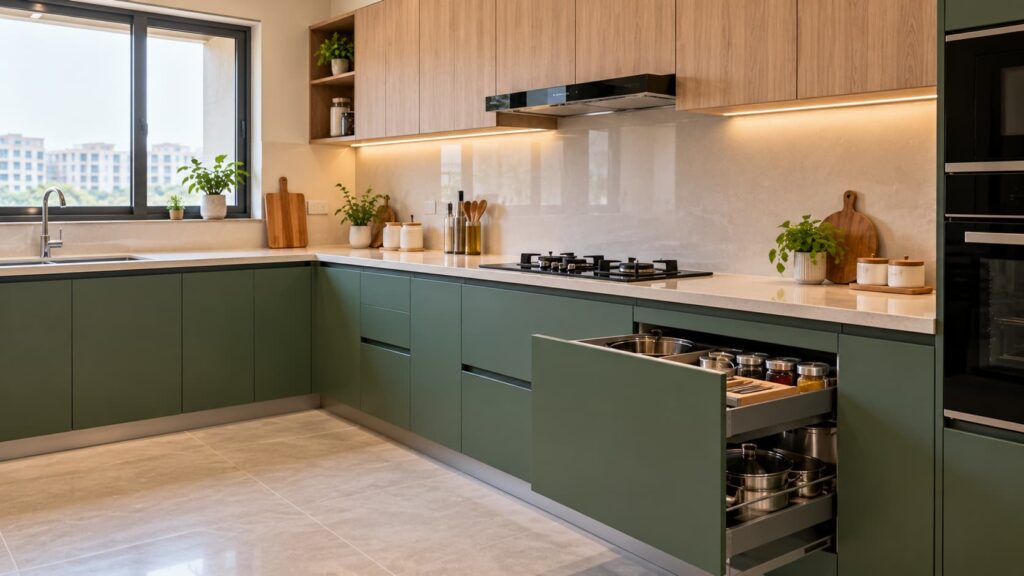
Modular furniture can be designed around specific storage needs, such as hanging space in wardrobes, drawers for smaller items, pull-out kitchen organisers, and overhead cabinets. This is useful in Bengaluru apartments, where every part of the available floor area may need to serve a purpose. Following practical interior design tips for compact homes can help homeowners balance storage, movement and everyday functionality.
The key is to plan around actual usage rather than filling every available space with cabinets. Door openings, walking clearance, ventilation, appliance access, and convenient reach should all influence the design.
Consistent Design Across Different Rooms
Factory production makes it easier to coordinate finishes, panel dimensions, and hardware across multiple rooms. For example, the same finish family can be used for wardrobe shutters, kitchen cabinetry, and selected living room storage to create a more unified appearance.
This does not mean every room needs identical furniture. Different storage layouts and finishes can still be used while maintaining a consistent overall design.
Easier Planning and Potentially Less Site Disruption
Because components are prepared before installation, homeowners can finalise important design decisions earlier. This reduces the amount of manufacturing work that needs to happen inside the house and can make coordination with other interior activities easier.
However, the installation team still needs a properly prepared site. Uneven walls, incomplete electrical work, plumbing changes, or inaccurate measurements can create delays regardless of how the furniture was manufactured.
How Does Modular Furniture Quality Affect Durability?
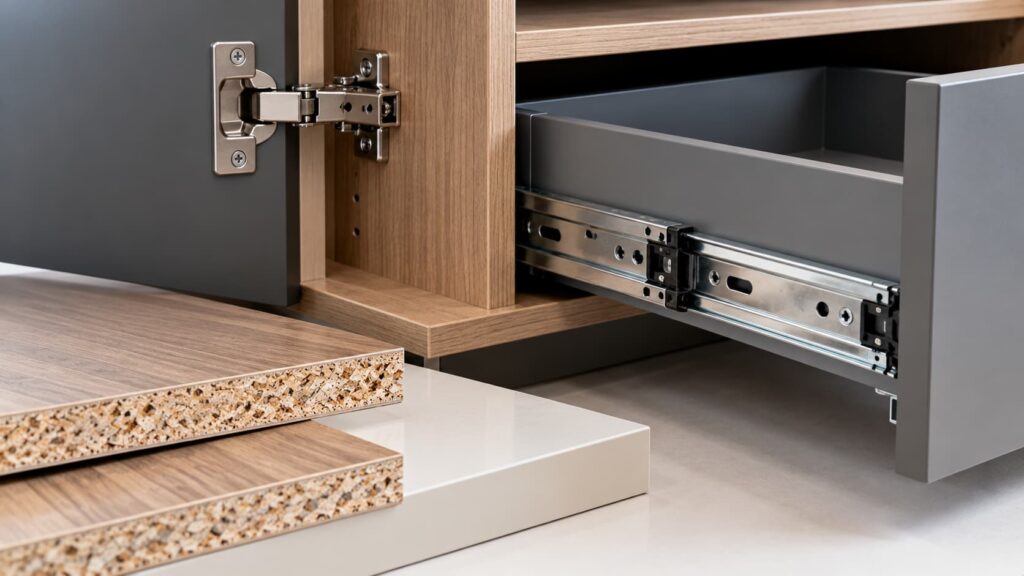
Modular furniture quality depends on several factors, including the core board, surface finish, edge treatment, hardware, assembly, and installation. Understanding how to choose the best wood for furniture can also help homeowners compare material options before finalising their designs. The manufacturing method alone does not determine how long a wardrobe or kitchen will last.
For example, moisture exposure can damage unsuitable boards, while poorly fitted hinges may cause doors to sag or become misaligned. Weak drawer channels can affect everyday usability, and inadequately sealed edges can allow moisture to enter exposed board material.
Before approving a design, ask the provider to specify the board type and thickness, the finish being used, and the brands or grades of hinges and drawer channels. Confirm that the quoted materials match the final installation and that the warranty explains what is covered.
For material selection, Woodlab Interiors has relevant guides on marine plywood vs commercial plywood and HDHMR vs MDF vs plywood. These can help you understand material differences before finalising your furniture specifications.
When Should You Choose Factory-Made Furniture for Your Home?
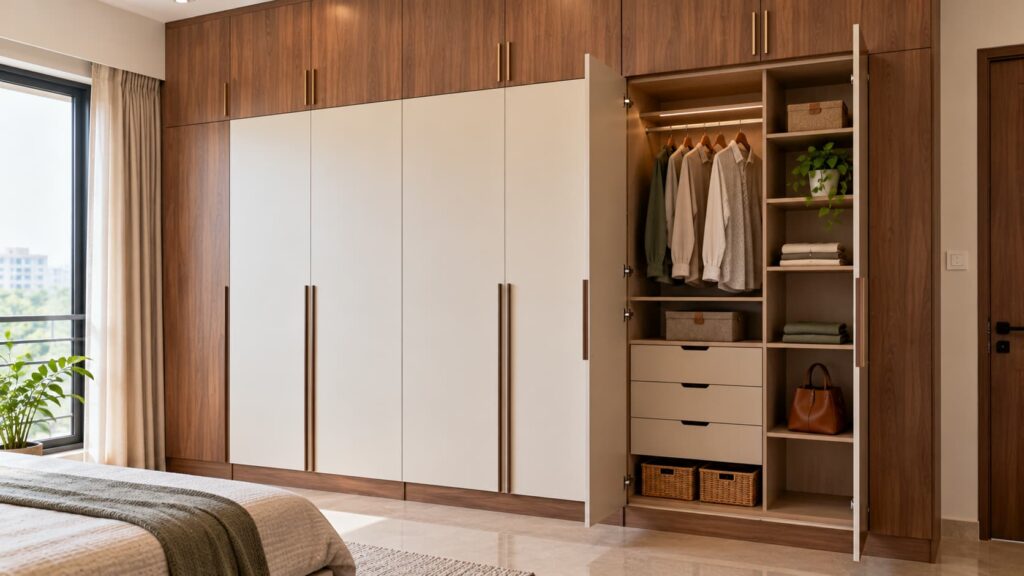
Factory-made furniture for home interiors is particularly useful when you need coordinated storage, predictable finishing, and an organised installation process. It is often a practical choice for modular kitchens, fitted wardrobes, and multi-room storage systems.
Modular Kitchens and Wardrobes
Kitchens and wardrobes contain multiple components that must work together. Cabinets, drawers, shutters, hinges, and internal accessories need accurate measurements and compatible fittings. Factory production helps standardise these components and simplifies the process of creating a consistent layout.
If you are planning a kitchen, explore Woodlab Interiors’ modular kitchen interior design services. For bedroom storage, the wardrobe interior design page offers a relevant starting point.
Custom-Made Modular Furniture for Specific Needs
Custom-made modular furniture combines planned factory production with choices suited to your home. You may be able to select cabinet dimensions, finishes, storage configurations, and hardware within the manufacturer’s available system.
This approach can work well when you want furniture tailored to your requirements without manufacturing every component manually at the property. However, unusual corners, curved surfaces, and non-standard structural features may require filler panels, special fabrication, or additional on-site work.
Factory-Finished Furniture for Homes With Limited Space
Factory-finished furniture for homes can be useful when you want storage that fits a carefully planned layout while maintaining a consistent finish. For compact bedrooms, for example, a fitted wardrobe with a practical internal layout may provide better everyday usability than a larger unit designed without considering access and circulation.
The best result comes from balancing storage capacity with comfortable movement, ventilation, and ease of maintenance.
When Is Traditional Carpentry the Better Option?
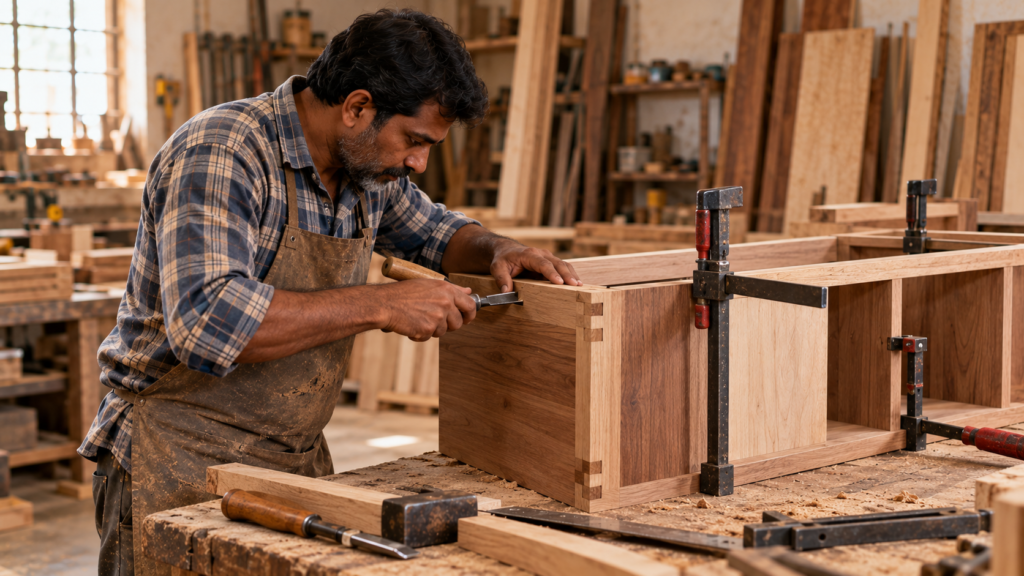
Factory manufacturing has clear practical advantages, but traditional carpentry remains valuable when flexibility and individual craftsmanship matter more than standardised production.
Irregular Spaces and Last-Minute Adjustments
Older houses and renovated properties may have uneven walls, unusual corners, sloping ceilings, or structural features that complicate standard cabinet installation. A skilled carpenter can adapt measurements and construction details directly to these conditions.
Traditional carpentry is also useful when decisions may change during construction. Adjusting a shelf or modifying a built-in unit can be more straightforward before the work is completed, whereas factory-made components may need to be reordered if the approved specifications change.
Bespoke Furniture and Detailed Woodwork
Handcrafted furniture, decorative woodwork, and one-of-a-kind pieces may require techniques that are not suited to a standard modular system. A carpenter with the appropriate skills can create individual designs using specified materials and traditional joinery methods.
The important point is that Traditional carpentry vs modular furniture is not a contest with one winner for every situation. The better choice depends on the complexity of the design, the available budget, the required finish, and how much flexibility you need during construction.
What Should Homeowners Check Before Choosing?
Before deciding between the two methods, compare the complete specifications rather than relying on attractive designs or broad claims about quality.
Ask the interior designer or manufacturer to explain the materials, hardware, manufacturing arrangements, installation responsibilities, and warranty conditions. If possible, inspect a finished sample or completed project to understand the actual quality of the edges, joints, shutters, and fittings.
Also clarify how the team handles measurement errors, damaged components, replacement parts, and repairs after installation. A written quotation should distinguish included work from exclusions so that additional charges are easier to anticipate.
For a broader understanding of the planning stage, read Woodlab Interiors’ home interior design process guide. You can also review the custom furniture vs ready-made furniture comparison when deciding how much customisation your project requires.
Conclusion
Factory-finished interiors offer a practical combination of consistent finishing, planned manufacturing, and organised installation, making them a strong option for many modern homes. The Benefits of factory-made interiors are particularly relevant for kitchens, wardrobes, and coordinated storage systems. However, traditional carpentry remains useful for unusual spaces, detailed woodwork, and designs that require frequent adjustments. Neither approach guarantees durability or lower costs on its own. Material quality, hardware, workmanship, and installation all matter. If you are planning a home in Bengaluru, compare detailed specifications and choose the method that best suits your layout, budget, and everyday needs.
Planning your home interiors? Explore Woodlab Interiors’ residential interior design services to discuss furniture layouts, finishes, and storage solutions for your home.
Frequently asked questions
Is factory-made furniture better than traditional carpentry?
Factory-made furniture can offer consistent dimensions, controlled finishing and a more organised installation process. Traditional carpentry can be more flexible for unusual spaces and detailed custom work. The better option depends on the materials, workmanship, design and your requirements.
Is factory-made furniture cheaper than carpenter-made furniture?
Not always. The total cost depends on the materials, hardware, design complexity, labour, finishing and installation. Compare itemised quotations to understand what each option includes before deciding.
Does factory-made furniture last longer?
Not necessarily. Durability depends on the board material, surface finish, edge sealing, hardware, assembly and installation quality. Well-made furniture from either method can last when suitable materials are used and maintained properly.
What is the difference between factory-made and modular furniture?
Factory-made furniture describes where and how furniture is manufactured. Modular furniture consists of components designed to fit together in a planned system. Modular furniture is often factory-made, but the terms do not mean exactly the same thing.
What should I check before choosing factory-made furniture?
Check the board type and thickness, surface finish, hardware specifications, edge treatment, installation charges, warranty coverage and replacement-part arrangements. Request a detailed written quotation and review samples or completed projects where possible.
Can I combine factory-made furniture with traditional carpentry?
Yes. A combined approach can work well—for example, using factory-made kitchen cabinets and wardrobes while commissioning a carpenter for a specialised shelf, decorative woodwork or an unusual built-in feature.