A pooja room is more than just a corner in your home—it is the spiritual heart that influences peace, focus, and positive energy in daily life. Yet many homeowners struggle with choosing the right pooja room design ideas that balance Vastu principles, modern interiors, and space limitations.
The challenge is clear: apartments today have less space, design styles are more modern, and Vastu rules often feel confusing or outdated.
This guide solves that problem by giving you practical, visually inspired, and Vastu-aligned pooja room design ideas that work for Indian homes in 2026. You’ll learn how to choose layouts, materials, lighting, and placements that enhance both beauty and spiritual energy—whether you live in a compact apartment or a spacious villa.
A well-designed pooja room should also blend seamlessly with your overall Home Interior Design, creating a balanced and harmonious living environment.
Understanding Pooja Room Design in Modern Homes
A pooja room in modern homes is a dedicated spiritual space designed to combine tradition with contemporary interiors while maintaining peace, focus, and aesthetic harmony. It is no longer limited to separate rooms but often integrated into living areas or compact corners.
Modern pooja room design ideas focus on functionality, elegance, and energy balance, making them suitable for apartments and independent homes alike.
Key aspects of modern pooja rooms:
- Space-efficient layouts for apartments
- Minimalist yet sacred design aesthetics
- Integration with living room interiors
- Use of lighting to enhance spirituality
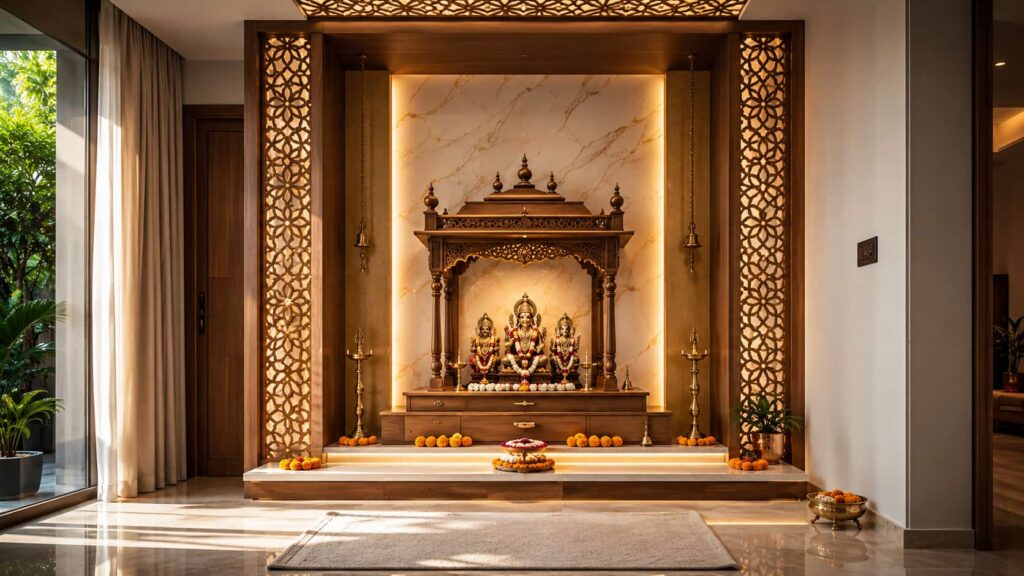
A floating wooden mandir with warm LED backlighting in a living room corner creates a peaceful yet modern devotional space without occupying extra square footage.
Pooja Room Vastu Guide for Positive Energy Flow
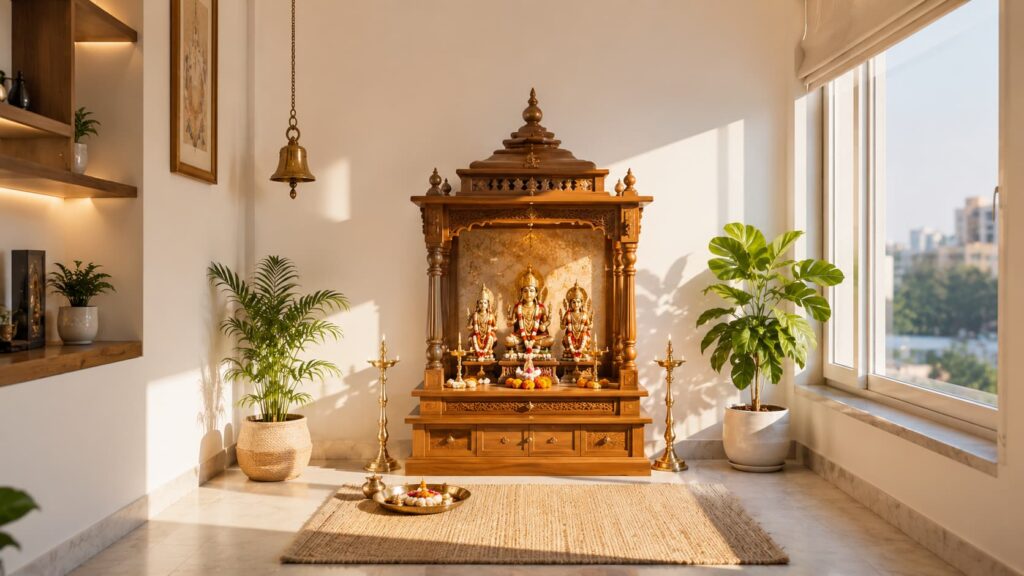
A Vastu-compliant pooja room ensures that positive energy flows freely in your home, enhancing peace, prosperity, and mental clarity. The best pooja room design ideas always start with correct direction and placement.
According to Vastu Shastra, the north-east direction (Ishan Kona) is considered ideal for a pooja room as it attracts divine energy and sunlight.
Key Vastu guidelines:
- Place mandir in the north-east direction
- Keep idols facing west or east
- Avoid placing pooja room near bathrooms
- Maintain cleanliness and uncluttered space
Vastu Direction Table
Direction | Effect | Recommendation |
North-East | Best energy flow | Ideal for pooja room |
East | Positive sunlight | Good alternative |
South | Heavy energy | Avoid |
West | Neutral | Use only if necessary |
Vastu Pooja Room Principle:
A design approach ensuring spatial alignment with natural energy fields to enhance positivity, calmness, and spiritual harmony in home environments.
Modern Pooja Room Design Ideas for Apartments
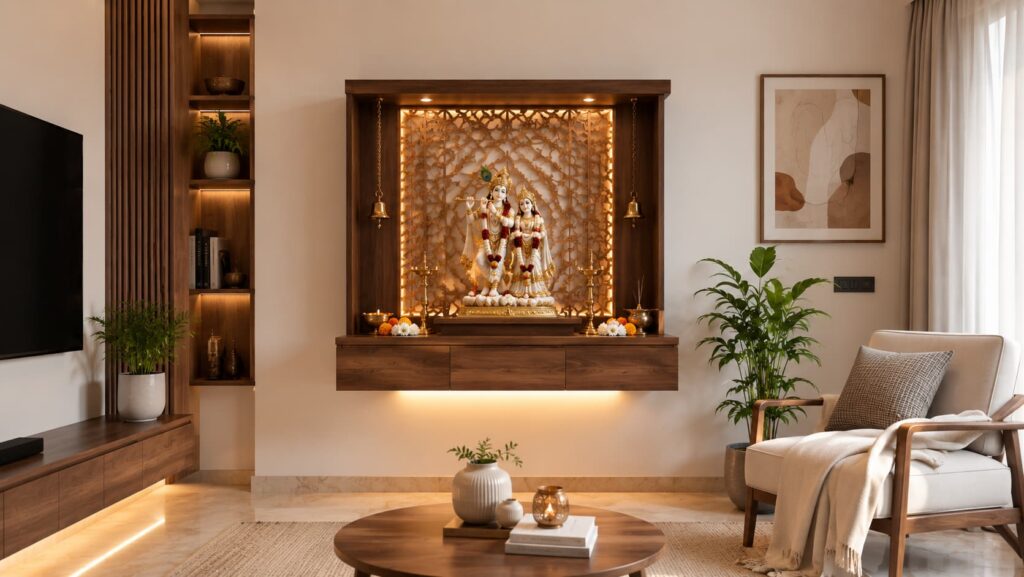
Modern apartment living demands compact yet elegant spiritual spaces. The best pooja room design ideas for apartments focus on vertical utilization, minimalism, and multifunctional storage.
Even a 2×2 ft corner can be transformed into a peaceful mandir with smart design choices.
Popular apartment design ideas:
- Wall-mounted floating mandirs
- Sliding panel pooja units
- Living room integrated temples
- Corner niche mandirs
Space Optimization Checklist:
- Use vertical wall space
- Add hidden storage drawers
- Use soft ambient lighting
- Keep décor minimal but symbolic
Step-by-Step Setup:
- Select a clean wall in the north-east zone
- Install a compact wooden or marble unit
- Add LED warm lighting behind idols
- Use brass bells or subtle décor elements
- Maintain open floor space for energy flow
Wooden Pooja Unit Design for Traditional Warmth
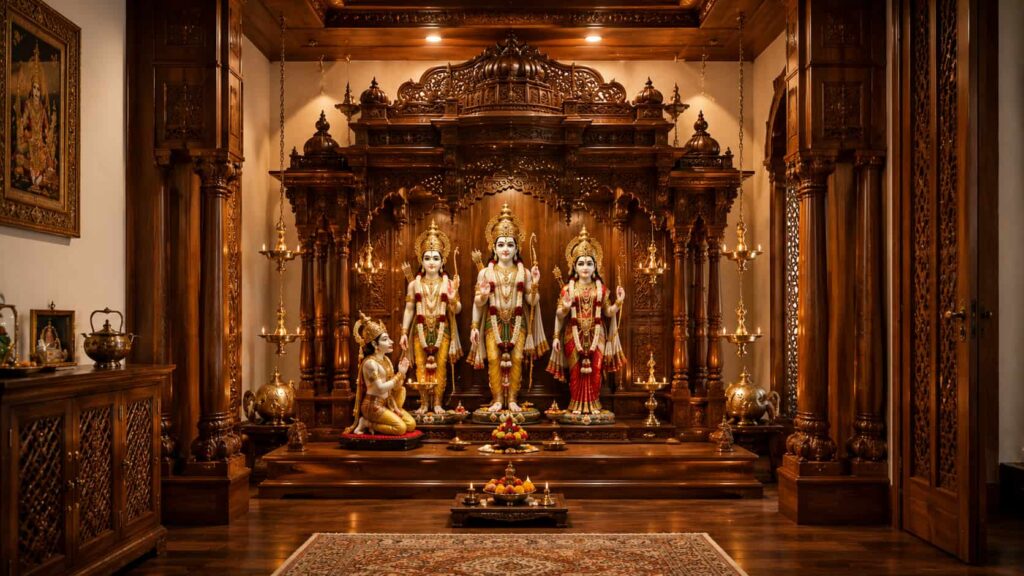
Wooden mandirs remain one of the most preferred pooja room design ideas due to their warmth, durability, and spiritual symbolism. Wood represents stability and grounding energy in Vastu.
Teak and Sheesham wood are commonly used for premium home temples.
Key benefits of wooden mandirs:
- Natural and traditional appeal
- Easy customization with CNC carvings
- Long-lasting durability
- Compatible with modern interiors
Wood Types
Wood Type | Durability | Look | Cost |
Teak | High | Premium golden tone | High |
Sheesham | Medium-High | Rich brown texture | Medium |
MDF (CNC) | Medium | Custom modern designs | Budget |
Pros & Cons
Pros:
- Warm aesthetic appeal
- Highly customizable
- Traditional spiritual feel
Cons:
- Requires maintenance
- Can be expensive (solid wood)
Marble Mandir Design for Elegant Spiritual Spaces
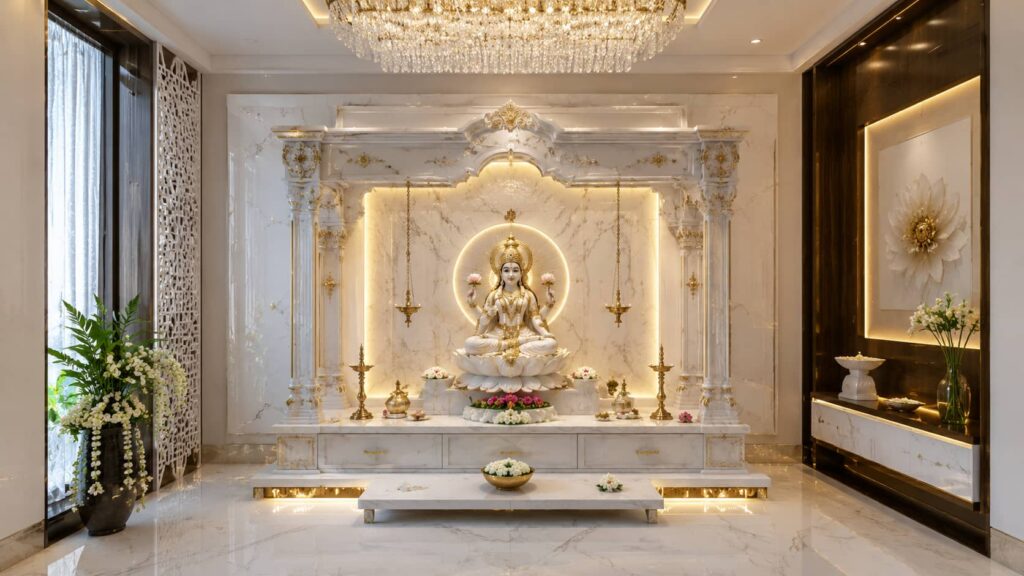
Marble mandirs represent purity, luxury, and timeless elegance. These pooja room design ideas are popular in modern Indian homes for their clean appearance and spiritual symbolism.
White marble especially enhances brightness and serenity in the pooja space.
Key highlights:
- Reflects purity and calmness
- Easy to clean and maintain
- Works well with LED lighting
- Suitable for luxury interiors
Marble vs Wood Mandir
Feature | Marble | Wood |
Aesthetic | Luxurious | Traditional |
Maintenance | Easy | Moderate |
Cost | High | Medium |
Energy Feel | Cool & calm | Warm & grounded |
Marble works best in well-lit spaces, while wood enhances intimacy and warmth in smaller, cozy homes.
Small Pooja Room Design Ideas for Compact Homes
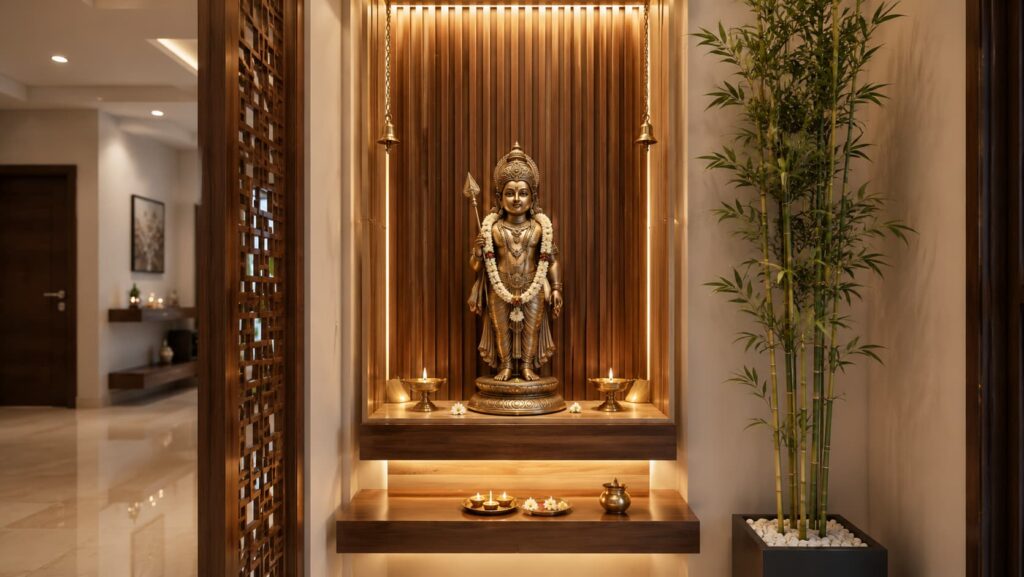
Small homes require intelligent planning. The best pooja room design ideas for compact spaces focus on maximizing utility without compromising spiritual essence.
Even unused corners, niches, or wall spaces can become sacred zones.
Smart small-space solutions:
- Corner mandir units
- Under-stair pooja rooms
- Foldable mandir panels
- Wall niche installations
Space-Saving Checklist:
- Use foldable doors or sliding panels
- Install vertical shelves
- Avoid bulky furniture
- Use soft lighting for depth
A 1BHK apartment transformed a hallway niche into a compact mandir using a CNC wooden panel, LED strip lighting, and a small marble base platform.
Wall Mounted Mandir & Compact Pooja Unit Designs
Wall-mounted mandirs are among the most modern pooja room design ideas, especially for urban apartments. They save floor space while maintaining spiritual focus.
These designs often include hidden storage and ambient lighting.
Key features:
- Floating shelf design
- LED backlit panels
- Minimal floor footprint
- Hidden drawers for storage
Pros vs Cons
Pros | Cons |
Space-saving | Limited idol size |
Modern aesthetic | Needs strong wall support |
Easy maintenance | Less traditional feel |
Clean wooden or MDF surfaces weekly and ensure LED lighting is dust-free to maintain visual purity and energy flow.
Lighting, Decor & Ambience for Spiritual Energy
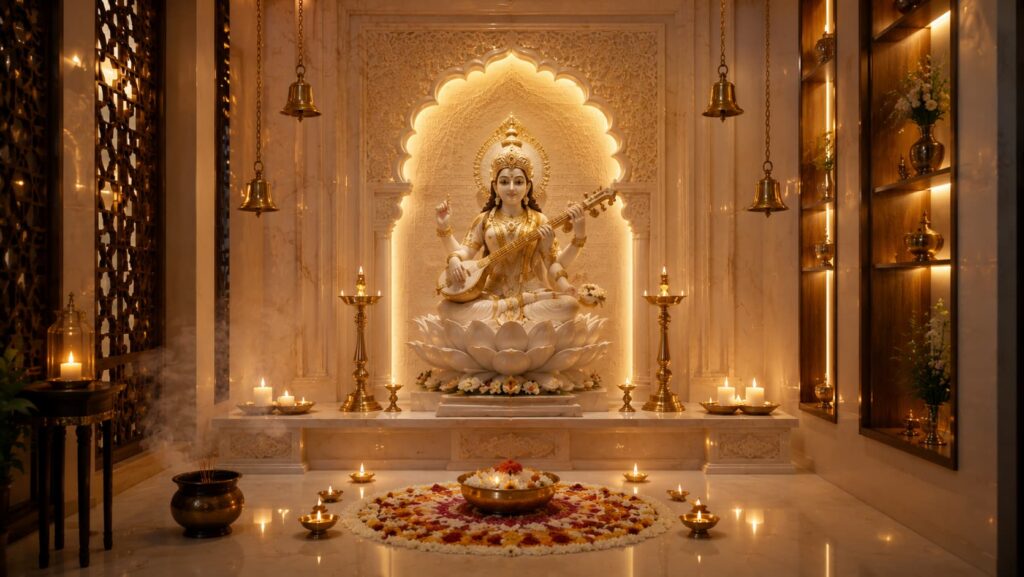
Lighting plays a crucial role in shaping spiritual energy in pooja room design ideas. Warm lighting enhances focus, calmness, and devotional experience.
A well-lit mandir feels more sacred and inviting. You can further enhance the ambience by incorporating a subtle False Ceiling Design with concealed warm LED lighting above the mandir.
Key lighting elements:
- Warm LED backlighting
- Diyas for traditional ambiance
- Brass bells for acoustic energy
- Soft indirect lighting
Choose a soothing Wall Colour Combination, such as warm white, beige, or soft earthy tones, to create a calm and peaceful prayer space.
Lighting Layer Guide:
- Primary: Ambient ceiling light
- Secondary: LED backlight
- Accent: Diyas or candles
Avoid harsh white lights as they disrupt calmness. Warm yellow tones create a meditative environment ideal for prayer.
Common Vastu Mistakes to Avoid
Many homes unknowingly reduce positive energy due to incorrect pooja room setups. Avoiding these mistakes ensures your pooja room design ideas remain spiritually effective.
Common mistakes:
- Placing mandir near bathroom walls
- Keeping cluttered idols or broken items
- Facing south direction
- Using dark, heavy colors excessively
Do’s and Don’ts Checklist
Do:
- Keep space clean and sacred
- Use soft lighting
- Place idols at eye level
Don’t:
- Store unrelated items in mandir
- Install near heavy appliances
- Overcrowd space with décor
Expert Tips for Designing a Perfect Home Temple
A perfect home temple blends aesthetics, functionality, and spirituality. The most effective pooja room design ideas focus on balance rather than complexity.
Expert recommendations:
- Keep design minimal but symbolic
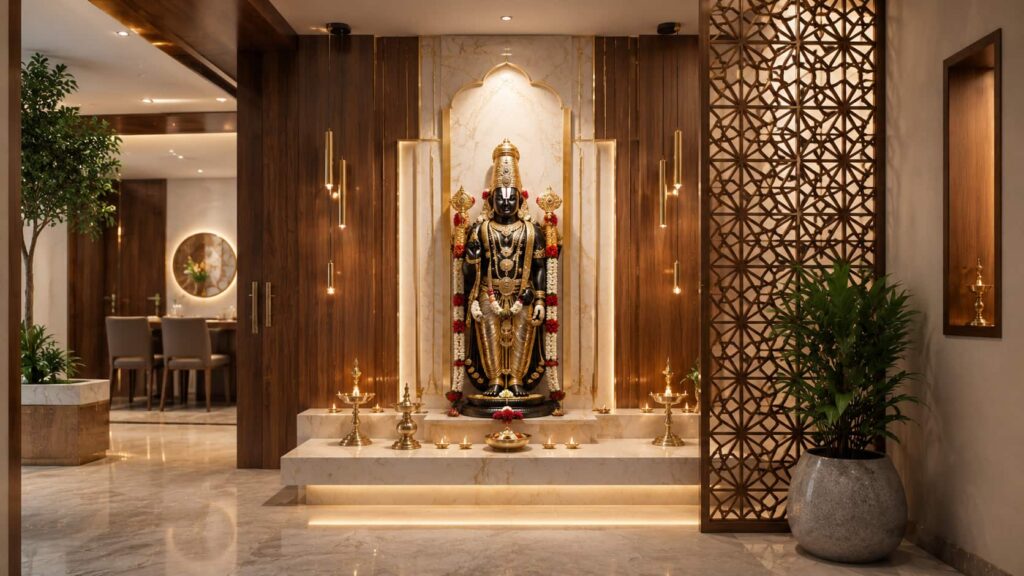
- Combine wood + marble for modern fusion
- Use CNC jaali panels for airflow and aesthetics
- Ensure symmetry in idol placement
Design Checklist:
- Proper Vastu alignment
- Adequate lighting layers
- Clean and uncluttered space
- Durable materials selection
Traditional vs Modern Pooja Room Design
Aspect | Traditional | Modern |
Design | Heavy carved wood | Minimalist panels |
Space usage | Dedicated room | Corner integration |
Lighting | Diyas only | LED + diyas |
Maintenance | Moderate | Easy |
Conclusion
A thoughtfully designed pooja room brings peace, balance, and positive energy into your home. By combining Vastu principles with modern interior design, you can create a sacred space that fits even compact apartments. Whether you choose wood, marble, or a wall-mounted unit, the key lies in maintaining cleanliness, direction, and harmony.
The best pooja room design ideas are those that reflect both devotion and simplicity while enhancing the overall energy of your living space. With the right planning, your home temple can become the most calming and meaningful corner of your home.
FAQs
1. Which direction is best for pooja room as per Vastu?
The north-east direction is considered the most auspicious for pooja rooms because it attracts natural positive energy and sunlight. East is also acceptable if north-east is not available in your home layout.
2. Can I place a pooja mandir in the living room?
Yes, a pooja mandir can be placed in the living room if space is limited. Ensure it is in a clean, quiet corner, preferably in the north-east direction, and separated visually from entertainment areas.
3. What is the best material for a home temple?
Wood and marble are the most preferred materials. Wood provides warmth and tradition, while marble offers purity and a modern luxurious appeal depending on interior style.
4. How can I design a small pooja room in an apartment?
Use wall-mounted units, corner mandirs, or compact cabinets. Focus on vertical space, soft lighting, and minimal décor to maintain spiritual balance without occupying much area.
5. Is LED lighting good for pooja rooms?
Yes, warm LED lighting is ideal as it enhances ambiance and highlights idols. Avoid harsh white lighting as it can reduce the calming and spiritual effect of the space.
6. What are common Vastu mistakes in pooja rooms?
Placing mandir near bathrooms, facing south, cluttering space, and using broken idols are common mistakes that should be avoided to maintain positive energy flow.
7. Can I mix modern and traditional mandir designs?
Yes, hybrid designs combining wood, marble, and modern lighting are highly popular in 2026 as they balance tradition with contemporary aesthetics.
8. How do I maintain positive energy in pooja room?
Keep the space clean, light incense or diyas regularly, avoid clutter, and ensure proper ventilation and lighting to maintain spiritual positivity.