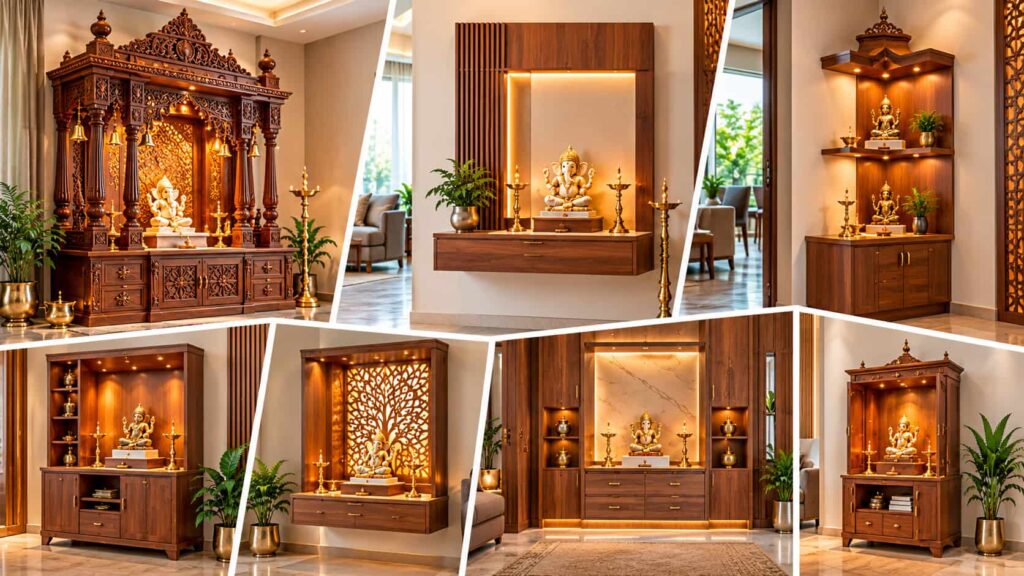
A beautiful mandir does not need an entire room to feel special. With the right wooden finish, thoughtful lighting and a well-planned layout, even a small corner can become a peaceful place for daily prayers. Choosing the right design, however, involves more than appearance. You also need to consider available space, storage, wood type, maintenance and how the mandir fits into your existing interiors. In this guide, Woodlab Interiors explores 15 wooden mandir designs for home, from traditional carved temples to modern wall-mounted units, helping you find a style that suits your home and everyday needs.
15 Wooden Mandir Designs for Home to Inspire Your Interiors
Wood offers flexibility in design, making it suitable for traditional prayer spaces as well as contemporary apartments. The right choice depends on the room’s dimensions, the number of idols, your storage needs and the overall interior style. Here are 15 ideas worth considering before finalising your design.
1. Traditional Carved Wooden Mandir
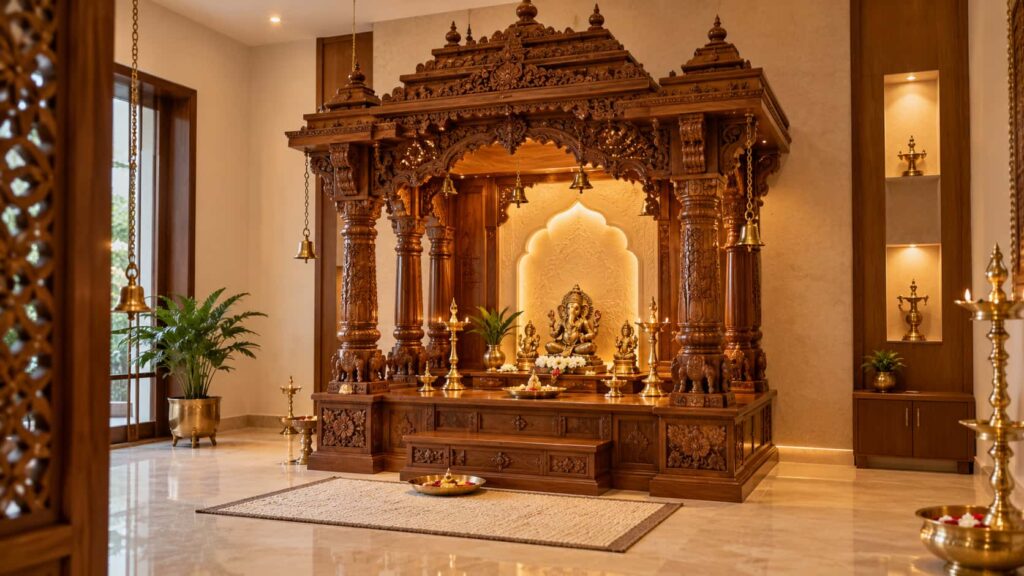
A traditional carved wooden temple brings a timeless character to a dedicated prayer area. Decorative pillars, an arched frame and detailed carvings create a classic appearance inspired by traditional temple architecture. This style works particularly well in independent houses, villas and homes with a separate pooja room.
When choosing this wooden mandir design, consider how much decorative detail the surrounding room already has. If the furniture and wall finishes are simple, an ornate mandir can become the focal point. A natural wood finish with subtle brass accents can complete the look without making the space feel overcrowded.
2. Modern Wooden Mandir Design with a Minimalist Finish
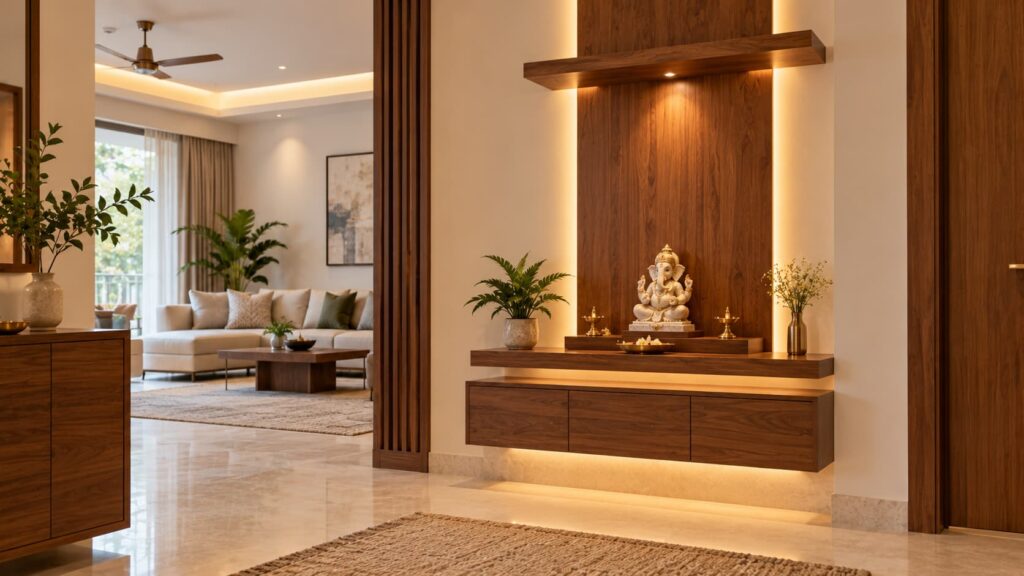
A modern wooden mandir design suits homeowners who prefer clean lines, understated finishes and uncluttered spaces. Instead of elaborate carvings, this style uses simple geometric shapes, smooth panels and carefully planned shelves. Walnut, teak-toned and natural wood finishes can complement contemporary furniture.
The key is to keep the proportions balanced. A compact wooden frame, a dedicated idol platform and warm lighting can create a defined prayer area without overwhelming the room. This approach is especially useful when the mandir shares space with a living room or another multipurpose area.
3. Wall Mounted Wooden Pooja Mandir
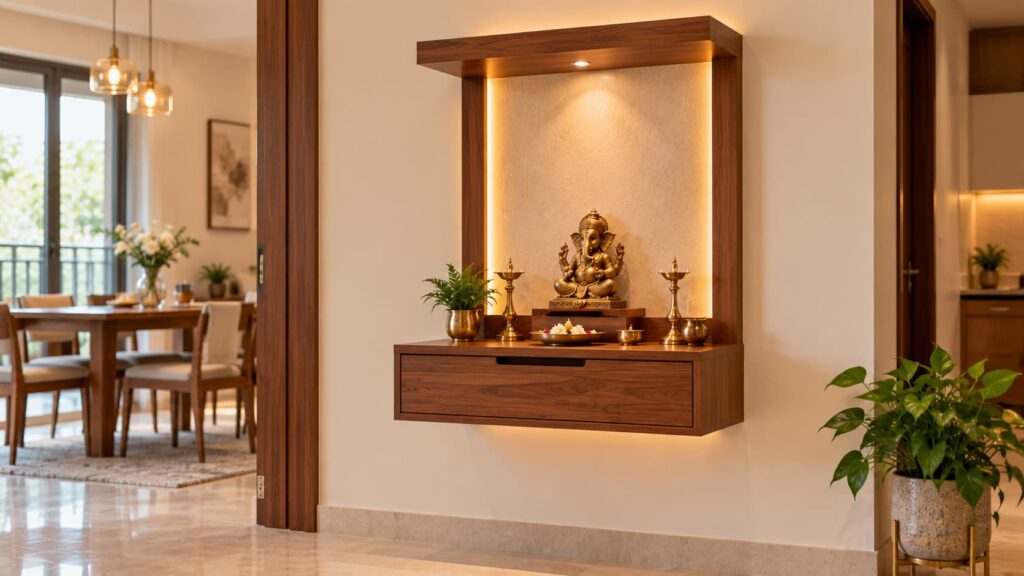
A wall mounted wooden pooja mandir is a practical option when floor space is limited. By lifting the unit off the floor, you can maintain a more open appearance and make routine floor cleaning easier. A compact design may include an idol shelf, a decorative back panel and a small drawer for prayer essentials.
Before installation, check the wall construction, fixing points and the combined weight of the mandir and its contents. The unit should be securely anchored, especially when it holds heavier idols or accessories. Plan the height around comfortable use rather than appearance alone, and allow sufficient clearance for lamps and other items used during prayer.
4. Corner Wooden Mandir Design
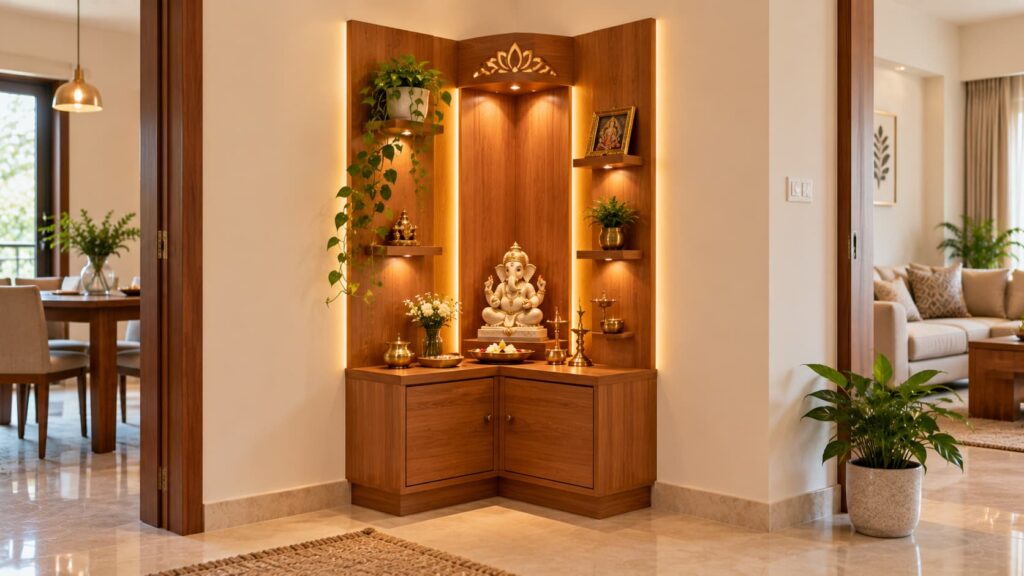
A corner wooden mandir design makes use of an area that might otherwise remain unused. It can fit beside a living room wall, in a suitable alcove or in a dedicated corner of a larger bedroom, depending on the household’s preferences and layout.
A triangular or L-shaped structure can follow the available wall space, while a vertical back panel gives the mandir a distinct identity. Include enough depth for the idols and daily prayer items, and avoid placing the unit where doors, walkways or furniture will obstruct access. This is a good option for homeowners who want a dedicated prayer area without redesigning an entire room.
5. Small Wooden Mandir Design with Storage
A small wooden mandir design with built-in storage helps keep the prayer area organised. Drawers or a compact cabinet can hold incense sticks, matchboxes, prayer books, cloths and other essentials, reducing the need for additional furniture nearby.
The most important detail is the balance between storage and the prayer platform. A cabinet that is too deep can make a narrow room feel cramped, while one that is too shallow may not accommodate the items you use regularly. Measure the available width, depth and height before finalising the design so the unit remains practical as well as attractive.
6. Sheesham Wood Mandir with a Natural Finish
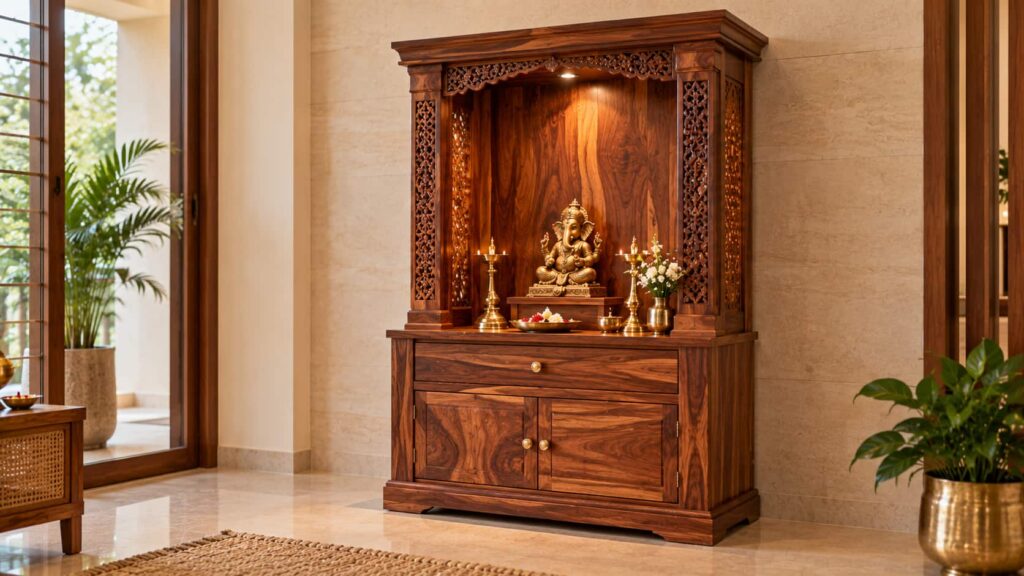
A sheesham wood mandir is worth considering if you like distinctive natural grain and rich brown tones. Sheesham, also known as Indian rosewood, is used in furniture and decorative woodwork, and its grain can give a home temple a warm, traditional appearance.
The finish matters as much as the wood itself. A clear or lightly tinted finish highlights the natural grain, while a darker polish creates a more formal look. Ask the manufacturer to clarify the wood species, construction and finish rather than relying on the product’s appearance alone. Also check whether the surface is suitable for the heat and occasional residue associated with daily prayer.
7. Wooden Mandir with a Decorative Jaali Backdrop
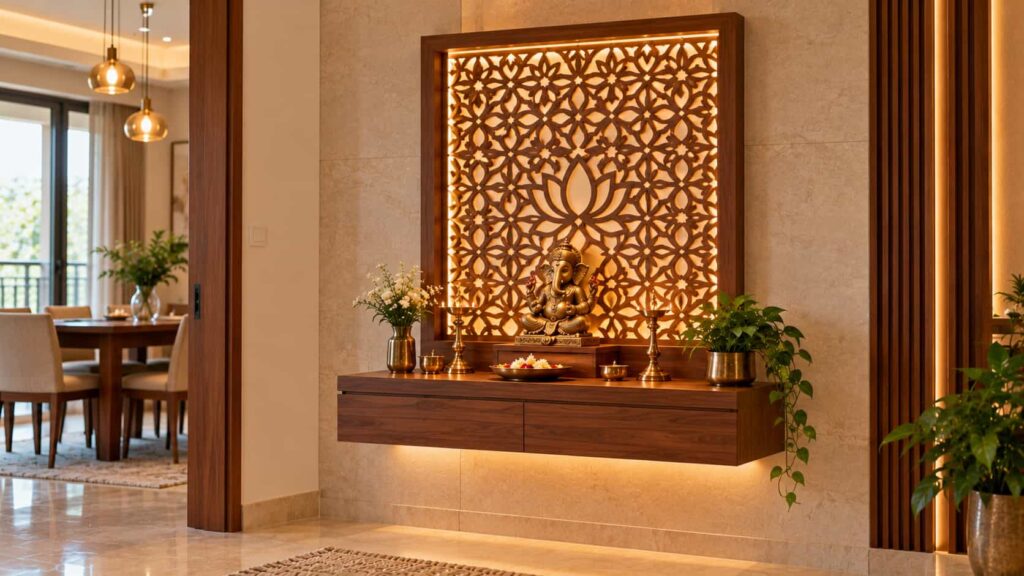
A jaali backdrop adds visual detail without requiring heavy carvings throughout the entire structure. The patterned panel can feature geometric cutouts, floral motifs or traditional Indian-inspired designs, creating a focal point behind the idols.
Backlighting can make the pattern more visible, particularly in the evening. Choose a warm, diffused light for a softer appearance and plan the wiring before installation. If you regularly light a diya, keep electrical components away from the flame and follow suitable fire-safety precautions. This style works well when you want a decorative feature that still feels contemporary.
8. Wooden Mandir with an Arched Frame
An arched wooden mandir blends traditional temple-inspired detailing with a relatively simple structure. The curved frame draws attention towards the centre, giving the idols a clearly defined place without requiring an oversized unit.
For a modern home, choose a slim arch with minimal carving. For a more traditional interior, a deeper frame with decorative pillars may feel more appropriate. Keep the arch proportional to the ceiling height and available wall width; an excessively tall structure can make a compact room feel crowded.
9. Wooden Mandir with Warm LED Lighting
Lighting can change the way a wooden mandir looks throughout the day. Concealed LED strips beneath shelves or behind a back panel highlight the wood grain and provide gentle illumination without requiring multiple decorative fixtures.
Plan the lighting around the activities that take place in the space. General room lighting should make cleaning and arranging prayer items easy, while accent lighting can emphasise the mandir’s design. Select fixtures that are suitable for their installation location, conceal wiring neatly and keep lights away from open flames. A well-lit mandir should feel calm, not overly bright or visually busy.
10. Floor-Standing Wooden Pooja Mandir
A floor-standing wooden pooja mandir works well when you have a dedicated area and want the temple to feel like a separate piece of furniture. It can incorporate an elevated idol platform, side panels, drawers and closed storage, depending on the available footprint.
This design is particularly useful for households with several idols or a larger collection of prayer accessories. Before choosing one, measure the full installation area, including space for opening doors and drawers. Check the floor’s level, access for installation and clearance from nearby furniture. A well-proportioned unit should leave enough room to stand comfortably during prayer.
11. Wall-Mounted Mandir with Closed Storage
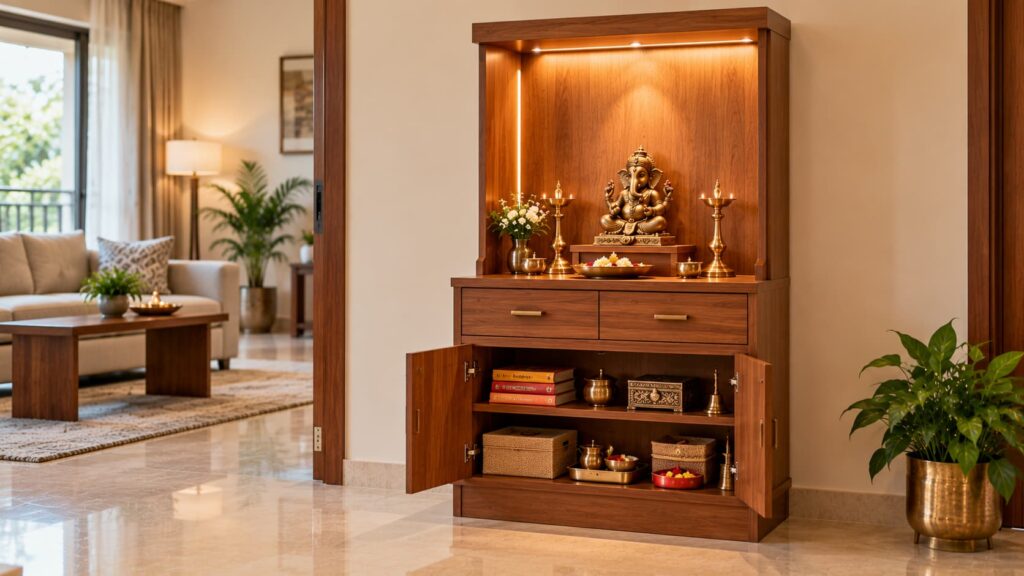
A wall-mounted wooden mandir with closed storage combines a clean appearance with everyday functionality. The upper section can display the idols, while the lower cabinet keeps smaller accessories out of sight. This helps maintain a tidy prayer corner, particularly in a living room where the mandir is visible throughout the day.
The design should account for the weight of the cabinet and its contents. Use suitable wall fixings and professional installation where needed, rather than assuming every wall can support a heavy unit. If storage is a priority, plan drawer dimensions around the actual items you intend to keep inside.
12. Compact Corner Mandir with a Glass Enclosure
A glass-enclosed wooden mandir offers a more protected space for idols and decorative accessories. The wooden frame adds warmth, while the transparent doors allow the contents to remain visible. This arrangement can suit homes where dust management and an organised appearance are important.
Consider the type of glass, door-opening mechanism and ease of cleaning before selecting the enclosure. Leave adequate ventilation where appropriate, and ensure that the door does not interfere with daily prayer routines. Glass also needs regular cleaning to prevent fingerprints and smudges from becoming noticeable.
13. Two-Tier Wooden Pooja Mandir
Two-tier wooden pooja mandir designs separate the main idol area from the lower platform used for prayer accessories or offerings. This arrangement can help organise the space without spreading objects across several shelves or nearby furniture.
The height and spacing between the tiers should reflect the size of the idols and the items used daily. Avoid filling every level with decoration simply because the shelves are available. A thoughtful layout leaves room for handling prayer items and cleaning the surfaces comfortably.
14. Traditional Wooden Mandir with Brass Accents
Wood and brass create a classic combination that suits traditional interiors as well as contemporary spaces with warm metallic accents. Brass bells, small decorative inlays or carefully chosen hardware can add detail without requiring extensive carving.
The best results usually come from restraint. Select one or two brass elements and let the wood remain the main visual feature. Make sure any metal fittings are securely installed, and clean them according to their finish requirements. If the mandir is positioned near a window, consider how changing daylight will affect the appearance of the wood and metal.
15. Custom Wooden Mandir Integrated into the Interior
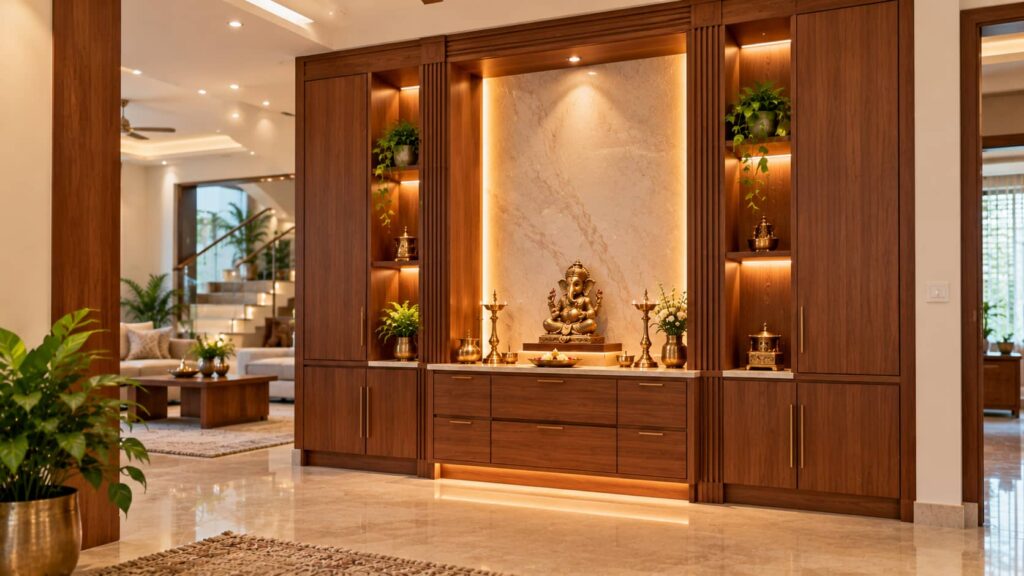
A custom-built mandir can be designed around the exact dimensions and style of your home. Instead of selecting a freestanding unit and adapting the room around it, you can coordinate the mandir with wall panels, cabinetry, lighting and the surrounding furniture.
This option is useful when the prayer area has unusual dimensions or specific storage requirements, making furniture selection and customization an important part of planning the design. It also allows you to choose the level of decoration, the wood finish and the arrangement of shelves. Before fabrication begins, review the measurements, material specifications, lighting plan and final drawings so the completed structure meets your practical needs as well as your design preferences.
How to Choose the Right Wooden Mandir for Your Home
With so many options available, the right design is the one that fits your room and your daily routine. Three factors deserve particular attention: available space, material selection and how you intend to use the mandir.
Match the design to your available space
For a compact apartment, a wall-mounted unit or corner structure can keep the floor clear. These interior design tips for compact homes can also help you make better use of limited space. Larger rooms can accommodate floor-standing temples or custom-built designs with additional storage. Measure the wall width, usable depth, ceiling height and nearby furniture before selecting a style.
Also consider how you will use the area. You may need room to sit, stand, light a diya or arrange offerings. A design that looks attractive in a photograph may not be suitable if it leaves insufficient space for these activities.
Select the right wood and finish
The wood species, construction quality and protective finish influence the appearance and maintenance requirements of the mandir, so understanding how to choose the best wood for furniture can help you compare suitable options. Solid wood can offer distinctive grain and a substantial feel, while engineered wood can provide more predictable finishes and different budget options. Neither choice should be judged by appearance alone.
Ask about the core material, joinery, surface treatment and care instructions, and compare laminate vs veneer and acrylic finishes before finalising the mandir’s appearance. Avoid exposing wood to repeated moisture, and clean it using methods recommended for the particular finish. For a mandir used with lamps or incense, consider the placement of the flame, ventilation and distance from combustible surfaces.
Plan storage, lighting and maintenance together
Storage is useful when it accommodates the items you actually use, rather than adding bulk to the design. Thoughtful interior design space planning also helps maintain comfortable movement around the mandir. Lighting should make the space comfortable to use and easy to maintain. Smooth shelves, accessible corners and finishes that can be cleaned easily will help keep the mandir looking neat over time.
If you are planning a custom unit, decide these details before fabrication. Changes made after installation can be more complicated when they involve electrical wiring, cabinetry or wall-mounted supports.
Wooden Mandir Design Ideas: Which Style Should You Choose?
| Design Style | Best Suited For | Main Advantage |
|---|---|---|
| Wall-Mounted Mandir | Compact apartments | Keeps the floor clear |
| Corner Wooden Mandir | Unused room corners | Makes better use of available space |
| Small Mandir with Storage | Homes with limited storage | Keeps prayer essentials organised |
| Traditional Carved Mandir | Classic interiors | Adds decorative detail |
| Sheesham Wood Mandir | Natural wood aesthetics | Highlights distinctive grain |
| Jaali-Backdrop Mandir | Modern and traditional homes | Creates a patterned focal point |
| Floor-Standing Mandir | Larger prayer areas | Provides a dedicated structure |
| Custom-Built Mandir | Specific room dimensions | Can be coordinated with the interiors |
The best choice is not necessarily the most elaborate design. A compact unit with thoughtful storage may work better than a large temple that restricts movement, while a dedicated prayer room may benefit from a more detailed structure.
Common Mistakes to Avoid When Planning a Wooden Mandir
Even a beautiful design can become inconvenient if the practical details are overlooked. Avoid these common mistakes before finalising your mandir.
Choosing a unit that is too large. A large temple can dominate a compact room and restrict movement. Measure the available area and account for door openings, walkways and cleaning access.
Focusing only on appearance. Carvings, lighting and decorative panels look attractive, but the mandir must also accommodate your idols, prayer accessories and daily routine.
Ignoring installation requirements. A wall-mounted unit needs appropriate supports and fixings. Check the wall construction and expected load before installation.
Placing open flames near combustible materials. Wood is combustible, so keep diyas and incense at a safe distance from wooden panels, curtains, wiring and decorative fabrics. Never leave an open flame unattended.
Selecting a finish without considering maintenance. Dust, oil residue and frequent handling can affect the surface over time. Choose a finish that suits your cleaning routine and follow the manufacturer’s care instructions.
Conclusion
The right wooden mandir brings together personal devotion, practical use and thoughtful interior design. Whether you prefer a traditional carved temple, a modern floating unit or a compact corner arrangement, choose a design that suits your available space and daily prayer routine. Pay attention to the wood, finish, storage, lighting and safe placement of lamps before making a final decision. If you are planning a new home or renovating an existing one in Bangalore, Woodlab Interiors can help you explore interior design options that complement your space. Start with your room measurements and preferred style to plan a mandir that feels right for your home.