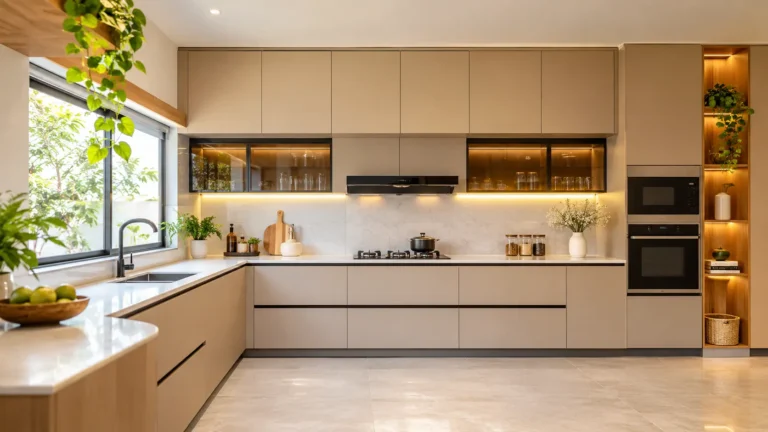
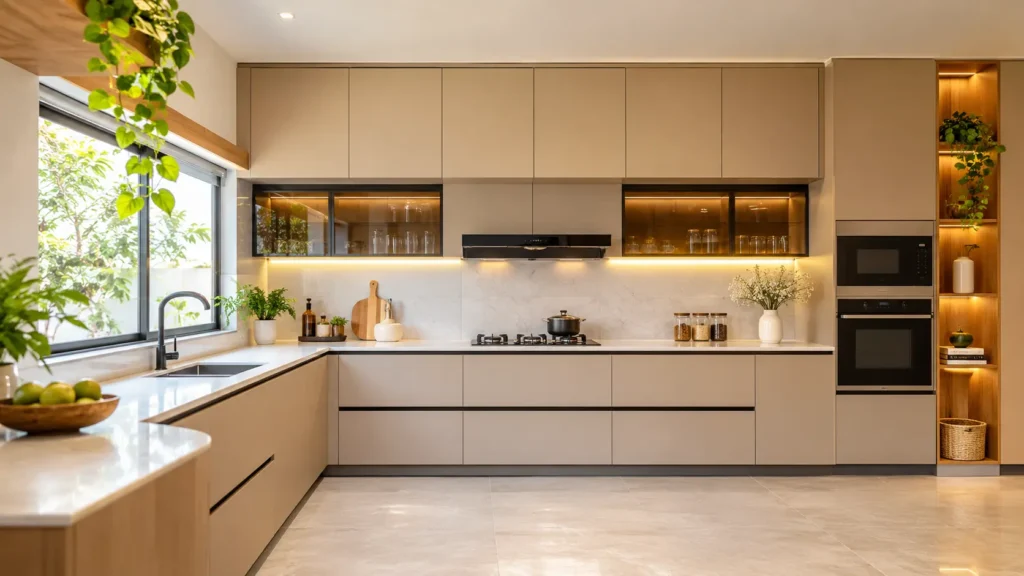
A kitchen should be easy to use, organised and visually appealing. While cabinet handles may seem like a small detail, they can influence the overall appearance and functionality of your kitchen. This is one reason handleless kitchen cabinets have become a popular choice in contemporary home interiors.
Handleless kitchen cabinets feature doors and drawers that open without conventional external handles. Instead, they use integrated grip profiles, recessed channels or push-to-open mechanisms to provide access.
For homeowners planning a modular kitchen in Bangalore, handleless designs offer several options, from minimalist apartment kitchens to spacious contemporary homes. However, choosing the right system requires more than selecting a cabinet colour. You also need to consider the opening mechanism, cabinet material, finish, storage requirements and everyday convenience.
This guide explains the different types of handleless kitchen cabinets, their benefits, limitations and important design considerations.
Key Takeaways
- Handleless kitchen cabinets use integrated profiles, recessed grips or push-to-open mechanisms instead of conventional handles.
- J-pull and G-profile systems provide physical gripping points, while push-to-open systems operate through a mechanical mechanism.
- Handleless designs create a clean and continuous appearance across kitchen cabinets.
- Matte laminates, acrylic and other suitable finishes can complement handleless cabinet designs.
- The right opening system depends on cabinet dimensions, frequency of use, budget and personal preferences.
- Handleless kitchens can be customised for apartments, villas and different modular kitchen layouts.
What Are Handleless Kitchen Cabinets?
Handleless kitchen cabinets are cabinet units designed without conventional external handles. Instead of pulling a protruding handle, users open cabinet doors and drawers using an integrated grip, recessed profile or push-to-open fitting.
These cabinets are commonly used in modern modular kitchens because they create uninterrupted cabinet surfaces and a minimalist appearance.
For example, a traditional kitchen cabinet may have a handle fixed to the front of the shutter. In a handleless kitchen, the same shutter may have a recessed edge or a channel that allows you to grip and open it.
The main difference is how the cabinet is opened. The cabinet structure, internal storage and materials can still be customised according to the kitchen layout.
Types of Handleless Kitchen Cabinet Systems
Not all handleless kitchen cabinets work in the same way. Different opening systems provide different levels of convenience, appearance and functionality.
Understanding these opening systems will help you choose a suitable layout and mechanism for your home. Explore different modular kitchen design ideas to compare cabinet arrangements, storage options and functional requirements before finalising your design.
1. J-Pull Handleless Kitchen Cabinets
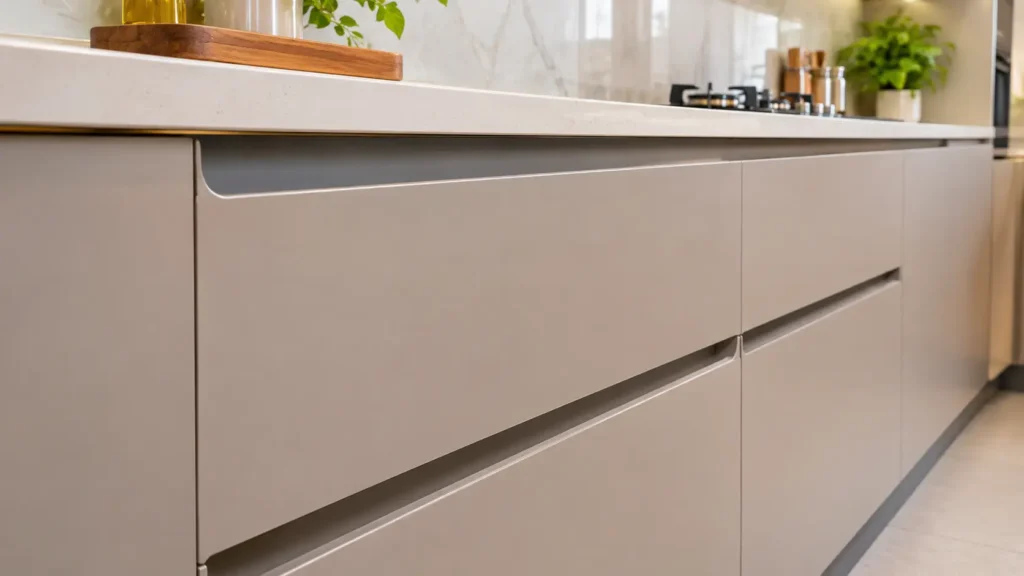
J-pull cabinets feature a curved or recessed grip profile along the edge of the cabinet door. The profile creates a space where you can place your fingers and pull the shutter open.
The grip is generally integrated into the cabinet front or its edge, depending on the manufacturing method.
Key features:
- Integrated gripping space.
- No conventional external handles.
- Suitable for contemporary kitchen designs.
- Provides direct physical access to cabinet doors.
J-pull designs are worth considering when you want a handleless appearance but prefer opening cabinets by pulling rather than pressing a mechanism.
2. G-Profile Handleless Kitchen Cabinets
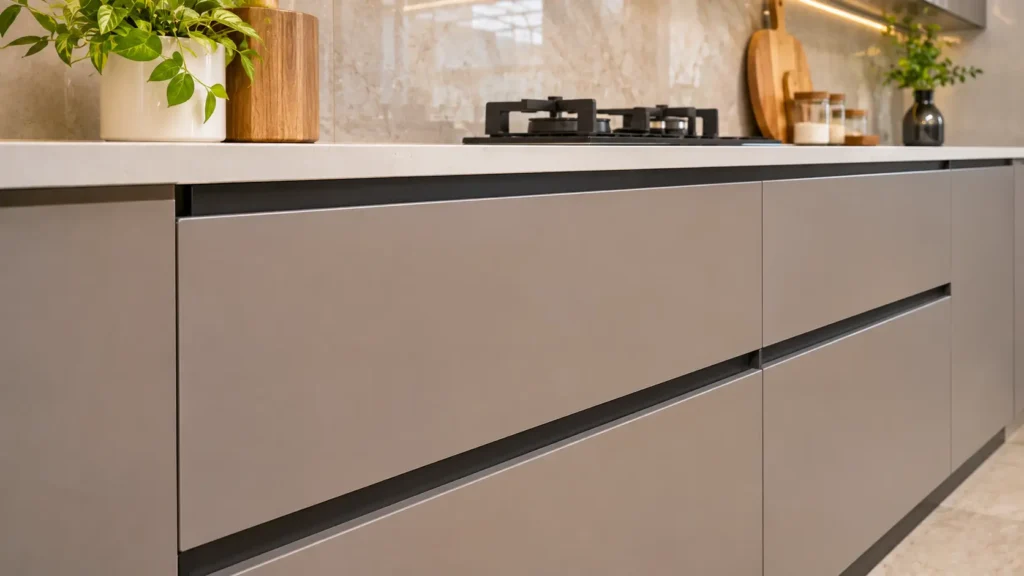
G-profile systems use a specially shaped channel or profile that creates a recessed gripping space between cabinet sections.
The profile is commonly integrated along the horizontal or vertical edges of kitchen units, depending on the cabinet configuration.
Key features:
- Recessed gripping channel.
- Clean horizontal or vertical cabinet lines.
- Suitable for coordinated base and tall cabinet designs.
- Can create a continuous handleless appearance.
G-profile systems are particularly useful when you want a consistent design across multiple cabinet units. The profile material, dimensions and installation details should be selected according to the cabinet layout.
3. Push-to-Open Kitchen Cabinets
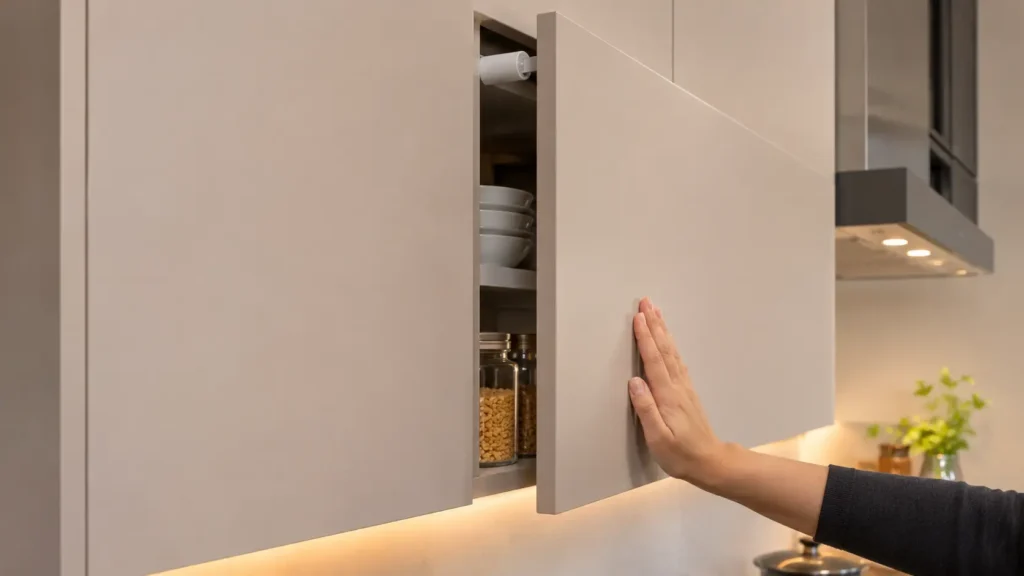
Push-to-open cabinets use a mechanical opening mechanism instead of a physical gripping channel.
A light push on the cabinet front activates the mechanism, which releases the door or drawer and allows it to open.
For example, Blum’s TIP-ON system uses mechanical opening support for handleless cabinet doors. Hettich also offers push-to-open systems for hinged doors and drawers.
Key features:
- No conventional external handles.
- Smooth, uninterrupted cabinet fronts.
- Mechanical opening mechanism.
- Available for selected cabinet doors and drawer systems.
Push-to-open cabinets are suitable for homeowners who prefer a minimalist appearance with minimal visible hardware.
However, the mechanism must be compatible with the cabinet dimensions, door weight and selected fittings.
4. Integrated Profile Handle Cabinets
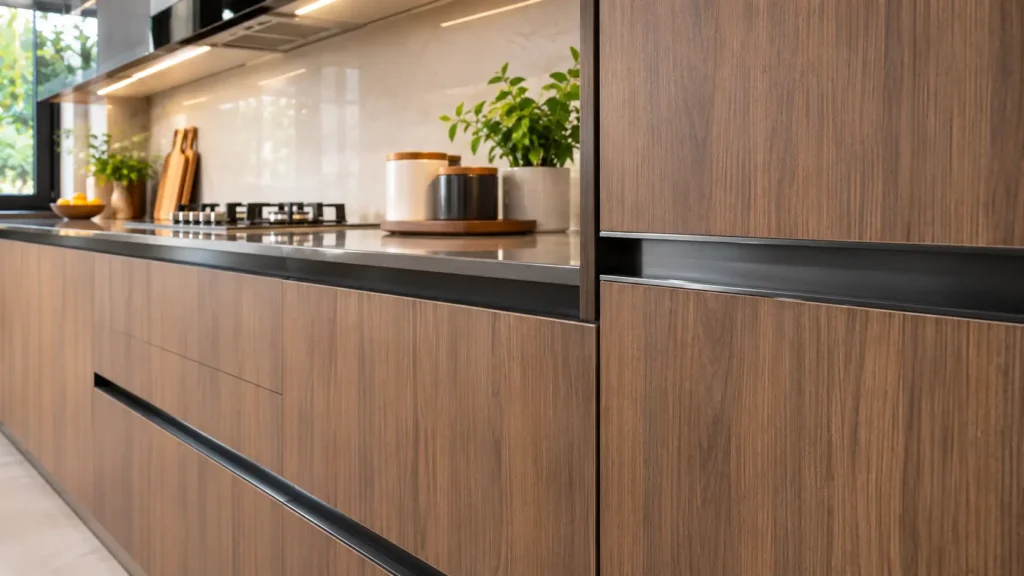
Integrated profile handles use a metal or specially designed channel fitted into the cabinet structure. Instead of attaching handles to the front, the profile creates a gripping space between or behind cabinet fronts.
These systems are often used in modern modular kitchens where maintaining consistent horizontal lines is important.
They can also be combined with different cabinet finishes to create contrast.
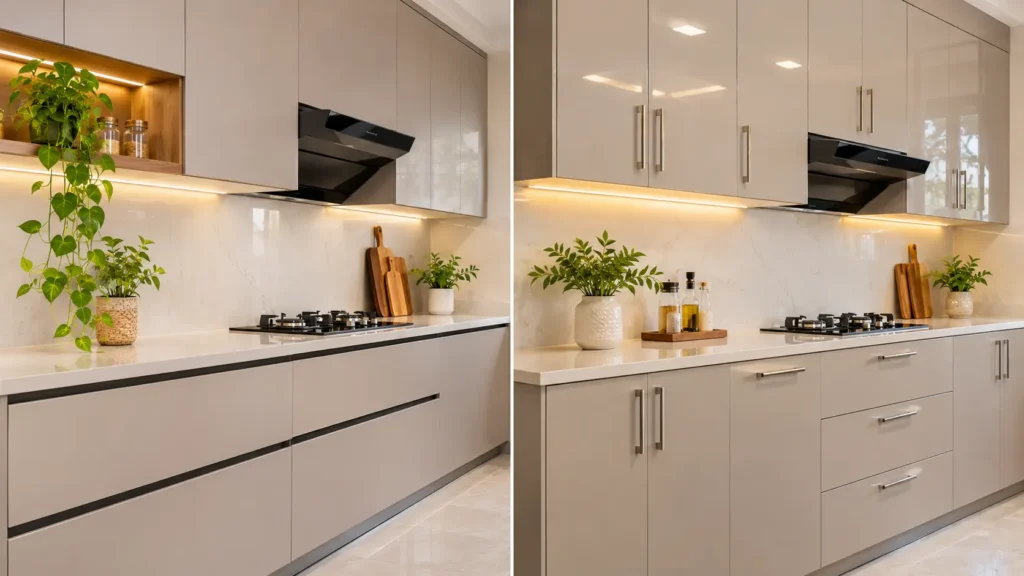
For example: Dark aluminium profiles paired with light-coloured matte cabinet shutters can create a subtle visual distinction without introducing conventional handles.
Handleless Kitchen Cabinets vs Traditional Kitchen Cabinets
| Comparison | Handleless Cabinets | Traditional Cabinets |
|---|---|---|
| Appearance | Minimalist and seamless | Visible external handles |
| Opening method | Recessed grip, profile or push mechanism | External handles |
| Hardware | May require specialised profiles or mechanisms | Generally uses conventional handles |
| Cleaning | No external handle projections, but grip channels may collect dirt | Handles and surrounding surfaces need cleaning |
| Customisation | Multiple profile and mechanism options | Wide variety of handle styles |
| Maintenance | Depends on mechanism and finish | Depends on handle and cabinet hardware |
Which should you choose?
Choose handleless cabinets if you prefer clean cabinet surfaces and integrated opening systems.
Traditional cabinets may be more suitable if you prefer conventional handles, straightforward opening methods or a wider choice of decorative handle styles.
Neither option is universally better. The right choice depends on your kitchen requirements, budget and preferred design.
Benefits of Handleless Kitchen Cabinets
Handleless kitchen cabinets offer several design and functional advantages.
1. Clean and Minimalist Appearance
One of the main reasons homeowners choose handleless kitchen cabinets is their simple appearance.
Removing external handles creates cleaner cabinet surfaces and allows the cabinet colours, textures and finishes to become the main design elements.
This works particularly well in contemporary and minimalist interiors.
2. Better Visual Continuitye
Handleless cabinet systems can create consistent horizontal and vertical lines across multiple kitchen units.
When the cabinet profiles, colours and dimensions are planned together, the kitchen can look more coordinated.
This is especially useful for kitchens with floor-to-ceiling storage or long cabinet arrangements.
3. Multiple Design Options
Handleless kitchens are not restricted to a single appearance.
You can choose from:
- Matte-finish cabinet shutters.
- Glossy acrylic finishes.
- Wood-textured laminates.
- Neutral colour combinations.
- Contrasting cabinet profiles.
- Integrated recessed grip designs.
These finish and profile combinations allow homeowners to create kitchens that match their preferred interior style. You can also explore our modular kitchen design projects to see different cabinet arrangements, finishes and contemporary kitchen design concepts.
4. Suitable for Modern Apartments
Handleless kitchen cabinets can work well in apartments where homeowners prefer a clean, uncluttered appearance.
They can be incorporated into L-shaped, parallel, U-shaped and other modular kitchen layouts.
However, the available space and cabinet dimensions should determine the layout rather than the handleless style alone.
5. Coordinated Cabinet Design
Handleless systems allow designers to coordinate cabinet shutters, profiles, countertops and backsplashes.
For example, a beige matte kitchen with a darker recessed profile can create a subtle contrast without making the overall design look busy.
Best Materials and Finishes for Handleless Kitchen Cabinets
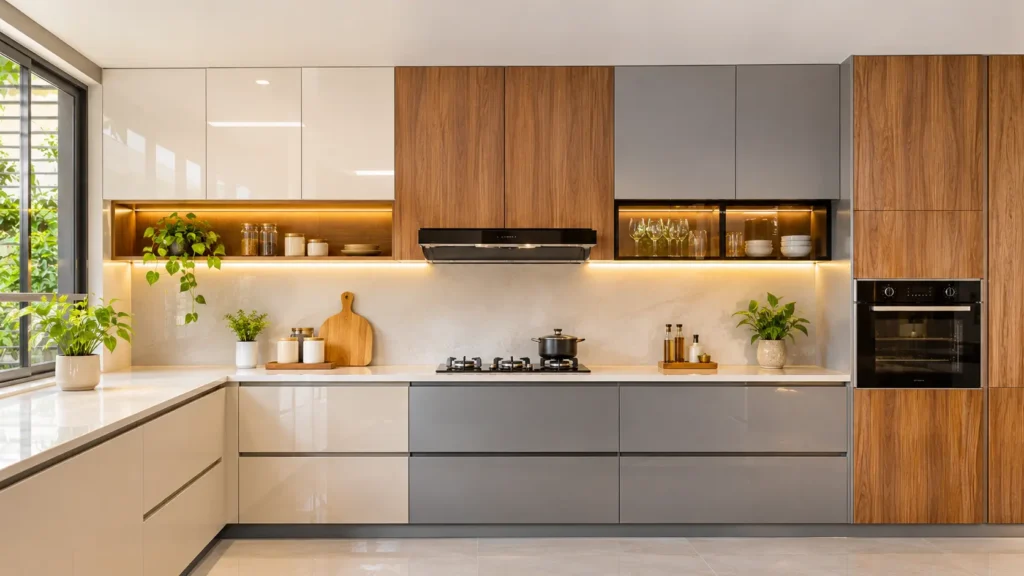
The cabinet material and finish influence appearance, maintenance and long-term usability.
Here are some options commonly considered for modular kitchen cabinets.
| Material or Finish | Appearance | Important Consideration |
|---|---|---|
| Laminates | Available in matte, gloss and textured options | Check surface quality and edge finishing |
| Acrylic | Smooth, reflective and contemporary | Surface scratches and maintenance requirements should be considered |
| MDF | Smooth surface suitable for selected decorative finishes | Use an appropriate grade and suitable protection against moisture |
| Plywood | Used for cabinet construction and structural applications | Select a suitable grade and ensure proper edge and surface protection |
| Wood-textured finishes | Natural wood-like appearance | Coordinate the texture with the kitchen colour scheme |
The right cabinet material should be selected based on durability, moisture exposure, intended application and budget. Before making a decision, compare marine plywood, commercial plywood and other plywood options to understand their suitability for different kitchen applications.
For example, cabinet construction materials and decorative shutter finishes serve different purposes. They should not be treated as interchangeable options.
Which Finish Should You Choose?
Matte finish: Suitable for understated, contemporary kitchens. However, fingerprints and cleaning requirements vary between surface products.
Gloss finish: Creates a reflective appearance and can brighten the visual impression of a kitchen. It may also make smudges more noticeable.
Wood-textured finish: Adds warmth and can balance the clean appearance of handleless cabinet systems.
Acrylic finish: Offers a smooth and polished appearance, making it an option for homeowners who prefer a contemporary kitchen.
Always compare physical samples before selecting your cabinet finish. Understanding the differences between laminate,veneer and acrylic finishes can help you choose a suitable surface based on appearance, maintenance and budget.
Are Handleless Kitchen Cabinets Practical for Everyday Use?
Yes, handleless kitchen cabinets can be practical for everyday use when the opening system is selected and installed correctly.
However, practicality depends on the type of mechanism.
J-pull and G-profile cabinets provide a physical gripping area. Push-to-open cabinets rely on a mechanical fitting that must release the cabinet front correctly.
For frequently used drawers, consider the opening effort, runner quality, closing mechanism and load requirements.
For example, a kitchen drawer used to store heavy utensils should have a suitable drawer system and runners. Choosing a handleless mechanism alone does not guarantee smooth operation.
You should also consider who will use the kitchen. A recessed grip may be easier for some household members than a push-to-open system, while others may prefer the clean appearance of push-operated cabinets.
How to Maintain Handleless Kitchen Cabinets
Handleless kitchens are not maintenance-free. Their cleaning requirements depend on the cabinet finish and opening mechanism.
Follow these practical recommendations:
- Clean cabinet surfaces regularly: Use a soft cloth and a cleaning product recommended for the selected finish.
- Clean recessed profiles: Remove dust, oil and food particles from grip channels.
- Avoid abrasive cleaners: Harsh chemicals and rough cleaning materials may damage certain finishes.
- Check push-to-open fittings: If a cabinet does not open properly, check its alignment and mechanism adjustment.
- Inspect cabinet edges: Pay attention to areas exposed to moisture, especially around the sink.
- Avoid excessive force: Open and close doors and drawers using their intended mechanisms.
Follow the manufacturer’s instructions for cleaning cabinet surfaces and maintaining opening mechanisms. You can also refer to these modular kitchen maintenance tips to understand how regular care helps maintain kitchen cabinets, fittings and accessories.
How Much Do Handleless Kitchen Cabinets Cost in Bangalore?
The cost of handleless kitchen cabinets in Bangalore depends on the kitchen dimensions, cabinet construction, selected materials, finish and hardware.
The final investment depends on the kitchen layout, cabinet dimensions, materials, finishes and hardware specifications. You can refer to our guide on modular kitchen cost in Bangalore to understand the factors that influence kitchen pricing.
Some of the main factors affecting the quotation include:
- Kitchen layout: L-shaped, parallel and U-shaped kitchens require different cabinet configurations.
- Cabinet dimensions: The overall length, height and storage requirements influence material and manufacturing costs.
- Opening mechanism: Integrated profiles and push-to-open hardware have different component and installation requirements.
- Material selection: Plywood, MDF and other cabinet construction options differ in cost and application.
- Surface finish: Laminate, acrylic and other decorative finishes can influence the overall budget.
- Internal accessories: Pull-outs, drawer organisers, corner units and other storage fittings add to the project cost.
- Installation: Cabinet fitting, alignment and finishing requirements also affect the quotation.
How to Plan Your Budget
Before requesting a handleless kitchen design quotation, prepare the following information:
- Kitchen layout and approximate dimensions.
- Preferred cabinet material.
- Shutter finish and colour preferences.
- Preferred opening mechanism.
- Internal storage and accessory requirements.
- Appliances and countertop requirements.
Request an itemised quotation that separates cabinet construction, shutters, hardware, accessories, installation and other included work.
This makes it easier to compare quotations from different modular kitchen providers.
How to Choose the Right Handleless Kitchen Design
Choosing a handleless kitchen design involves more than selecting an attractive cabinet style.
Consider these factors before finalising your modular kitchen.
1. Evaluate your kitchen layout
Measure the available space and identify appliance positions, work areas and storage requirements.
2. Select the opening system
Decide whether J-pull, G-profile or push-to-open cabinets suit your everyday usage.
3. Choose suitable materials
Select cabinet construction materials based on their intended application, moisture exposure and budget.
4. Finalise the finish
Compare physical samples under your kitchen’s lighting conditions before making a decision.
5. Plan internal storage
Consider practical storage solutions such as cutlery organisers, tandem drawers, bottle pull-outs and corner units. Explore this modular kitchen accessories guide to understand the available accessories, sizes and functional options.
6. Check hardware compatibility
Confirm that the hinges, drawer runners and opening mechanisms are suitable for the cabinet dimensions and front weight.
7. Review the complete design
Check the 3D design, cabinet arrangement, appliance positions and finishing details before approving production.
Design Your Handleless Modular Kitchen with Woodlab Interiors
A well-planned handleless kitchen should balance appearance, storage and everyday convenience. The right combination of cabinet materials, opening systems, finishes and internal accessories can help create a kitchen that suits your home and lifestyle.
Woodlab Interiors offers residential interior design and modular kitchen design solutions in Bangalore. If you are planning a new kitchen or upgrading your existing space, discuss your layout, storage requirements and preferred finishes before finalising the design.
Frequently Asked Questions
What are handleless kitchen cabinets?
Handleless kitchen cabinets are cabinet units that do not use conventional external handles. They open through integrated grip profiles, recessed channels or push-to-open mechanisms.
Are handleless kitchen cabinets practical?
Yes. Handleless cabinets can be practical when the opening mechanism, cabinet dimensions and hardware are selected correctly. Recessed grips and push-to-open fittings offer different opening experiences.
What is the difference between J-pull and G-profile kitchen cabinets?
J-pull cabinets use a curved or recessed gripping edge integrated into the cabinet front. G-profile systems use a shaped channel or profile to create a gripping space between cabinet sections.
How much does a handleless modular kitchen cost in Bangalore?
The cost depends on kitchen size, cabinet materials, finishes, hardware, storage accessories and installation requirements. A site measurement and detailed design are needed for an accurate quotation.
Which handleless kitchen system is best?
There is no single best system for every kitchen. J-pull and G-profile designs offer physical gripping spaces, while push-to-open systems provide a clean appearance through mechanical opening fittings. Choose according to your usage and design requirements.
Are handleless kitchen cabinets suitable for small kitchens?
Yes. Handleless cabinets can be incorporated into compact kitchens and apartment layouts. The cabinet arrangement, appliance positions and storage planning are more important than the handleless style itself.
Are handleless kitchen cabinets easy to maintain?
They can be easy to maintain with regular cleaning. However, recessed profiles may collect dirt, and push-to-open fittings may need adjustment or servicing depending on usage.
Can handleless kitchen cabinets be customised?
Yes. Handleless cabinets can be customised through different layouts, materials, colours, finishes, profiles, opening mechanisms and internal storage accessories.