Choosing Sunmica is not only about picking a colour or wood pattern. The right sheet also depends on where it will be used, how much wear it will receive, and whether you need properties such as moisture resistance, flexibility, impact resistance or UV protection.
In this guide, we explain the different types of Sunmica sheets, their uses, benefits and finishes. You will also learn which Sunmica is suitable for furniture, wardrobes and kitchen cabinets, whether Sunmica is waterproof, and what to check when choosing sheets for an interior project in Bangalore.
Quick AI Summary
Sunmica is a decorative laminate used for furniture, wardrobes, kitchen cabinets, wall panels and other interiors. The main types include standard decorative, postforming, backer/liner, compact, exterior-grade and specialty laminates. Popular finishes include matte, gloss, suede, woodgrain, textured, marble and metallic. Standard decorative Sunmica suits most furniture, while compact or specialty laminates are better for demanding applications. For wardrobes, matte and woodgrain finishes are popular; kitchens need durable, easy-to-clean options. Sunmica is a brand name, while laminate is the broader material category. Always check the product’s specifications before choosing.
What Is Sunmica?
Sunmica is a well-known brand of decorative laminate, while laminate is the broader material category. In India, the word “Sunmica” is commonly used to describe decorative laminate sheets, including products from different manufacturers. AICA itself notes that its Sunmica brand has become generic in nature.
These sheets are applied over substrates such as plywood, MDF or other suitable boards to create a decorative and protective surface. They are widely used for furniture, wardrobes, wall panels, kitchen surfaces and other interior applications.
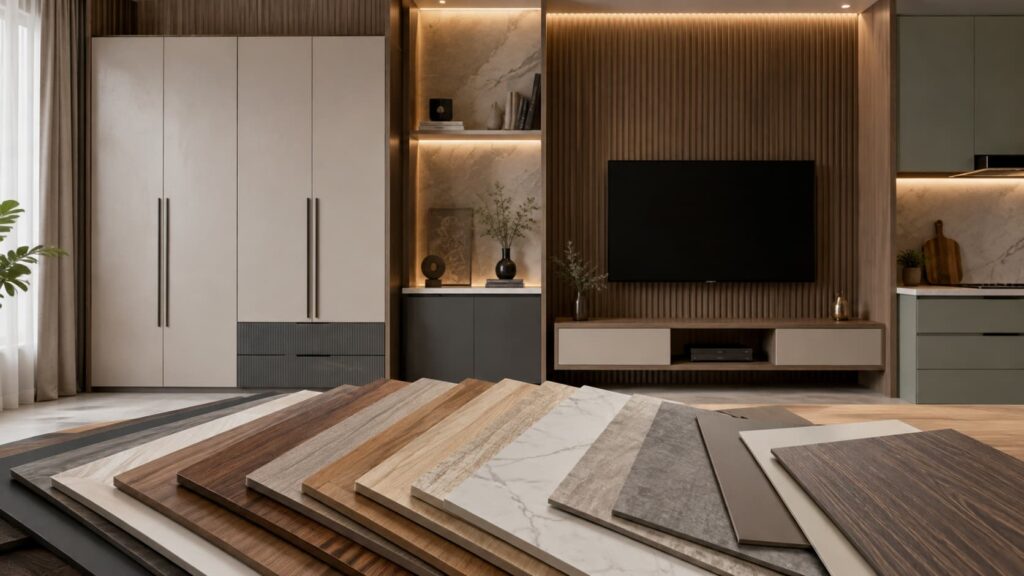
What Is Sunmica Used For?
Sunmica is mainly used as a decorative surface for:
- Wardrobe shutters
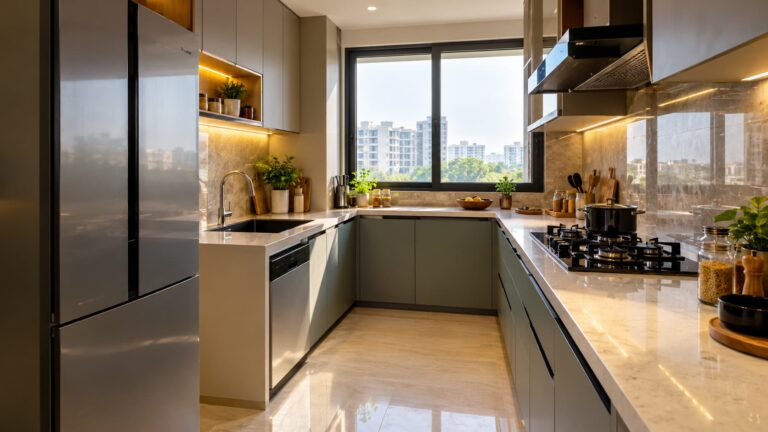
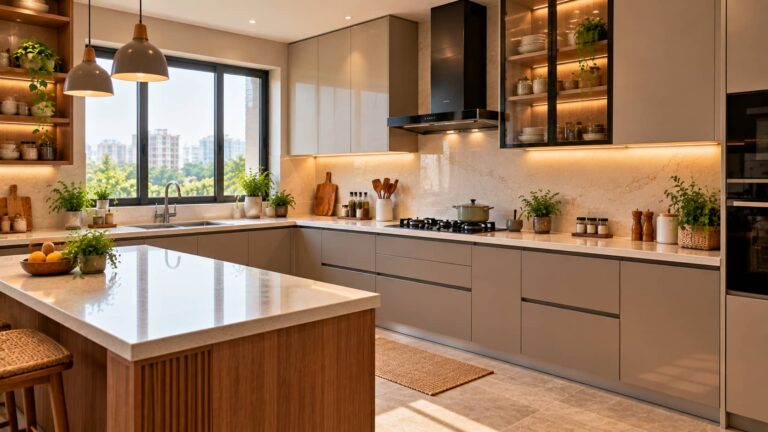
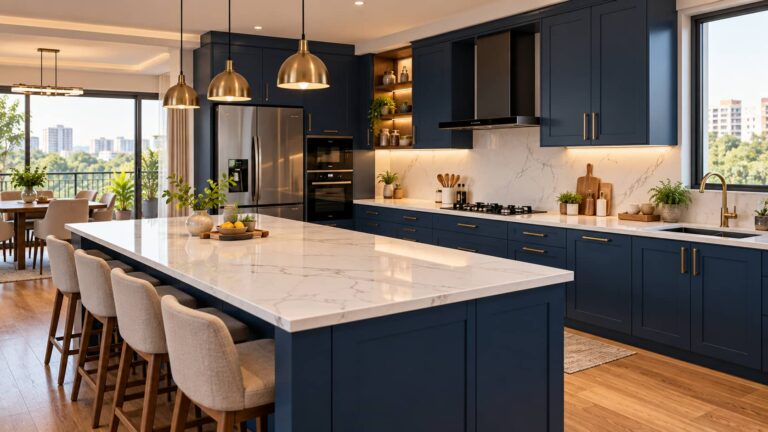
- Kitchen cabinets and backsplashes
- TV units
- Study tables and storage units
- Office furniture
- Wall panelling
- Doors
- Shelves and partitions
The exact application should determine the laminate grade and performance requirements. AICA’s current product ranges, for example, include decorative, postforming, compact, backer-liner and exterior laminates.
7 Best Types of Sunmica Sheets
There is no single universal classification of “seven Sunmica types.” For a buyer, the more useful approach is to classify laminates by construction, application and performance.
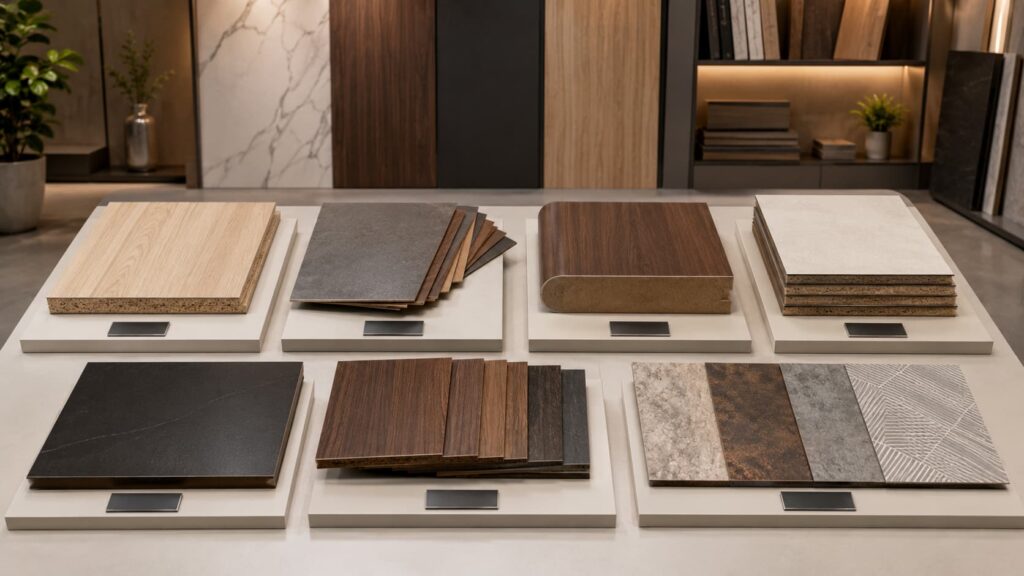
1. Standard Decorative Laminate
Standard decorative laminate is the most common choice for residential furniture. It is available in a wide range of colours, wood looks, patterns and surface finishes.
Best for: Wardrobes, TV units, cabinets, shelves, study tables and general furniture.
Choose this type when you mainly need an attractive, durable interior surface without a specialist performance requirement.
2. 0.8 mm and 1 mm Decorative Laminate
Thickness is another important way to distinguish Sunmica sheet types. Current AICA ranges include 0.8 mm and 1 mm decorative laminates, with different colours and finishes available.
Best for: Furniture, wall panels, wardrobes and selected kitchen applications.
The thicker sheet is not automatically “better” for every project. The correct thickness depends on the application, substrate and manufacturer’s specifications.
3. Postforming Laminate
Postforming laminate is designed for applications where the sheet needs to follow a rounded furniture edge. AICA’s Curvica range, for example, is designed to mould around rounded edges and is available in 0.60 mm and 0.70 mm thicknesses.
Best for: Curved furniture edges and designs where a seamless rounded finish is required.
This is useful when conventional flat laminate would not provide the desired edge treatment.
4. Backer and Liner Grade Laminate
Backer and liner laminates are intended for the inside or reverse surfaces of cabinets, cupboards and wardrobes. AICA currently lists backer at 0.5 mm and liner grade at 0.7 mm.
Best for: Cabinet interiors, wardrobe interiors and concealed furniture surfaces.
They can provide a neat, practical internal finish without using the same decorative specification as the visible exterior surface.
5. Compact Laminate
Compact laminate is a thicker, self-supporting laminate category designed for demanding applications. AICA lists compact grades from 3 mm to 20 mm and highlights mechanical strength, impact resistance and resistance to water, humidity and heat.
Best for: High-use furniture, partitions, wall panelling, countertops and moisture-prone applications.
Compact laminate can be a better choice when the project requires more than a thin decorative surface.
6. Exterior-Grade Laminate
Regular interior laminate should not automatically be used outdoors. Exterior-grade laminates are specifically designed for weather exposure.
For example, AICA’s Ultra Shield exterior HPL is positioned as UV-, fire-, weather- and water-resistant.
Best for: Exterior wall applications and other specified outdoor uses.
If a surface will receive direct sunlight, rain or prolonged outdoor exposure, select a product specifically rated for that environment.
7. Performance or Specialty Laminate
Some laminate ranges are developed for a specific functional requirement rather than appearance alone. These can include anti-fingerprint, scratch-resistant, antibacterial, fire-retardant or other performance-focused surfaces.
For example, current laminate ranges from major manufacturers include antibacterial, impact-resistant and fire-resistant options.
Best for: Kitchens, commercial interiors, healthcare environments, high-use furniture and projects with specific performance requirements.
The important point is to verify the manufacturer’s stated performance instead of assuming a decorative laminate has a particular property.
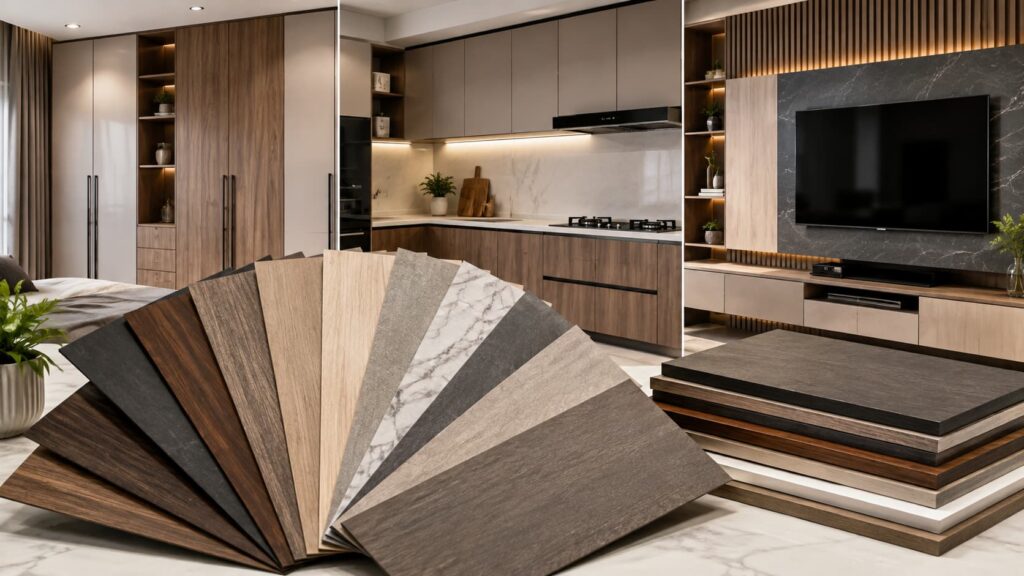
Types of Sunmica Finishes
| Finish | Look & Feel | Suitable Applications |
|---|---|---|
| Gloss | Smooth and reflective | Modern furniture, selected kitchens |
| Matte | Soft and low-reflection | Wardrobes, bedrooms, minimalist interiors |
| Suede | Soft, refined texture | Wardrobes and premium furniture |
| Woodgrain | Mimics natural timber | Wardrobes, cabinets and furniture |
| Textured | Tactile surface | Feature furniture and panels |
| Stone / Marble Look | Mineral-inspired appearance | Kitchens, counters and feature areas |
| Metallic / Specialty | Decorative statement finish | Accent furniture and feature panels |
AICA’s current ranges demonstrate how several finishes can exist within the same laminate category. Its 0.8 mm range, for example, includes Gloss, Smooth Matte, Suede, Formatt and other surface options.
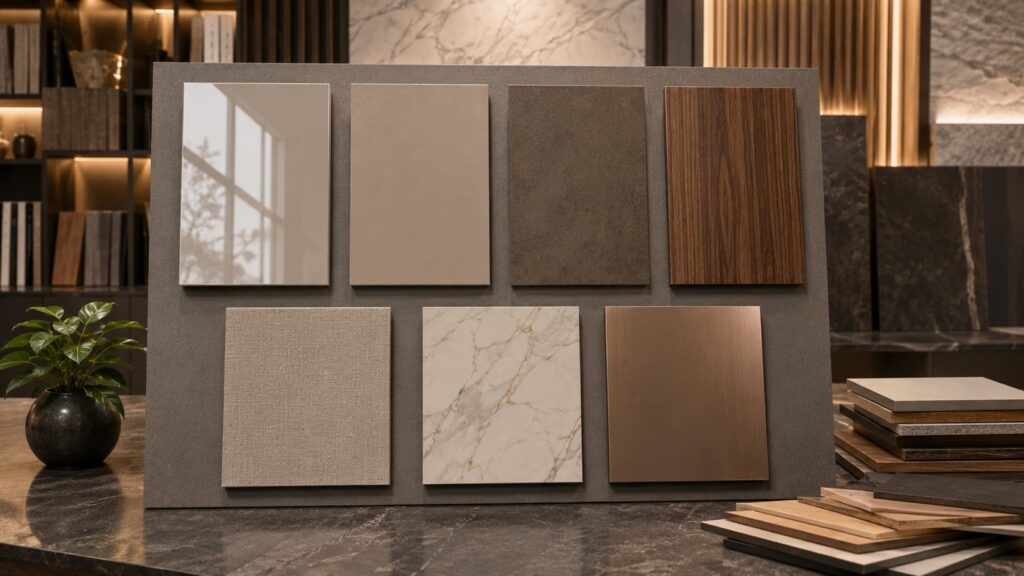
Which Sunmica Is Best for Furniture?
For most furniture, standard decorative laminate in a suitable thickness and finish is the practical choice. For custom pieces, Furniture Selection & Customization
Choose based on how the furniture will be used:
- Wardrobes: Matte, suede or woodgrain
- TV units: Matte, woodgrain or gloss
- Study tables: Durable matte or textured surfaces
- Curved furniture: Postforming laminate
- Heavy-use furniture: Consider a higher-performance or compact option
Do not select the sheet by appearance alone. Check its abrasion, scratch, stain and application specifications where those factors matter.
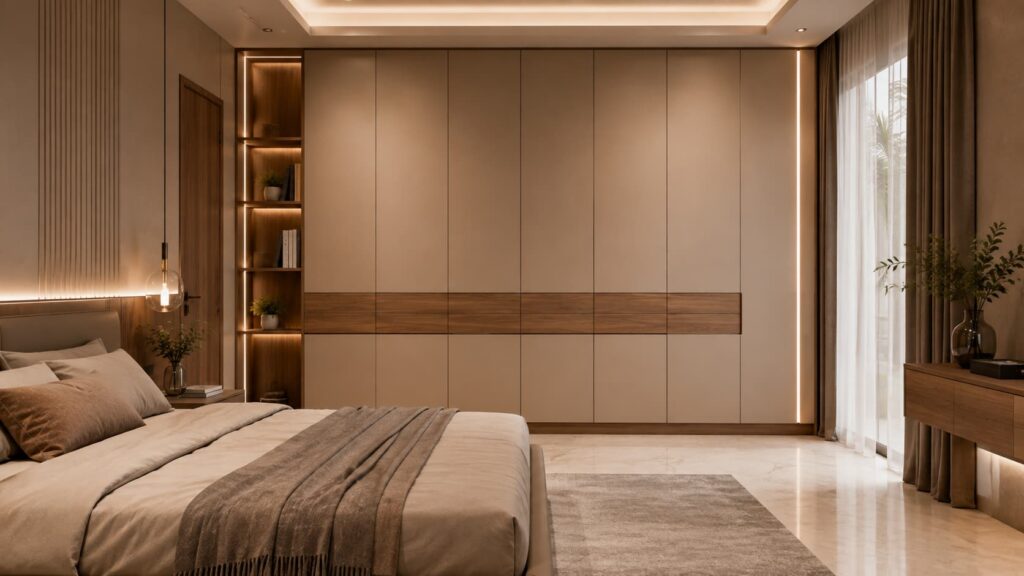
Which Sunmica Is Best for Wardrobes?
Matte, suede and woodgrain Sunmica finishes are strong choices for wardrobes. They can create a softer appearance than high-gloss surfaces and work well with both contemporary and traditional interiors.
If fingerprints are a concern, consider an anti-fingerprint surface. AICA’s Veltouch range, for example, lists fingerprint resistance, low reflection, smooth texture and scratch resistance as product features.
For wardrobe shutters, laminate selection should also work with the shutter profile, handles, storage layout and overall room design. Explore Wardrobe Interior Design
- Room lighting
- Handle or handleless design
- Fingerprint visibility
- Scratch resistance
- Edge treatment
- Colour coordination with flooring and walls
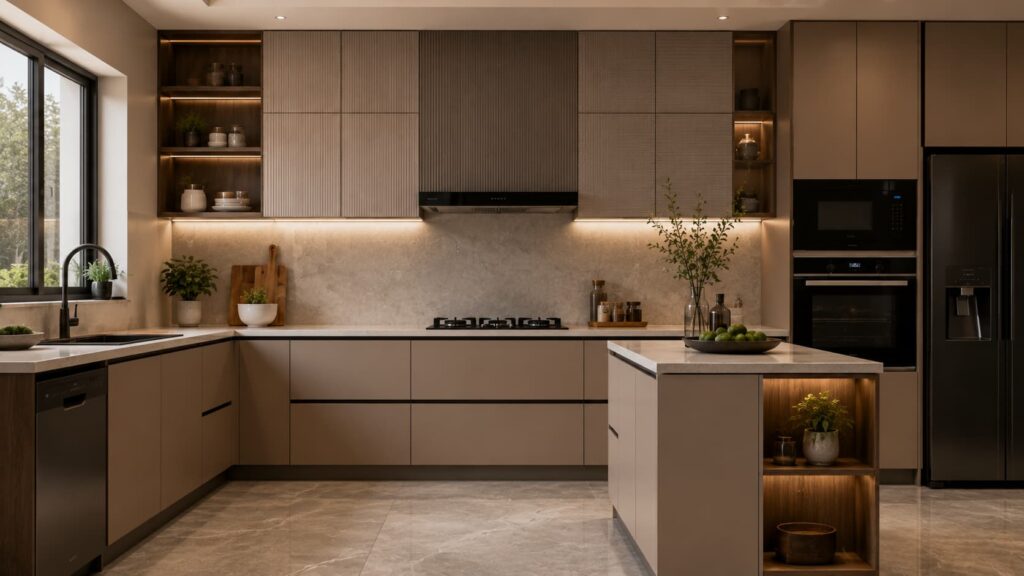
Which Sunmica Is Best for Kitchen Cabinets?
For kitchen cabinets, choose a laminate that suits frequent cleaning, everyday moisture and regular handling.
A matte or textured finish can be practical because it generally creates less visual glare and may make minor marks less noticeable. For demanding applications, look for documented stain, abrasion, moisture or heat performance.
Do not choose the laminate in isolation. The substrate, edge sealing, joints, hardware and kitchen layout also affect the finished cabinet. Modular Kitchen Interior Design brings these decisions together as part of the overall kitchen design.
Is Sunmica Waterproof?
Ordinary decorative Sunmica should not be treated as completely waterproof. The laminate surface can handle everyday cleaning and incidental moisture, but water can still enter through exposed edges, joints or damaged areas and affect the substrate.
Specialist compact laminates can offer substantially stronger water resistance. AICA’s compact range specifically lists resistance to water and humidity among its properties.
So, if waterproof or high-moisture performance is essential, choose a product specifically designed and rated for that application.
Sunmica vs Laminate: What's the Difference?
The terms are often used interchangeably in India, but there is a technical distinction.
Sunmica is a brand name; laminate is the broader material category. AICA describes Sunmica as a flagship Indian brand that has become generic in everyday usage.
Therefore, when someone asks for “Sunmica,” they may actually be asking for decorative laminate from any manufacturer.
For a project, compare the actual product specification, manufacturer, thickness, finish and performance, rather than relying only on the word “Sunmica.”
How to Choose Sunmica for Your Requirement
| Requirement | What to Consider |
|---|---|
| General furniture | Standard decorative laminate |
| Wardrobe shutters | Matte, suede or woodgrain |
| Kitchen cabinets | Easy-clean, durable decorative laminate |
| Curved edges | Postforming laminate |
| Cabinet interiors | Backer or liner grade |
| High moisture | Suitable compact / water-resistant grade |
| Heavy-use surface | Compact or performance laminate |
| Outdoor application | Exterior-grade HPL |
| Fingerprint concerns | Anti-fingerprint finish |
| Feature furniture | Textured, stone, metallic or specialty finish |
How Long Does Sunmica Last?
There is no single lifespan that applies to every Sunmica sheet. Durability depends on laminate quality, thickness, substrate, adhesive, installation, cleaning and the level of daily wear.
Good installation matters as much as choosing a visually attractive sheet. Sharp objects, prolonged heat and unsuitable cleaning methods can damage laminate surfaces. AICA’s care guidance recommends avoiding prolonged high-temperature exposure and abrasive scratching.
Instead of choosing solely by an advertised lifespan, ask about the specific product’s performance and warranty.
How to Clean and Maintain Sunmica
Sunmica is relatively easy to maintain when cleaned correctly.
- Wipe regularly with a soft, damp cloth.
- Use mild detergent for routine cleaning.
- Avoid abrasive scrubbing.
- Do not drag sharp or rough objects across the surface.
- Protect horizontal surfaces from direct contact with very hot cookware.
- Follow the manufacturer’s cleaning instructions for specialty finishes.
AICA’s care guidance similarly recommends damp-cloth cleaning and warns against scratching and prolonged exposure to high temperatures.
Sunmica Sheets in Bangalore: What Should You Check?
When comparing Sunmica sheets in Bangalore, start with the application rather than the colour catalogue.
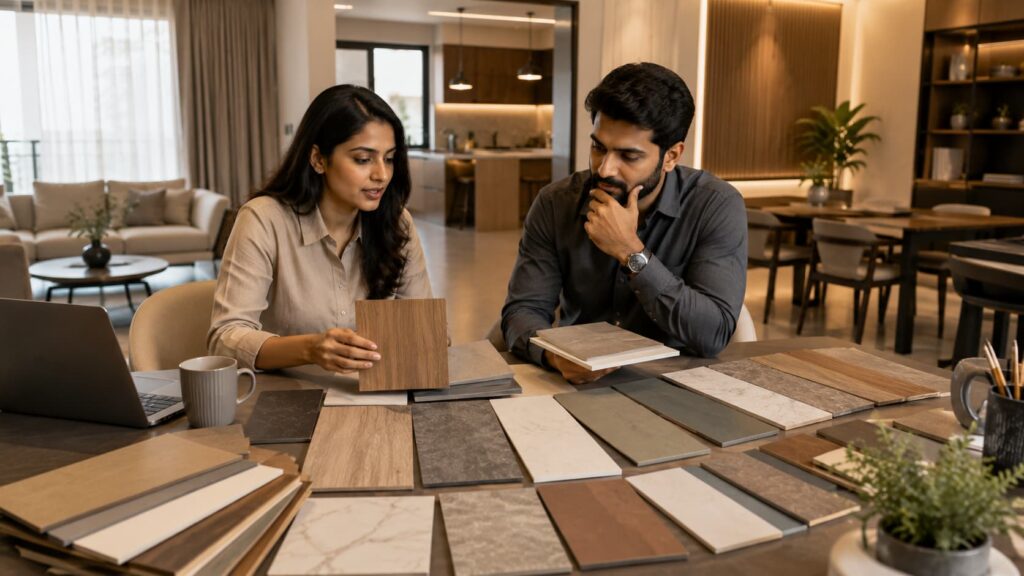
Ask for physical samples and compare them under the lighting of your home. Then confirm the sheet’s thickness, finish, application suitability and performance requirements.
If you are planning a complete interior, the laminate should be considered alongside the plywood or MDF substrate, edge treatment, hardware and overall design. Home Interior Design in Bangalore can help coordinate these material decisions across different rooms.
How to Choose a Reliable Sunmica Sheet Supplier
If you are searching for Sunmica sheet suppliers in Bangalore, compare more than price.
Ask the supplier or interior designer:
- What is the exact manufacturer and product range?
- What is the sheet thickness?
- Which finish is being supplied?
- Is the product suitable for the intended application?
- Does it have specific moisture, heat, scratch or stain performance?
- What substrate will be used underneath?
- How will the edges and joints be finished?
- What warranty applies to the material and installation?
This approach reduces the risk of choosing a sheet based only on a sample’s appearance.
Common Mistakes to Avoid
Choosing only by colour
A beautiful finish may not be suitable for a high-use or moisture-prone surface. Application should come before aesthetics.
Assuming all Sunmica is waterproof
Regular decorative laminate and water-resistant compact laminate are not interchangeable. Always check the product specification.
Ignoring the substrate
Laminate is only the visible surface. The board underneath, adhesive and edge treatment also influence the finished furniture.
Using interior laminate outdoors
Outdoor exposure requires an exterior-rated product. A standard interior sheet should not be treated as an outdoor material.
Selecting without seeing a sample
Screens can alter how colour, texture and gloss appear. A physical sample is better for final selection.
Conclusion
The best type of Sunmica sheet depends on the job it needs to do. Standard decorative laminates work well for everyday furniture, while postforming, backer-liner, compact, exterior and specialty laminates solve more specific requirements. Finishes such as matte, gloss, suede and woodgrain then determine the final appearance.
For a Bangalore home, compare physical samples, product specifications and the complete furniture construction before choosing. If you are planning a wardrobe, kitchen or custom furniture, explore Woodlab Interiors’ interior design services or request a consultation to discuss suitable material and finish options.
FAQs
What are the different types of Sunmica sheets?
Common practical categories include standard decorative laminate, 0.8 mm or 1 mm decorative laminate, postforming laminate, backer/liner grade, compact laminate, exterior-grade laminate and specialty performance laminates.
What is Sunmica used for?
Sunmica is commonly used as a decorative surface on wardrobes, kitchen cabinets, furniture, TV units, wall panels, doors, shelves and partitions.
Which type of Sunmica sheet is best for furniture?
For most furniture, a good-quality standard decorative laminate is suitable. Choose the finish and performance specification according to the furniture’s location and level of use. For custom pieces, Furniture Selection & Customization can also help coordinate the material with the furniture design.
Which Sunmica is best for kitchen cabinets?
Choose a durable, easy-to-clean laminate suitable for kitchen conditions. For demanding applications, check the product’s moisture, stain, abrasion and heat specifications rather than choosing only by colour.
Is Sunmica better than laminate?
The comparison is slightly misleading because Sunmica is a brand name, while laminate is the broader product category. Compare the actual laminate product, manufacturer, finish and performance.
Can Sunmica be used on walls?
Yes. Suitable laminate products can be used for wall panelling. Some compact and decorative laminate ranges specifically list wall panelling among their applications.
How long does Sunmica last?
There is no universal lifespan. Product quality, substrate, installation, maintenance and usage all affect durability. Follow the manufacturer’s specifications and care instructions.